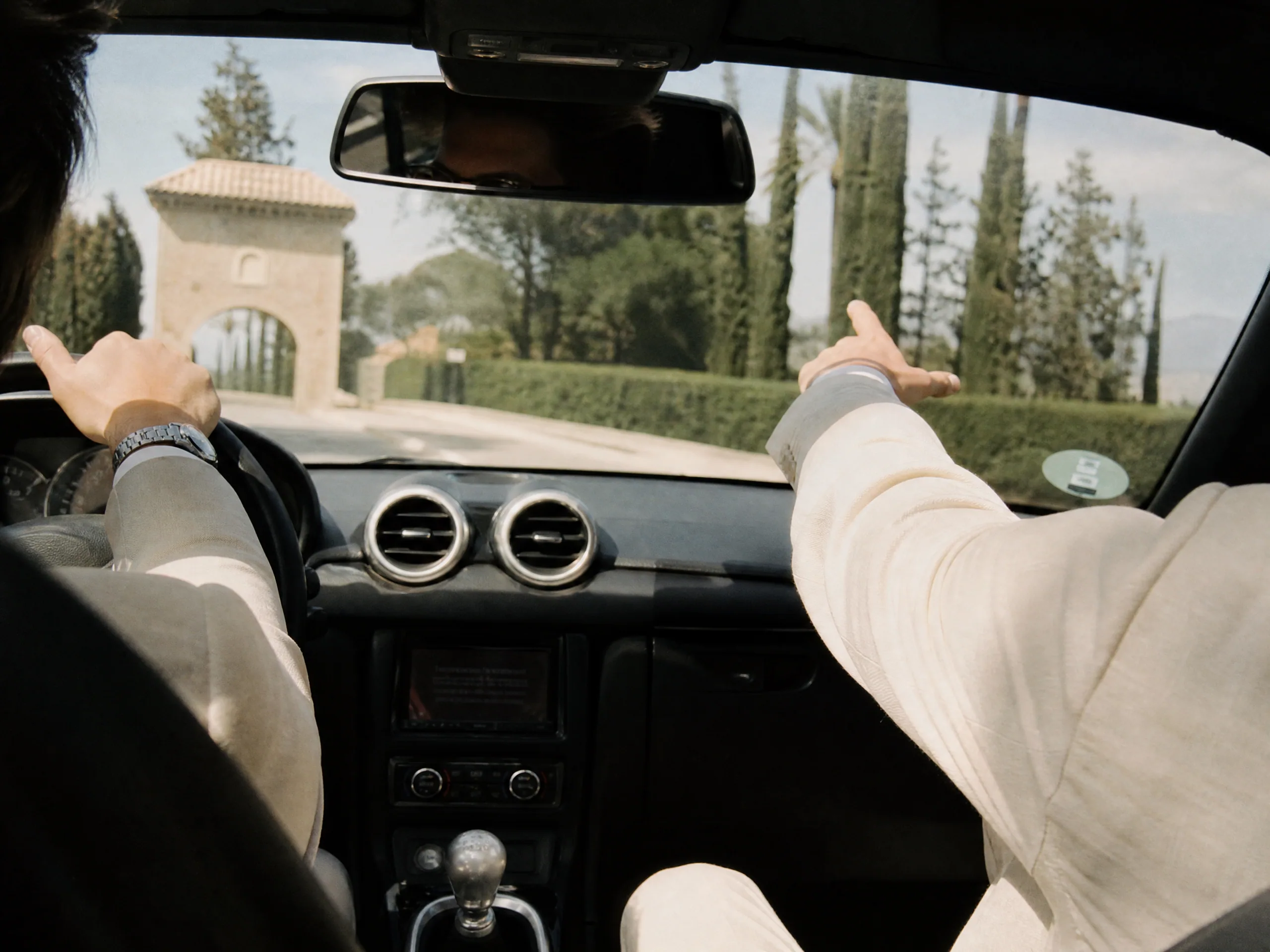
International guests who rent cars for a Spanish destination wedding weekend often study fuel policy, tolls, and parking apps—then freeze at the first multi-exit rotonda outside the airport. Spain’s roundabouts (rotondas) and the classic prioridad a la derecha rule are ordinary for local drivers and opaque for visitors used to four-way stops or signalized junctions. Hesitation creates rear-end scares on busy approach roads; wrong-exit loops burn the buffer before rehearsal dinner. KUDRYA Studio treats roundabout literacy as part of the guest driving brief, not a footnote on the welcome PDF.
Why Rotondas Belong in the Guest Driving Brief
Most Spain destination weekends mix airport exits, ring-road connectors, and narrow rural approaches to fincas or coastal venues. Guests arrive jet-lagged, often in the wrong lane, with Google Maps recalculating mid-circle. A short briefing—yield to traffic already in the rotonda, signal early, and take another lap if unsure—prevents the frantic brake-check that starts a weekend of nerves. Couples who assume “everyone knows roundabouts” underestimate how differently US, Canadian, and some Asian drivers are trained.
Prioridad a la Derecha: When It Still Matters Outside the Circle
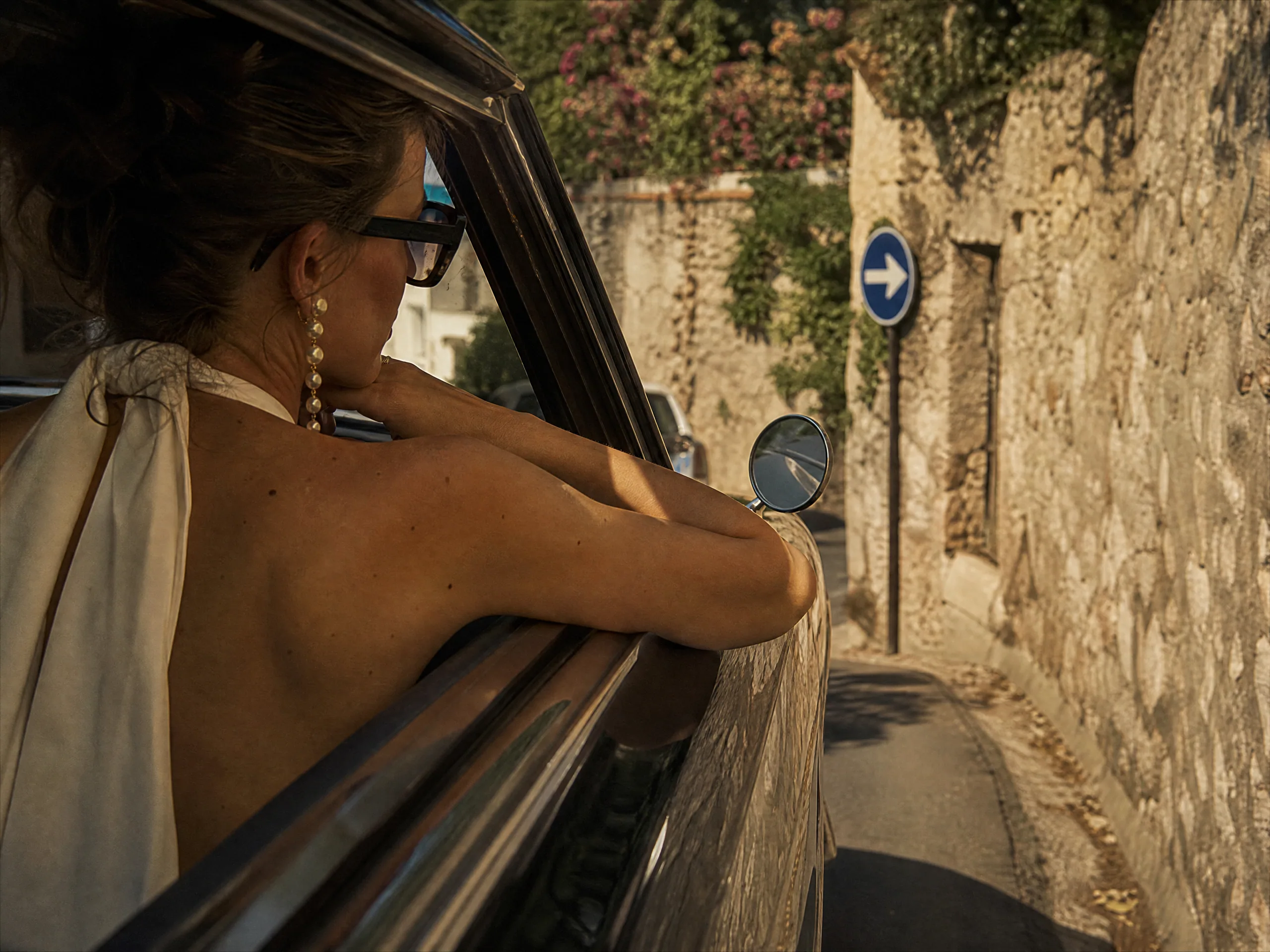
Inside a marked rotonda, vehicles already circulating usually have priority. Outside it, older unmarked junctions and some small-town crossings still run on prioridad a la derecha: yield to traffic coming from the right unless signs or paint say otherwise. Guests who treat every junction like a US four-way stop can either surge too early or wait forever. Put one plain sentence in the WhatsApp group: on unsigned local roads, expect right-side priority; on signed rotondas, yield to the circle.


Lane Choice Before You Enter: Left Exit vs Straight Through
Multi-lane Spanish rotondas reward early decisions. Guests heading for the first exit should stay right; longer arcs often use the inner lane before signaling out. Wrong-lane entry forces last-second cuts across circulating traffic—exactly the move that startles a convoy of wedding guests in heels and suits. Ask drivers to read the exit count on Maps before the approach, not while already inside the painted circle.
Signals, Horns, and the Calm Extra Lap
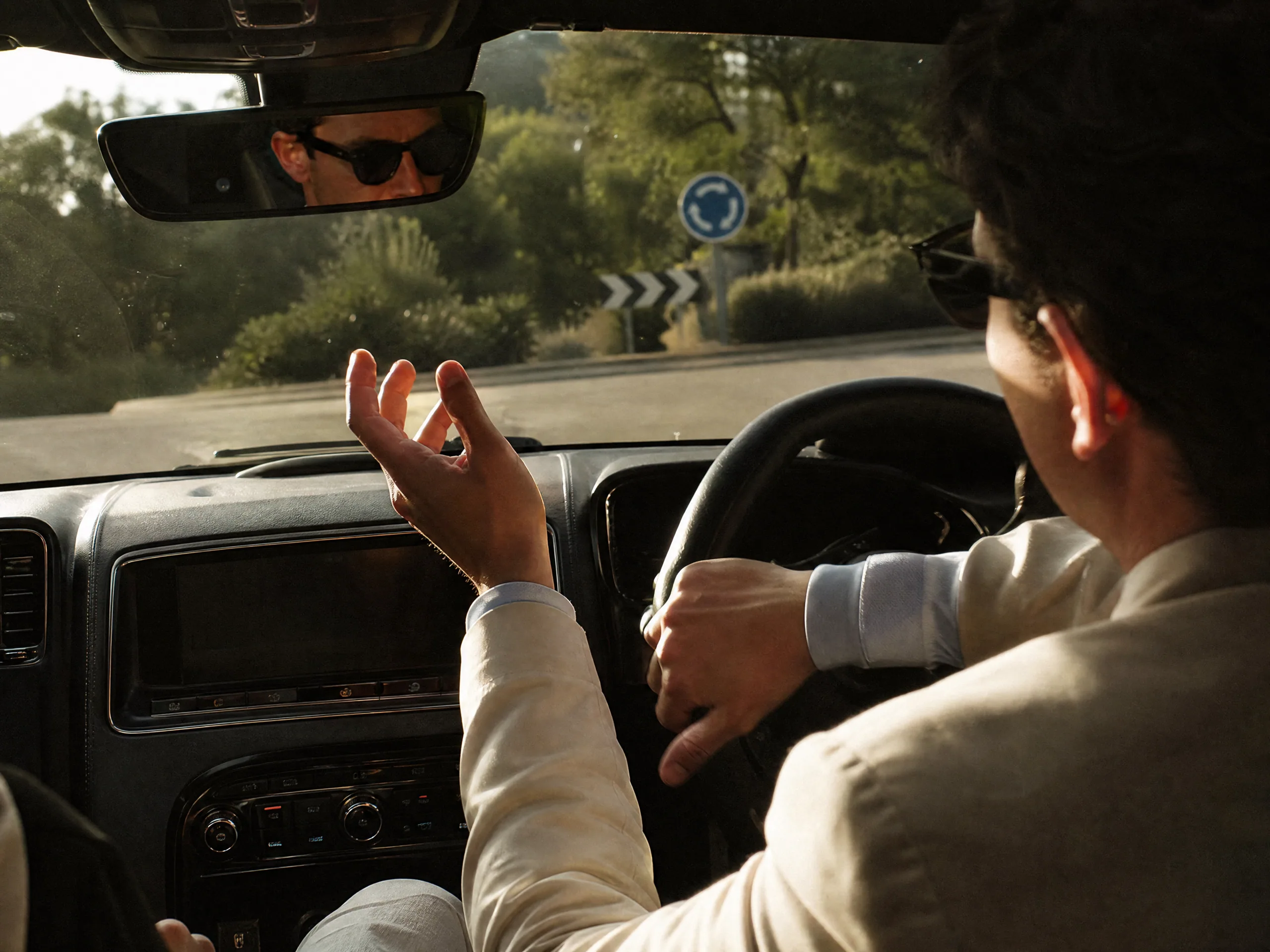
Indicate before you leave the rotonda; do not assume others will guess your exit. If you miss it, complete another circuit instead of reversing or stopping in the lane. Horns on Spanish approach roads are communication, not always aggression—still, wedding guests in formalwear do better with predictable, slow exits than with apologetic mid-circle freezes. Build “one extra lap is fine” into the brief so nobody panics about looking lost.
Airport Exits and Ring Roads vs Quiet Estate Approaches
Airport and city rotondas move fast and stack multiple lanes; rural estate approaches may be single-lane circles with poor sightlines behind stone walls or olive trees. The rule set is the same; the stress profile is not. For evening arrivals after ceremony fittings, pair Maps pin-drops with a note about blind entries and low sun glare. Shared cars should nominate a calm navigator who watches exit numbers while the driver watches circulating traffic.
Shared Rentals, Multiple Drivers, and Who Briefs Whom
Weekend fleets often rotate drivers between airport runs, grocery trips, and late-night hotel returns. One person who “gets” Spanish rotondas does not automatically transfer that skill to the next driver at midnight. Keep a three-line note in the group chat: yield to the circle, signal out, take another lap if unsure. Confirm every new driver has read it before keys change hands—especially after barra libre hours when confidence rises and judgment does not.
Navigation Apps, Pin Drops, and Wrong-Exit Recovery
Offline Maps downloads help when coastal or mountain venues lose signal mid-approach. Drop the exact estate pin and the recommended final approach road the day before, not from the hard shoulder. If the app reroutes through a sudden U-turn across a busy rotonda, ignore the panicked suggestion and take the next safe exit instead. Couples can pre-share a “if you overshoot, continue to [landmark] and turn around” line so guests never reverse against circulating cars.
What Not to Do: Stopping, Reversing, and Mid-Circle Debates
Never stop inside the circulating lane to argue about the correct exit. Never reverse. Never open doors to ask a pedestrian while traffic is moving. Pull into a legal lay-by or estate entrance beyond the circle, then re-enter with a plan. Guests in wedding shoes should not walk the painted island. If a minor scrape happens, move to a safe spot, use the rental emergency kit briefing you already sent, and call the rental roadside number—not the group chat first.
Planner Checklist Before the First Airport Pickup Wave
Add rotonda language to the rental-car guest card beside fuel policy and chaleco checks. Screenshot a typical multi-exit approach near the venue and mark the correct exit number. Nominate one confident driver for the first night’s unfamiliar roads. Remind guests that an extra lap costs two minutes; a sudden cut costs a weekend. KUDRYA Studio builds these micro-briefs so destination wedding logistics stay elegant under Spanish traffic rules—not improvised at the give-way line.