Spanish rental villas from Extremadura and western Andalusia to parts of Castilla-La Mancha, Catalonia’s cork country, Mallorca’s interior, and the Costa Blanca hinterland often keep an alcornoque—cork oak (Quercus suber)—as a driveway, courtyard, or open-finca specimen with thick, furrowed bark and a broad evergreen canopy. Guests confuse it with encina or olivo, peel “souvenir cork,” or hang hammock ropes on soft harvest scars before ceremony photos. It is not an encina, not an olivo, not a ciprés, not a madroño, and not a formal hedge block. A short briefing on bark protection, shade etiquette, and caretaker-only pruning protects the tree through the wedding weekend.
Why Alcornoque Belongs in the Guest Briefing
Cork oaks are living infrastructure on many Spanish fincas: valuable bark cycles, deep shade over gravel courts, and a silhouette that reads as “western Iberia” in aerials and golden-hour stills. Destination-wedding houses use mature alcornoques as welcome-drink shade, parking-bay canopies, or quiet green backdrops once paths are cleared of litter. International visitors often assume the spongy outer bark is free scrap, a climbable texture wall, or DIY décor for place cards and table runners. Say who owns the tree, whether bark may ever be touched, and who may prune or hang décor—before the first guest Instagram reel, not after the caretaker finds peeled panels and rope burns on a recently stripped trunk.
What Guests Are Looking At (And What It Is Not)
Alcornoque is the everyday Spanish name; botanically you are looking at Quercus suber, the cork oak. Expect a broad evergreen canopy, leaves that can look similar to holm oak at a glance, and—most importantly—thick, corky bark that is harvested on a legal, multi-year cycle by professionals, not by wedding guests with pocket knives. It is not an encina (holm oak / Quercus ilex) with harder, thinner bark and a darker “carrasca” look; not an olivo with silvery fruit-tree foliage; not a narrow ciprés; not a red-berried madroño; not a toxic tejo; and not a leylandii or arizónica hedge screen. If guests only remember one sentence, make it this: the thick bark is a protected crop and structural shield—never peel it for souvenirs.
Where It Usually Grows on Wedding Villas
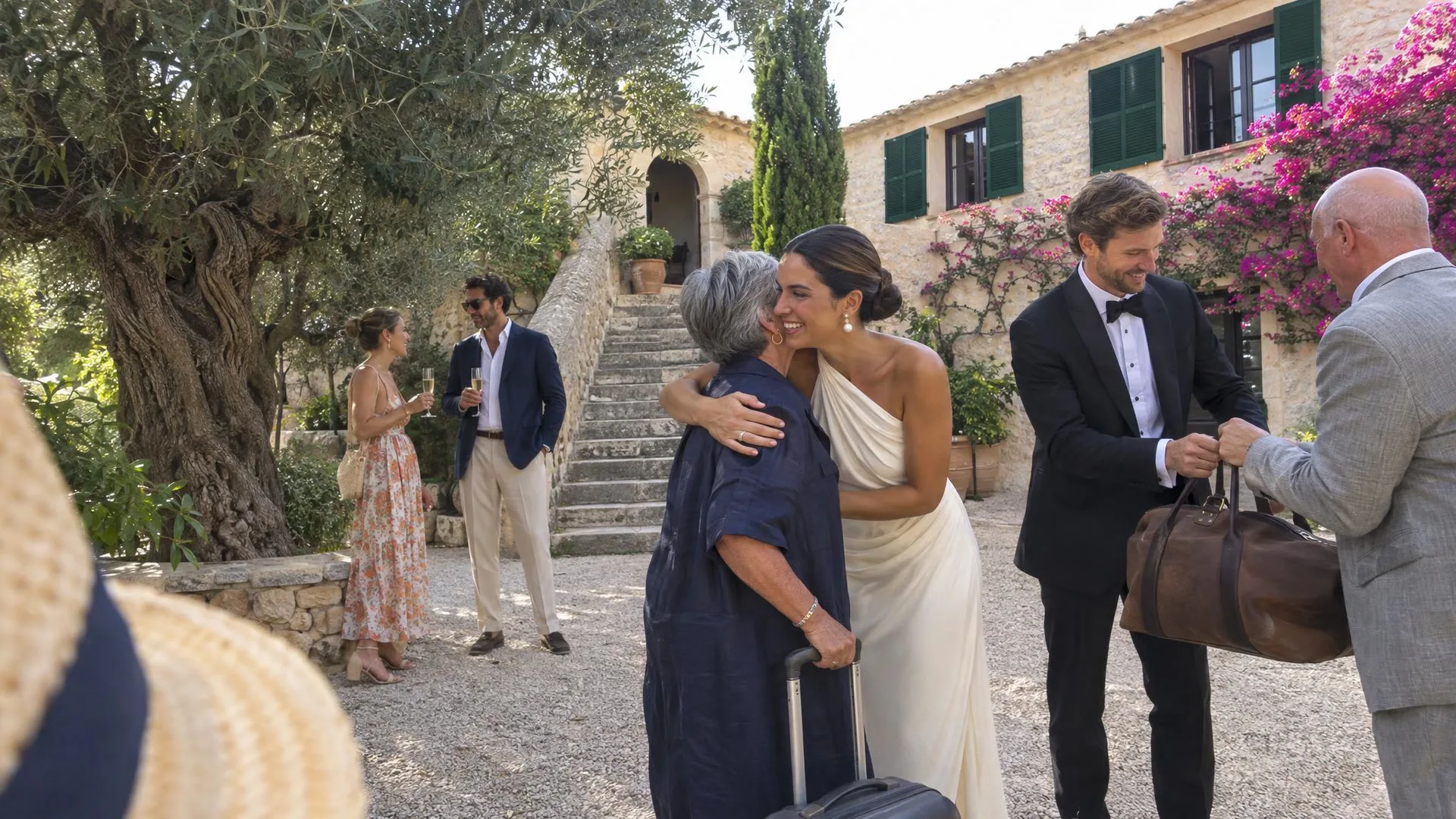
On wedding rentals you will most often meet an alcornoque beside a dusty driveway, shading a stone courtyard, marking the edge of an olive-and-cork mosaic, or standing alone in a lawn that was once open dehesa-style pasture. Extremadura, Huelva, Cádiz inland, and parts of Girona cork country are classic; Mallorca and warmer Mediterranean hinterlands also host mature specimens on private estates. Brief guests by location (“the cork oak by the parking gate,” “the big bark tree behind the pool terrace”) so they do not treat every evergreen oak as a photo prop. Shared urbanización gardens may have protected trees with municipal rules on top of the villa house manual—assume stricter, not looser.
Bark, Harvest Scars, and Why Peeling Is Off-Limits
Commercial cork is stripped in carefully timed harvests; between cycles the tree shows smooth or scarred underbark that looks tempting to touch. Guests must never cut, peel, carve initials, staple signage, or pry soft panels for craft tables—even “just a little piece.” Fresh scars invite pests, drought stress, and caretaker conflict the morning after the welcome party. If the hosts want cork décor, they buy finished cork sheets or hire a florist; they do not open the living trunk. Tell children the bark is not a climbing wall or writing surface. If someone already peeled a patch, stop further damage, photograph for the caretaker, and do not attempt DIY sealants.
Kids, Climbing, and Acorn Litter Underfoot
Like other oaks, alcornoques drop acorns and leaf litter in waves. Brief guests to watch footing on gravel paths, keep stilettos and garment bags out of heavy drop zones, and leave sweeping to the caretaker or a designated host helper—not to kids collecting “nature souvenirs” by the armful for rooms that then track mess indoors. Climbing is off-limits: branches can snap, bark can scar, and a fall onto roots or stone is a medical headache far from home. Hammocks, aerial silks, and swing ropes belong on approved hardware, never on cork-oak limbs or trunks recovering from harvest.
Shade, Film Backdrops, and Branch Etiquette
Cork oaks make excellent soft shade for cocktail hour and documentary B-roll—if guests stay on paths and do not yank foliage for boutonnières. No DIY pruning for “cleaner frames,” no breaking low tips for aisle markers, and no tape or cable ties left on bark after the last dance. Videographers and content creators should treat the canopy as a fixed backdrop: move people, not branches. If a limb already hangs into a walkway, ask the caretaker before the weekend; do not send the bridal party up a ladder with secateurs the morning of the ceremony.
Water, Roots, and Shared Courtyard Rules
Mature roots lift paving and dislike repeated soaking from guest ice dumps, cooler meltwater, or DIY “tree watering” with chlorinated pool rinse. Keep drinks stations and ice bins on hardscape the hosts designate, not piled against the trunk flare. Do not dig trenches for fairy-light stakes through the root zone. If the alcornoque sits on a shared boundary, keep décor, ashtrays, and litter on your plot; neighbors notice bark damage and overnight noise under the same canopy.
Season, Checkout, and Neighbor Courtesy
Late summer and autumn weekends may bring heavier litter and wasp interest around fallen fruit; spring can mean pollen and soft new growth guests should not handle. Before checkout, do a polite walk: remove guest-tied ribbons, collect personal cork “samples,” empty ice melt away from the trunk, and report any accidental bark damage in the house chat—not as a surprise for the next rental party. Quiet hours still apply under the shade canopy; late karaoke under the alcornoque is still late karaoke for the urbanización.
One-Paragraph Guest Note You Can Paste
Please treat the villa alcornoque (cork oak / Quercus suber) as shared garden and landscape infrastructure, not a souvenir bark source or climbable play structure: do not peel, cut, carve, climb, hang ropes, or prune without the caretaker; walk carefully on acorn and leaf litter; keep kids and garment bags out of heavy drop zones; and leave any cork décor to purchased materials and the hosts’ florist. Thank you for helping us keep the courtyard and drive photo-ready through the wedding weekend.