"Is this enough food?" might be the most nervous question in wedding planning. A recent planning thread started with exactly that: a bride posted a photo of the plated main course from her venue tasting, her mother was sure the guests would leave hungry, and more than eighty replies piled in. Around the same time, a budget wedding forum argued for a week about buffet versus plated dinners, and another thread turned into a long vent about venues that will not let families cook.
The advice in those threads was surprisingly consistent. And if you are planning a wedding in Spain, most of that worry can relax a little, because the way Spanish weddings feed people is built around abundance. You still need to plan it, though. Here is how food at a Spanish wedding usually works, how much is enough, and what to check at your menu tasting.
What the threads agreed on
Reading through the replies, a few points came up again and again:
- One plate is never the whole story. People judged the main course by what came before and after it. A modest plate is fine after a generous cocktail hour and before a late snack; it looks thin if it is the only food of the evening.
- Drinking changes everything. Several replies said the same thing in different words: with an open bar, guests need more food, and they need it earlier.
- Ask for a side, not a miracle. The most upvoted suggestion was practical: move the salad to its own plate or course, add a second side to the main, put bread on the tables. Small changes that make a plate feel generous.
- Do not order for 25% more people. Former planners in the buffet thread explained that caterers already build a margin into their quantities. You pay for your confirmed headcount, not for imaginary guests.
- Buffet or plated is about the room as much as the food. Buffets got praise for choice and hot food, and criticism for queues, older guests carrying plates in formalwear and a less formal feel. Plated service won for black tie and for guests with allergies.
How a Spanish wedding meal is usually structured
A typical evening wedding in Spain feeds guests in three or four waves rather than one big dinner. Knowing the rhythm is the best answer to "will there be enough".
1. The cocktail (aperitivo)
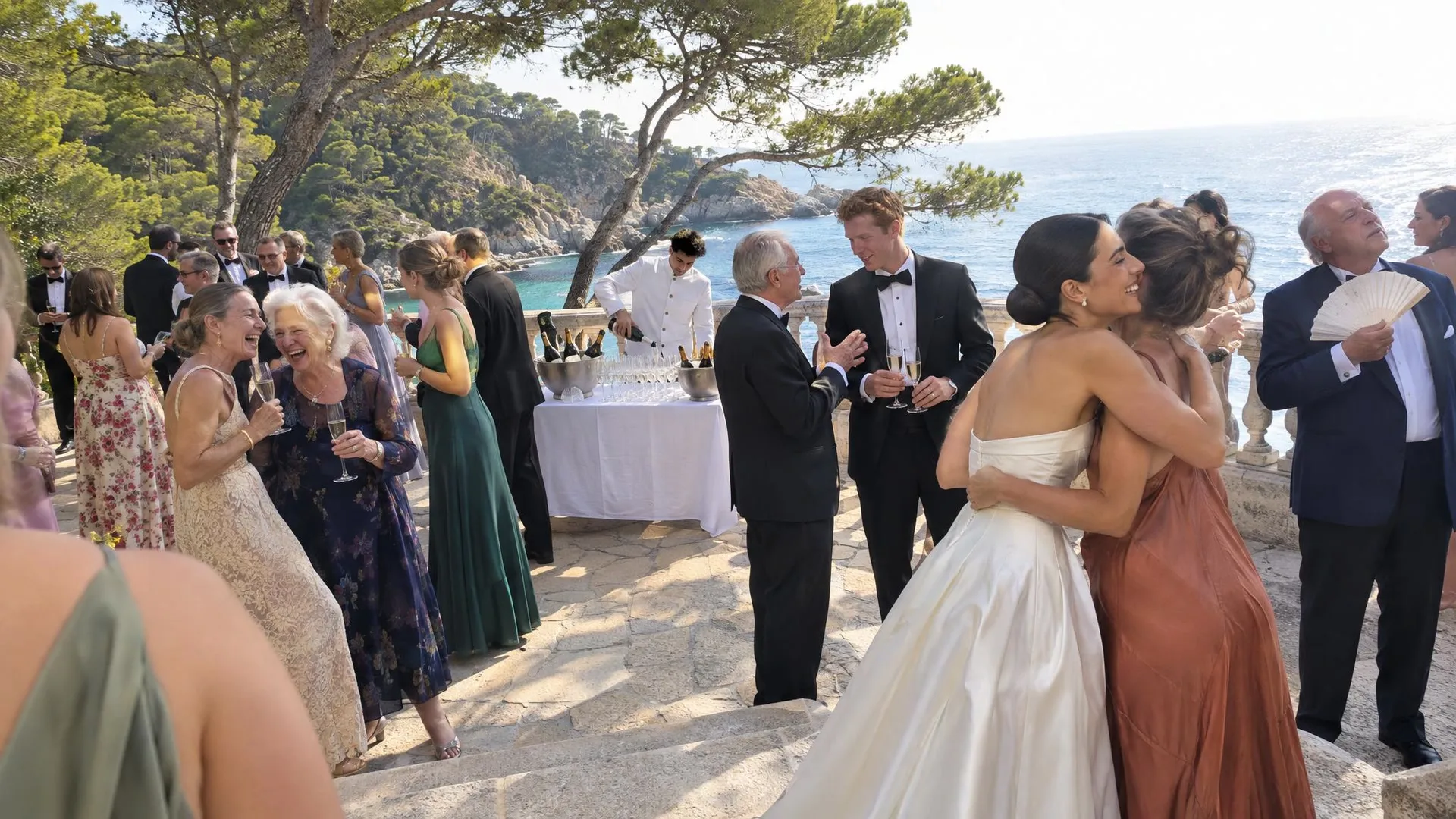
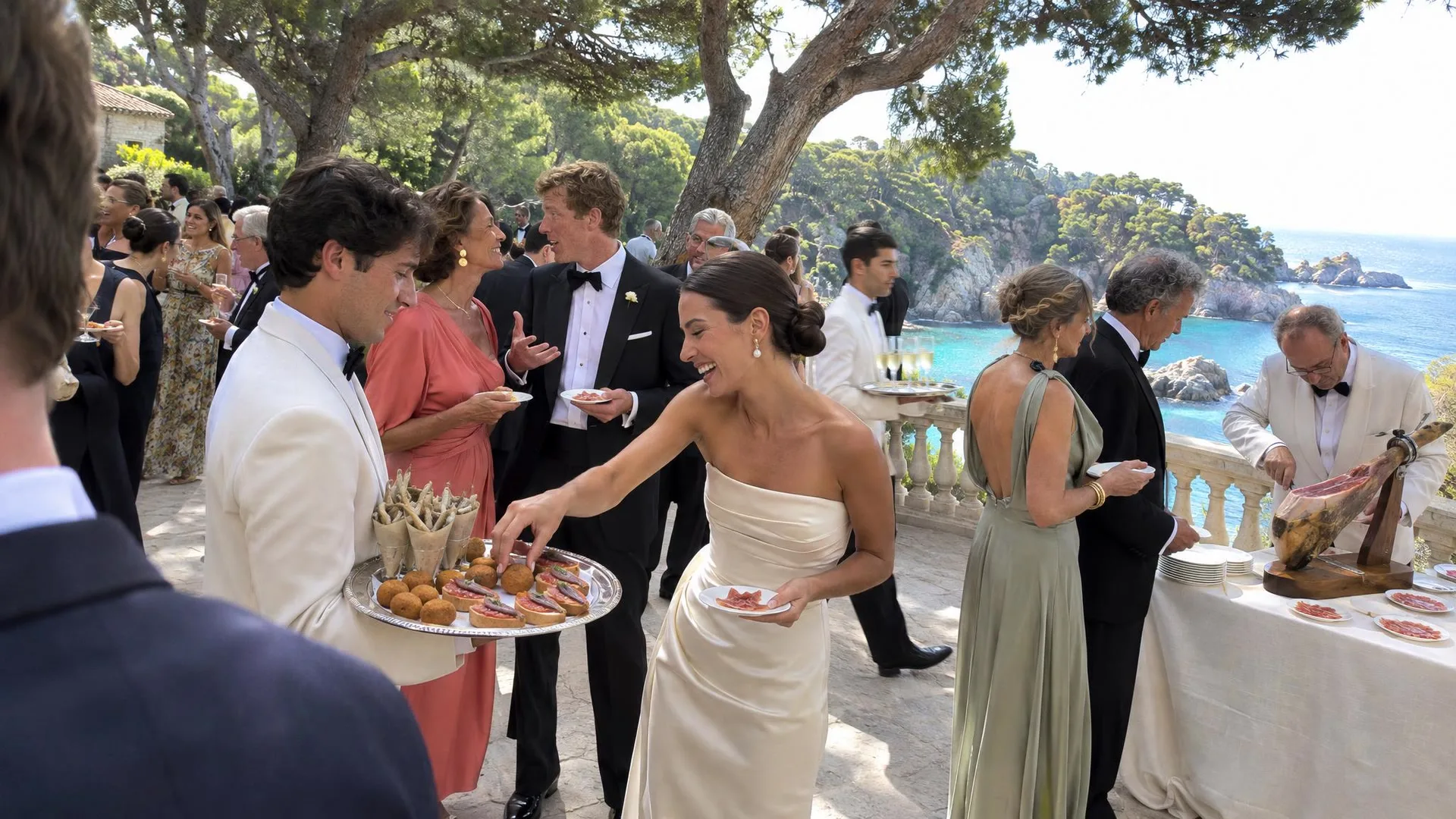
Straight after the ceremony comes the cóctel, usually an hour or more on a terrace or in a garden. Waiters pass small bites constantly: croquetas, little toasts, fried fish, tiny portions of rice, cheese, often a jamón carving station or a live cooking corner. Menus are planned so that the number of bites per person adds up to a light meal on its own. For international guests this is usually the first surprise of the day. Our guide to cocktail hour planning in Spain covers timing, shade and guest flow.
2. The seated dinner (banquete)
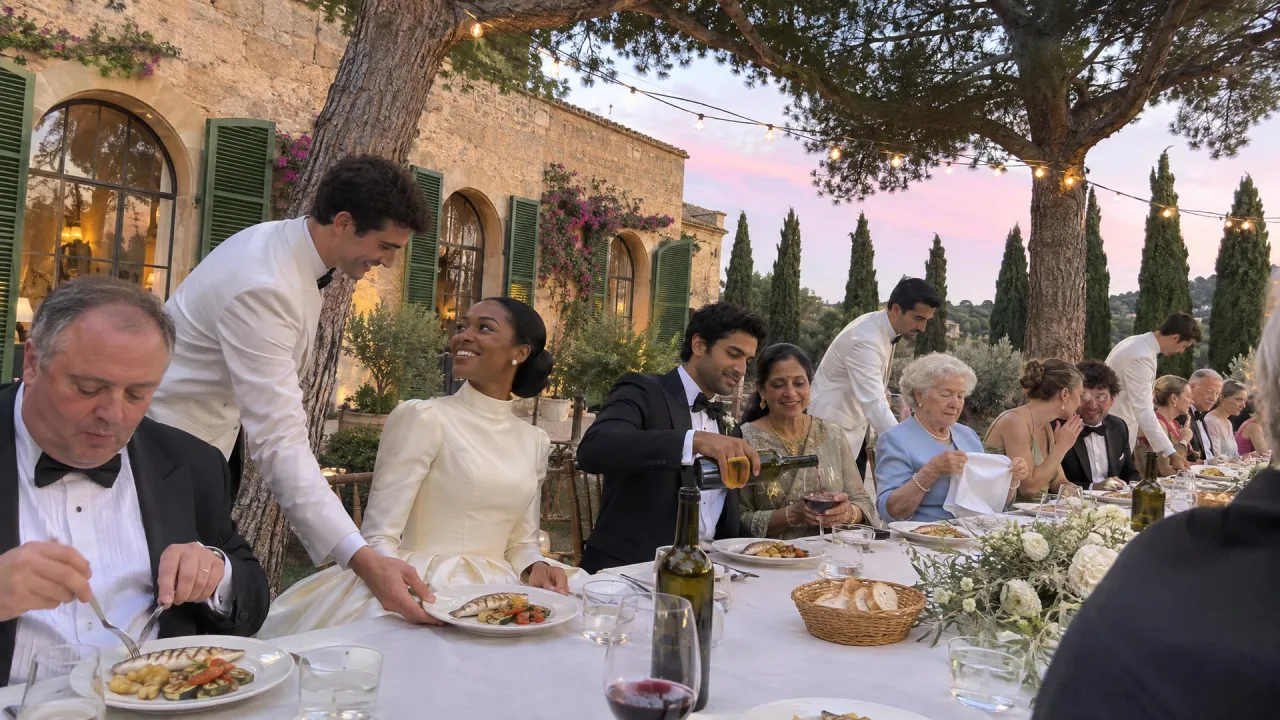
Then guests sit down. A classic Spanish wedding dinner has a starter, a fish or meat main course (sometimes both), a sorbet or palate cleanser in between and a dessert, followed by the wedding cake. Portions are designed to work after the cocktail, not instead of it. Dinner tends to start later than many guests expect, which is one more reason the cocktail matters; see Spanish dinner timing for destination weddings.
3. The open bar (barra libre)
After dinner the dancing and the barra libre begin, usually priced by the hour. This is exactly the moment the threads warned about: people drinking for hours after an early meal. In Spain the answer is the next wave.
4. The recena
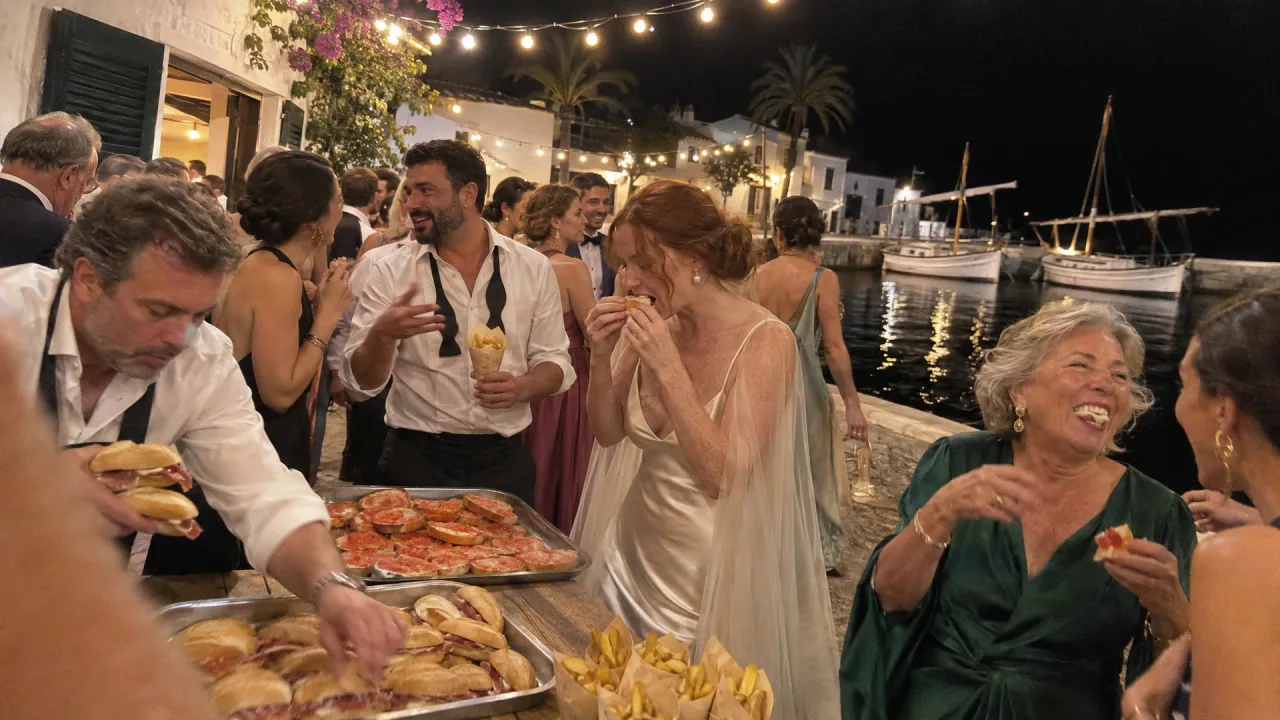
Around one or two in the morning, a late snack comes out: bocadillos, pan con tomate, mini burgers, crisps, sometimes something sweet. It is cheap compared to the rest of the menu and one of the things guests remember most. If your caterer does not suggest it, ask.
So how much food is enough?
There is no magic gram count, but there is a simple test. Write your day as a timeline and mark every moment when food appears. If guests go more than about three hours without anything to eat while drinks are flowing, you have a gap. At a Spanish wedding with a full cocktail, a seated dinner and a recena, guests are rarely hungry. Where couples get caught out is when they shorten the cocktail to save money, start dinner very late, or skip the late snack.
A few practical rules:
- Do not shrink the cocktail to pay for decor. It is the part of the meal that carries the first three hours of the evening.
- Count the hours, not just the courses. A wedding that runs until four in the morning needs a recena.
- Feed the people working. Your coordinator, musicians, photographer and video team are on their feet for twelve hours or more. Most caterers offer a simple crew menu; include it in the headcount so nobody is filming your speeches on an empty stomach.
- Plan children's meals separately. Most caterers have a kids' menu, and children usually eat earlier.
- Collect allergies with the RSVP. Ask once, in writing, and pass the list to the caterer with table numbers. Our guide to dietary restrictions at Spanish weddings explains how to brief a Spanish kitchen.
Buffet, plated or a long cocktail?
Most evening weddings at Spanish venues are plated, and that suits black tie, long tables and speeches. Buffets are less common for formal dinners, but family-style sharing platters, a long standing cocktail instead of a sit-down dinner, or food stations work well for relaxed weddings and smaller groups. A cóctel largo, where the standing reception simply continues with more substantial dishes, is a real option if you want guests mixing rather than sitting in one place all night.
Whatever you choose, ask how the food will reach older guests and people who cannot queue easily, and whether hot dishes are cooked on site.
Can you bring your own food?
The vent thread was about venues that do not allow self-catering, and Spain is similar. Most venues work with their own kitchen or a short list of approved caterers, mainly for kitchen access, insurance and food safety. Some private fincas and villas are more flexible. If family recipes matter to you, ask early whether a dish or a dessert can be added through the caterer, or whether a family member can bring something for the dessert table or the recena. It is often easier than people expect when it is part of the plan rather than a last-minute request.
What to check at your menu tasting
The prueba de menú, the menu tasting, is where the "is this enough" question should be answered. Treat it as a working session, not just a nice lunch:
- Ask to see real portion sizes, plated as they will be on the day, not tasting spoons.
- Taste the cocktail bites too, and ask how many per person the quote includes.
- Walk through the whole timeline: arrival, cocktail, dinner, cake, barra libre, recena. Check where the gaps are.
- Ask what changes for allergies and children, and how special meals are marked at the table.
- Confirm the final headcount deadline and how no-shows and late cancellations are charged.
- Ask about the crew meal and where suppliers will eat.
- Check the wine and cava served with dinner versus what the barra libre includes.
Food is usually one of the biggest lines in a wedding budget; our destination wedding budget for Spain shows how it sits next to the venue, travel and everything else.
Why this matters for your film too
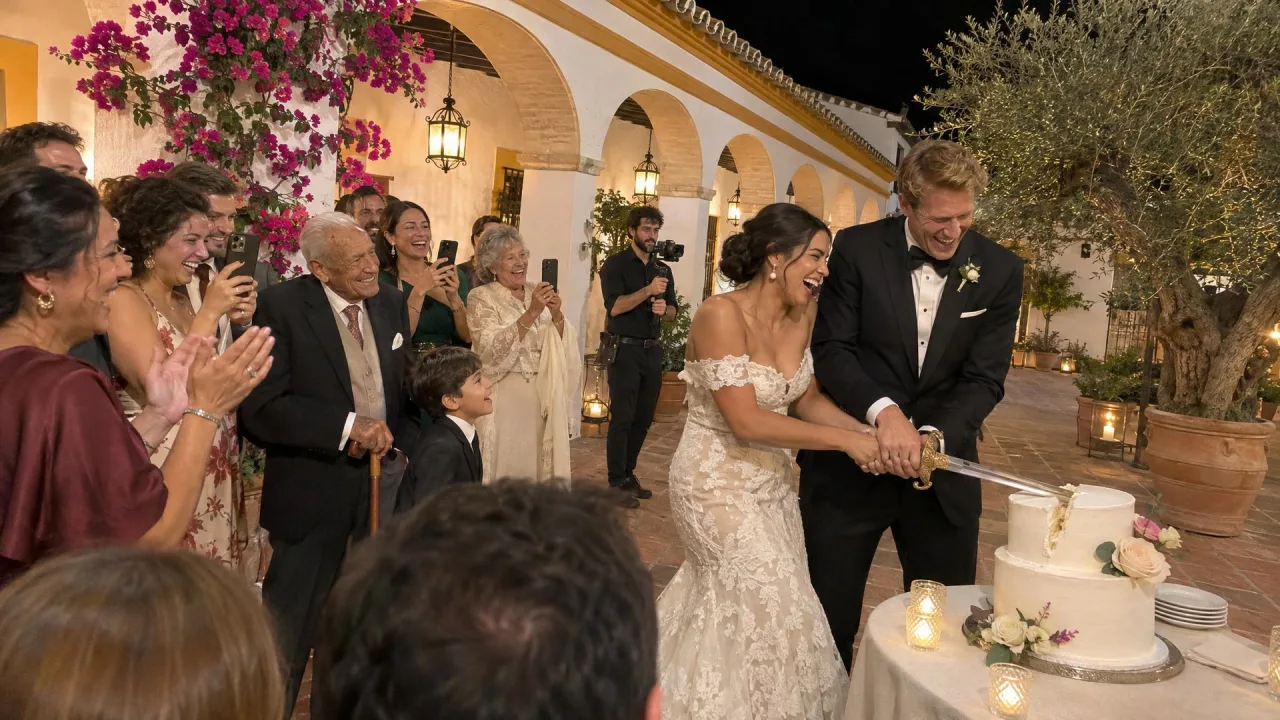
Food moments are some of the warmest scenes of a wedding day: grandparents trying jamón for the first time, the noise of a long table, the cake that will not cut straight, friends crowding the recena at two in the morning. When we make documentary and cinematic wedding films in Spain, the meal is where many of the real conversations happen, and the speeches usually land in the middle of dinner. Share the menu timeline with your video team so they know when the courses, toasts and cake are coming, and so they can eat at a moment when nothing important is happening. You can see how we work on our wedding videography in Spain page.
A quick checklist
- Map every food moment on your timeline; avoid gaps of more than about three hours.
- Keep the cocktail generous; it is the first meal of the evening.
- Add a recena if the party goes past midnight.
- Order for confirmed guests; the caterer's margin is already built in.
- Use the menu tasting to check real portions, not just flavour.
- Include crew meals, kids' menus and allergies in the final numbers.
Planning your wedding in Spain and want to talk about how the day will flow on film? Check your date with us.