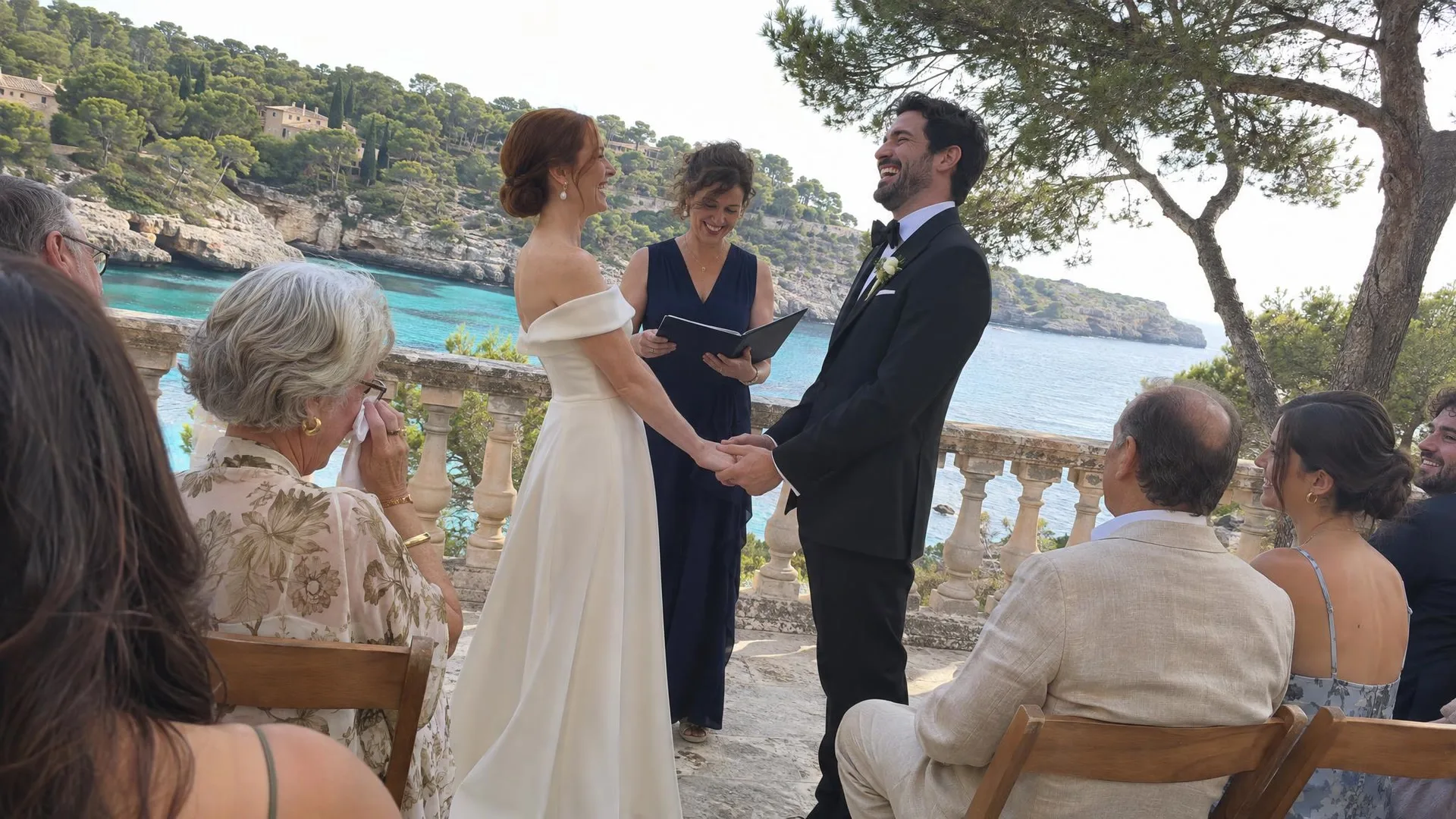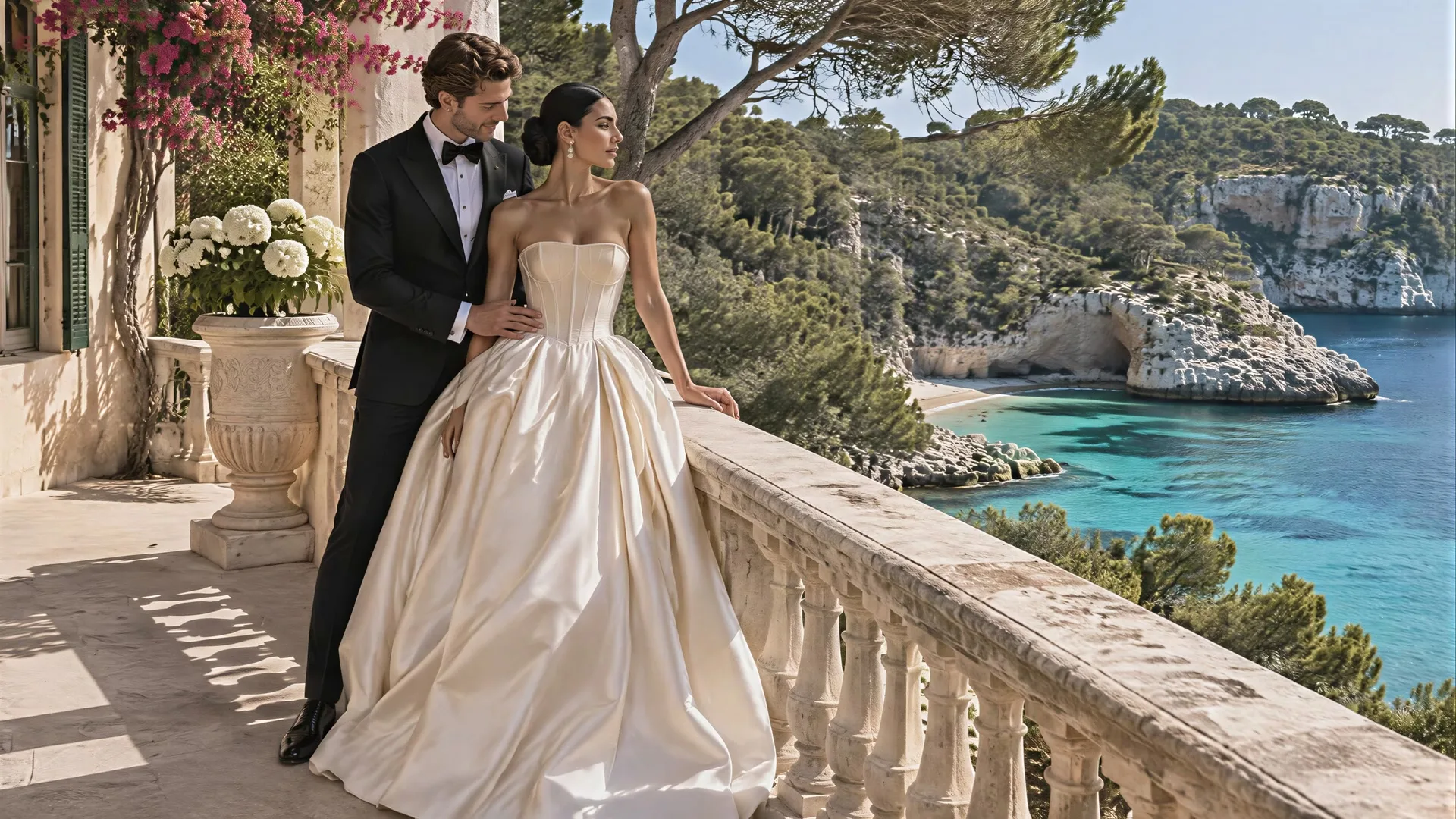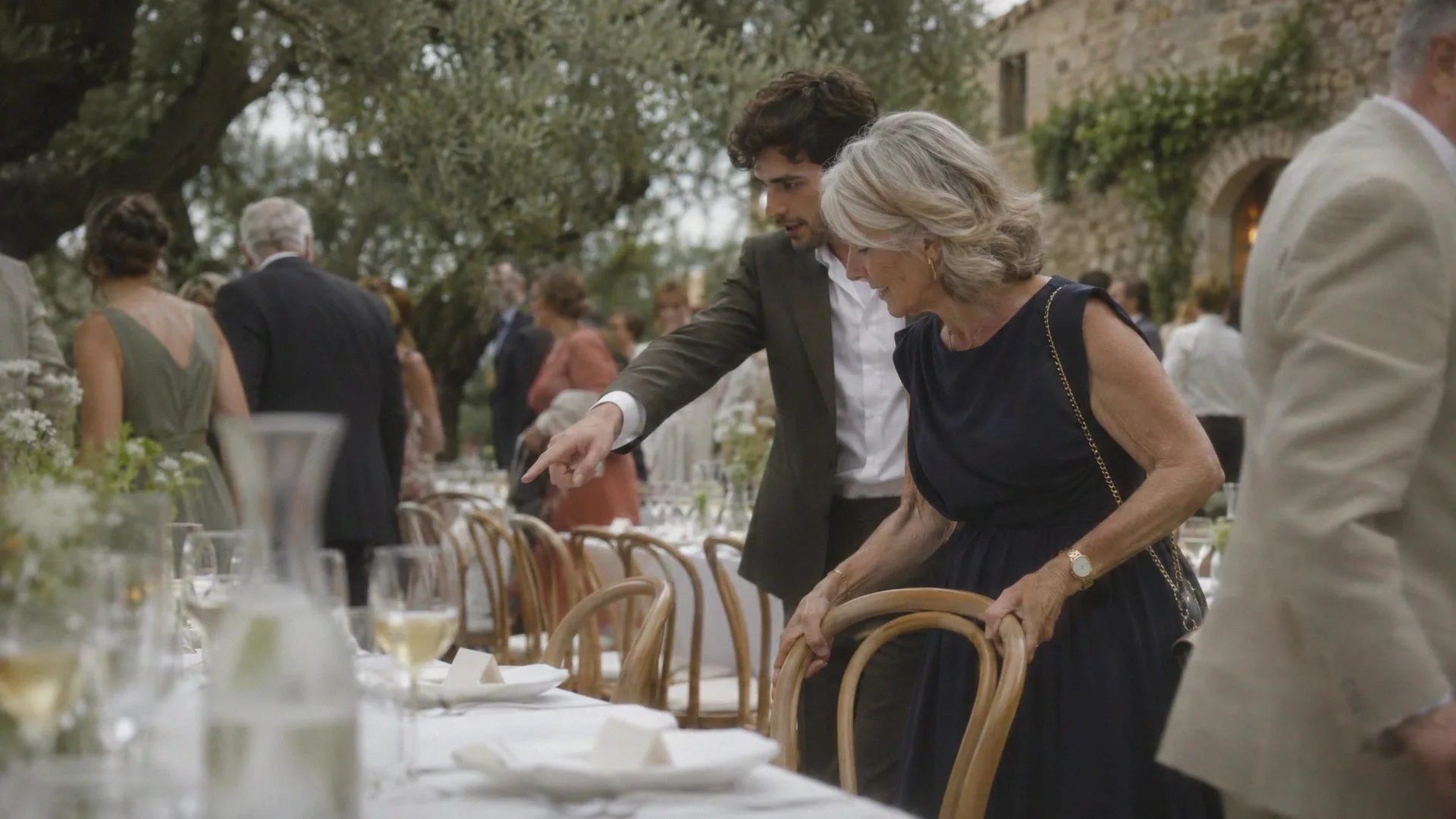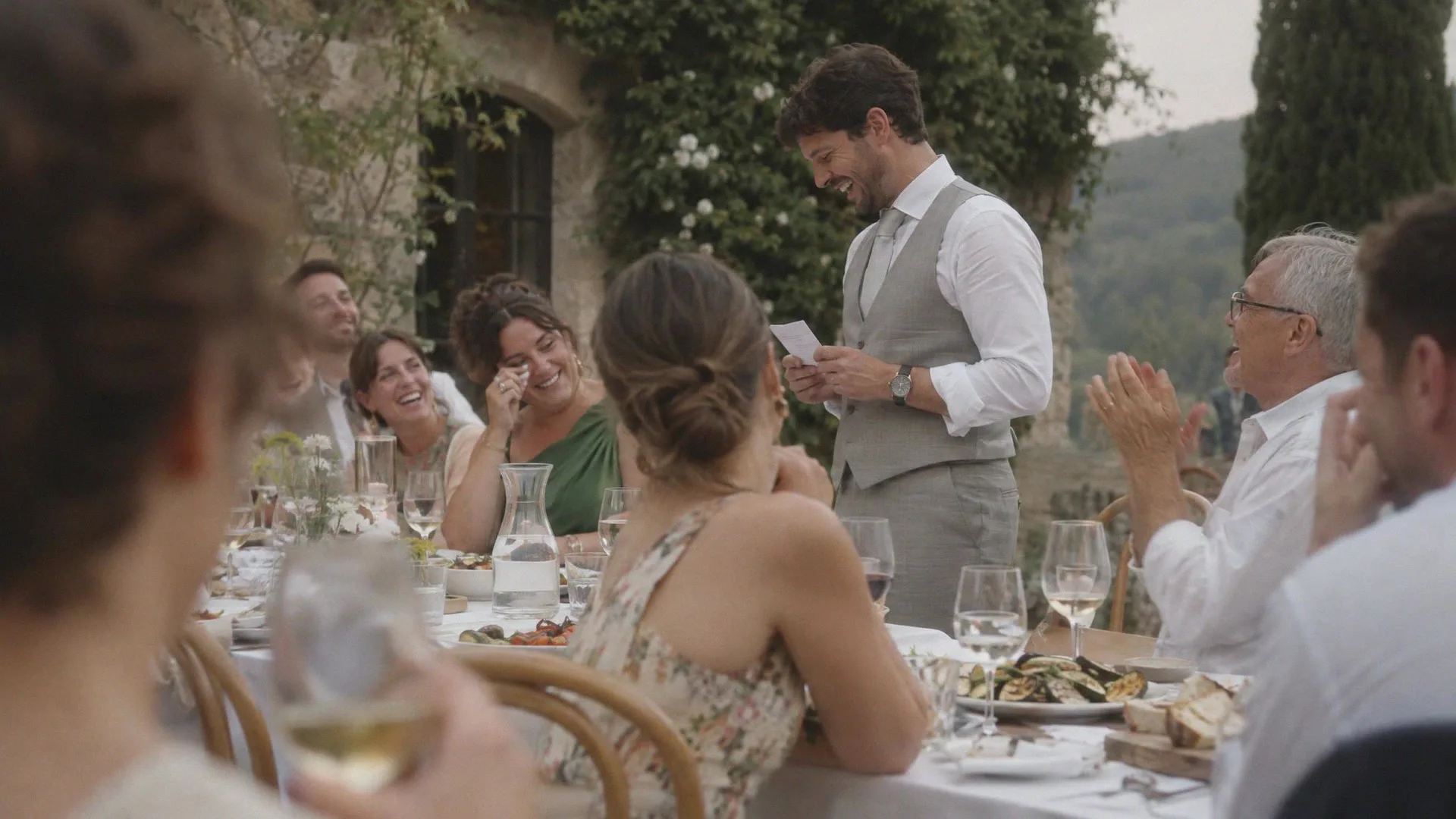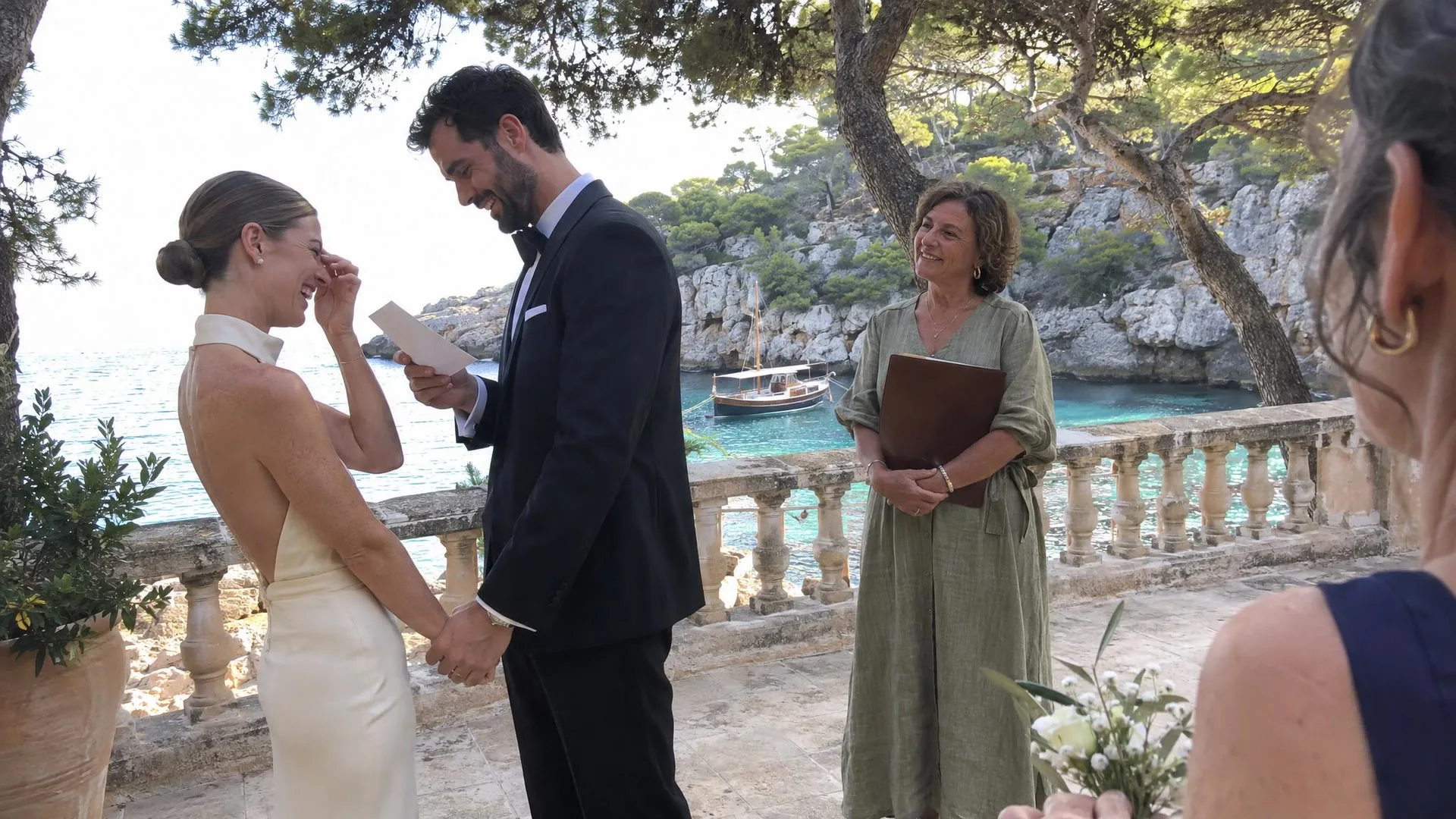
More couples are deciding to elope in Spain: a cove in Mallorca, a quiet morning in Barcelona, a long dinner in the Andalusian hills, and nobody else to host. The idea is simple. The planning is less obvious, because a symbolic ceremony abroad, local permits and an anxious family back home all need a plan.
A recent elopement thread asked a plain question, "what was your reason for eloping?", and drew about a hundred replies. The answers were remarkably consistent. People eloped because they did not want to be the centre of attention, because family opinions had taken over the planning, because they would rather put the money into a house or a long trip, or because they wanted the day to be about the two of them. Almost nobody said they regretted it. A second thread on the pros and cons of eloping filled in the other side: the main downside people mentioned was that some relatives felt left out.
This guide takes both threads and turns them into a practical plan for eloping in Spain: the legal part, where to go, how the day can run, what to budget for and how to share it with the people who were not there.
Be clear about why you are eloping
Reading through the replies, the happiest couples had a clear reason. "We hate being the centre of attention." "We wanted our savings for a home." "Our families could not agree on anything, so we chose nobody and peace." When someone asks why they were not invited, a short, honest reason lands far better than a long apology.
The same threads had a gentle warning. A few people said they eloped mainly to escape stress and later felt a little sad that a parent never saw them in the dress. That is not a reason to avoid eloping. It is a reason to plan how your family will be part of the story afterwards, which we cover below.
The legal part: symbolic in Spain, legal at home
This is the step that surprises most couples. A civil marriage in Spain is generally handled by the civil registry where one of the partners lives, so it normally requires at least one of you to be resident here. For a couple flying in for a long weekend, that rarely works.
So most couples who elope to Spain do the paperwork at home, before or after the trip, and hold a symbolic ceremony here with a celebrant, their own vows and no forms. Couples in the threads did it in both orders and nobody had problems. Some even kept the registry appointment private, so that the ceremony in Spain felt like the real wedding. Rules depend on your nationality and your situation, so check with your own registry or consulate. Our guide to legal requirements for getting married in Spain explains the options in more detail.
Where to elope in Spain
Spain gives you very different backdrops within a short flight:
- Mallorca and Menorca: turquoise coves, pine-covered cliffs, wooden boats and villas with terraces. Beautiful, but busy in July and August.
- Costa Brava: rocky coves, cliff paths and small towns, an hour or two from Barcelona airport.
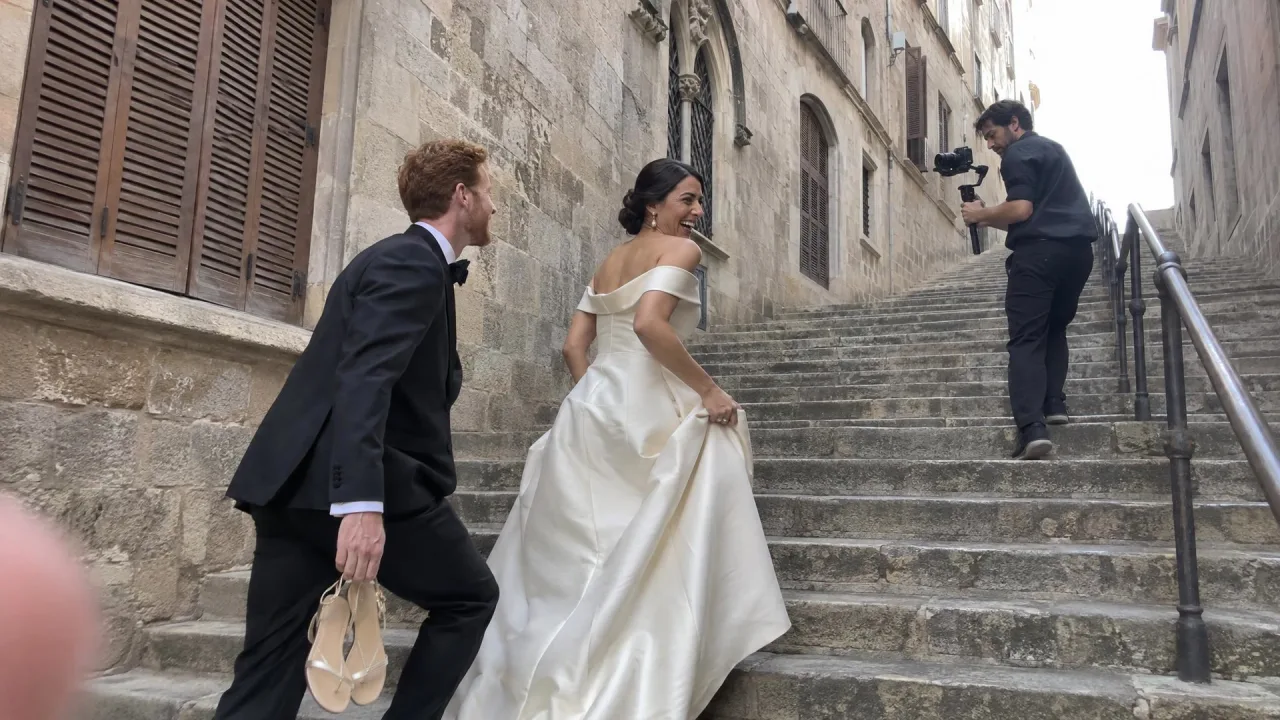
- Barcelona: stone streets and stairs that are empty only early in the morning, plus rooftops and gardens.
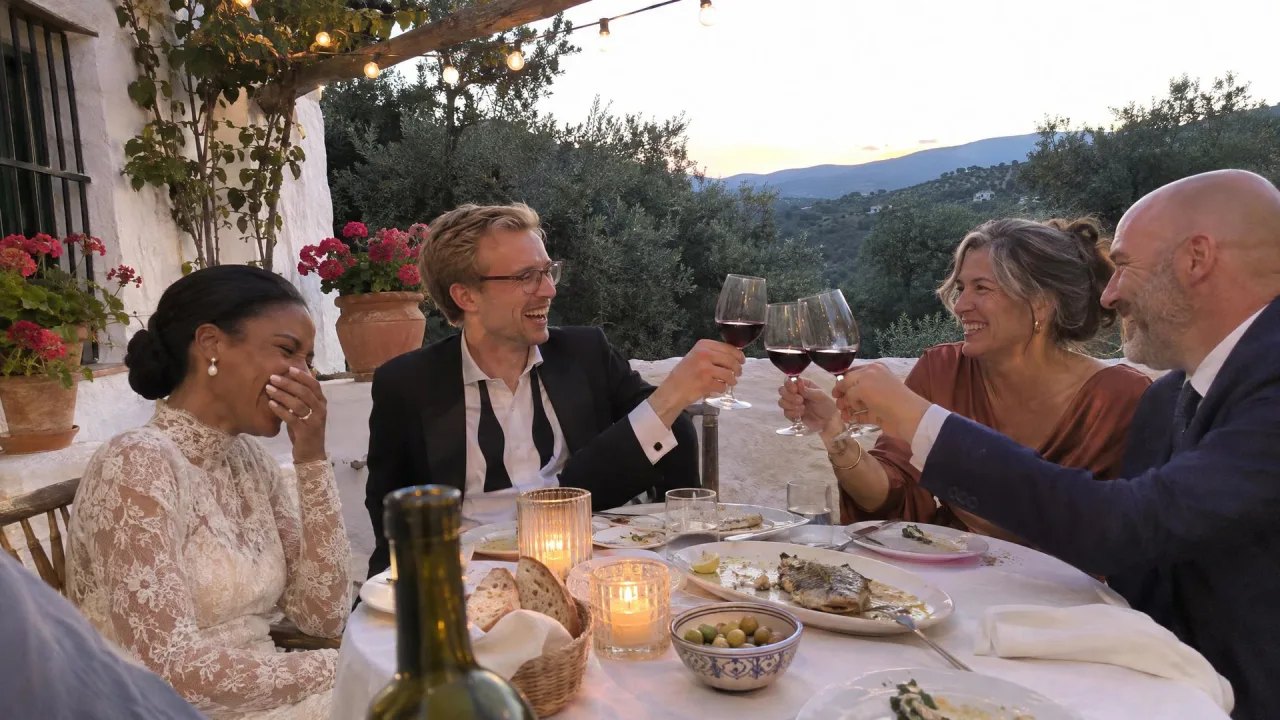
- Andalusia: white villages, olive groves, cortijos and long, warm evenings.
The biggest practical choice is private versus public. A beach, a square or a viewpoint is public, so you cannot reserve it, and a setup with chairs, an arch or a group standing in a circle may need permission from the local town hall. A villa terrace, a finca or a private boat avoids most of that and gives you a place to change, eat and hide from the wind. Many couples combine the two: a ceremony somewhere private, then a walk or a boat trip for the views.
Season matters as much as place. Late spring and September to October usually mean softer heat and fewer crowds. If you are still choosing a date, our guide on how to choose a destination wedding date in Spain covers heat, holidays and light.
A realistic elopement day
Without guests to manage, the day can follow the light. A simple plan for a September elopement on the coast might look like this:
- Slow morning. Breakfast, a swim, hair and makeup without a crowd in the room.
- Getting ready, 3:00 to 4:30 pm. Letters to each other, the dress, the last buttons.
- Ceremony around 5:30 pm. Late enough to avoid the hardest sun, early enough for the light to stay with you.
- Walk, boat or viewpoint, 6:30 to 8:00 pm. This is where many couples get the images they treasure.
- Dinner from 8:30 or 9:00 pm. That is a normal dinner time in Spain, so the restaurant or the villa chef will not find it late.
If you would like to start at dawn instead, Barcelona's old streets and the coves are almost empty then. One thing to keep in mind: hair and makeup at 5 am is a real commitment, and several people in the threads said so.
What to budget for
An elopement removes the biggest costs of a wedding, the guest count and the catering, but it does not remove everything. Couples in the threads listed the same few lines again and again:
- a celebrant for the symbolic ceremony;
- photos, film or both, because you will want the day captured even if nobody else is there;
- the outfits, which many people said they did not want to compromise on;
- hair and makeup;
- the place: a villa terrace, a finca, a boat hire or a permit;
- a very good dinner;
- flights and accommodation, which usually turn the elopement into a honeymoon too.
Several people said the total was a fraction of what even a small wedding would have cost. Others spent their savings on a couture gown or a top photographer and were happy with that choice. Both work as long as it is your choice. If you are weighing an elopement against a small celebration with your closest people, our guide to planning a small wedding in Spain covers the other option.

How to bring your family into it
The main downside people mentioned was family feeling excluded. The couples who handled it best did three things:
- They told people before, not after. A calm conversation a few months ahead goes over far better than a surprise photo on social media.
- They planned a celebration at home. A casual dinner, a brunch in a wine bar or a party a few weeks later gave everyone a chance to hug them, and nobody had to fly.
- They brought the day home. Photos, a film and a few recorded words for grandparents let people see the vows and the place, not just hear about them.
That last point is why film matters more at an elopement, not less. Nobody else heard your vows. A short film with your real voices, the wind and the sea is what you show your parents at that dinner at home.
Filming an elopement in Spain
An elopement is about as intimate as a wedding gets: two people, a celebrant, maybe a couple of witnesses. We make documentary and cinematic wedding films in Spain, from Mallorca and Menorca to Barcelona and the Costa Brava, and that approach suits an elopement well. Documentary because we follow what actually happens: the nerves before the vows, the laugh halfway through them. Cinematic because the scenes, the sound and the music are built into a story you will want to watch again.
A few practical points:
- Sound first. At an elopement, the vows are the whole programme. We use lavalier microphones and record sound separately, because wind on the coast is the enemy of every phone recording.
- Keep it light. One cinematographer is often enough for a ceremony for two. Our Mini package is built for that: up to six hours with one cinematographer, a 3 to 5 minute film, vertical reels and the raw footage, for €3,900 + IVA, with travel and accommodation separate. A teaser comes only with the Full and Full+ packages.
- Drone rules. Drone flights in Spain have their own rules, and many coastal and city areas are restricted. Ask before you plan an aerial shot around a specific spot.
For packages and what a film costs once travel is included, see our guide to wedding videographer prices in Spain.
Quick checklist for eloping in Spain
- Write down your reason for eloping in one sentence.
- Decide on legal at home and symbolic in Spain, and check your own country's rules.
- Choose private versus public, and ask about permits if it is public.
- Pick the season and plan the day around the light.
- Book the celebrant and the photographer or film team first, then the place and the dinner.
- Tell your family early and plan a celebration at home.
- Make sure the vows are recorded with clean sound.
If you are planning to elope in Spain and want to talk about how to film it, check your date with us and tell us where you are thinking of going.