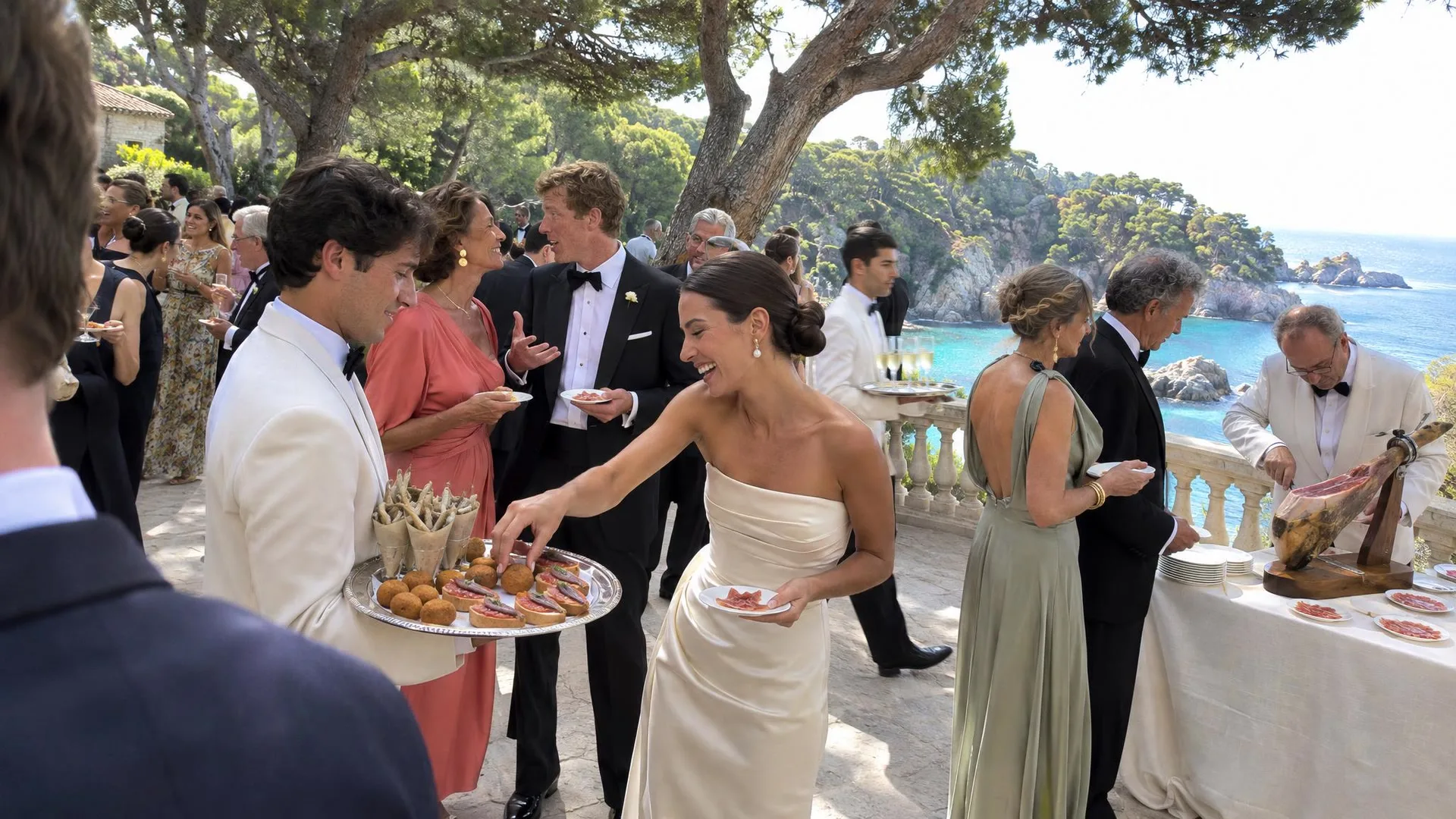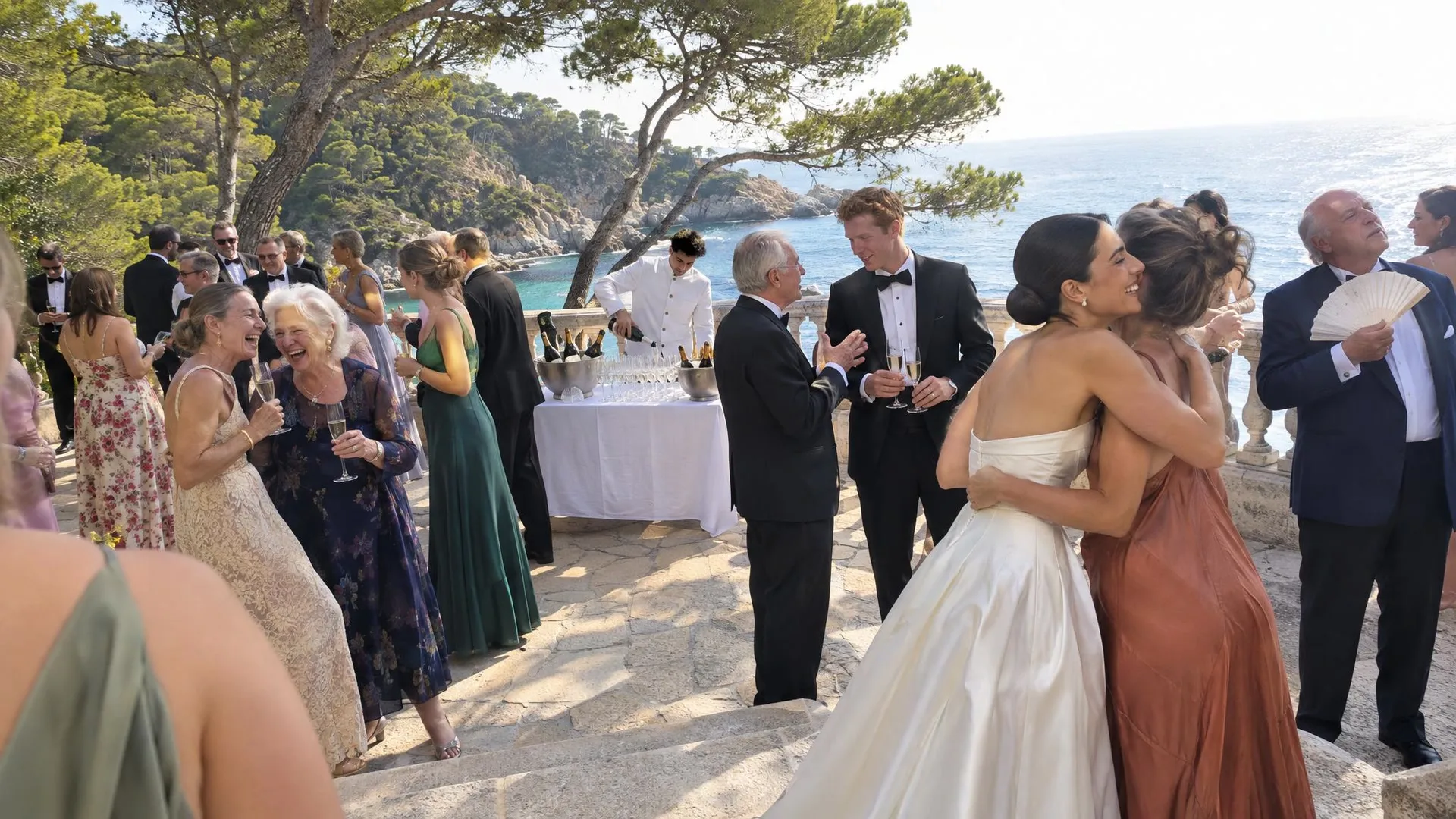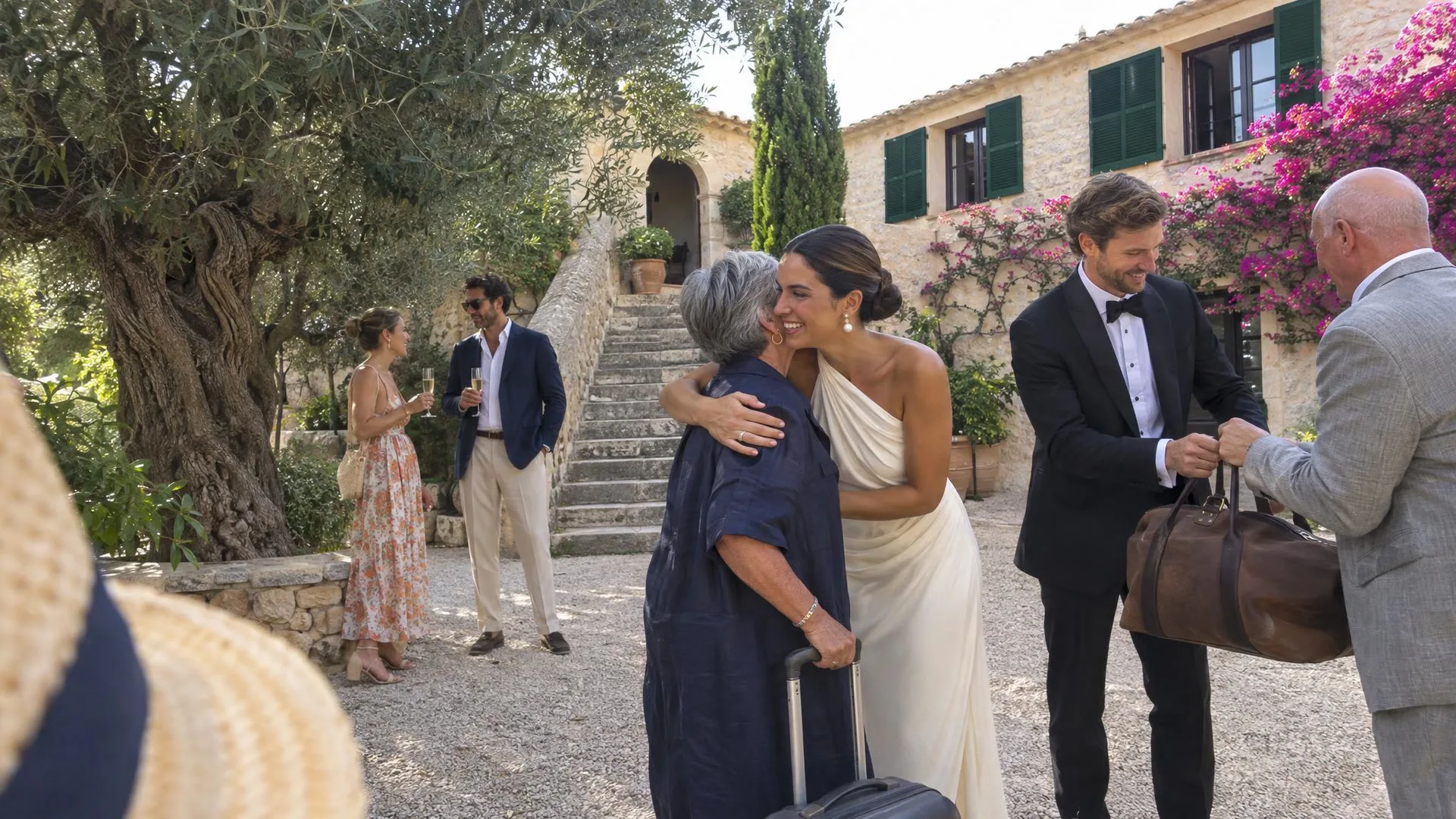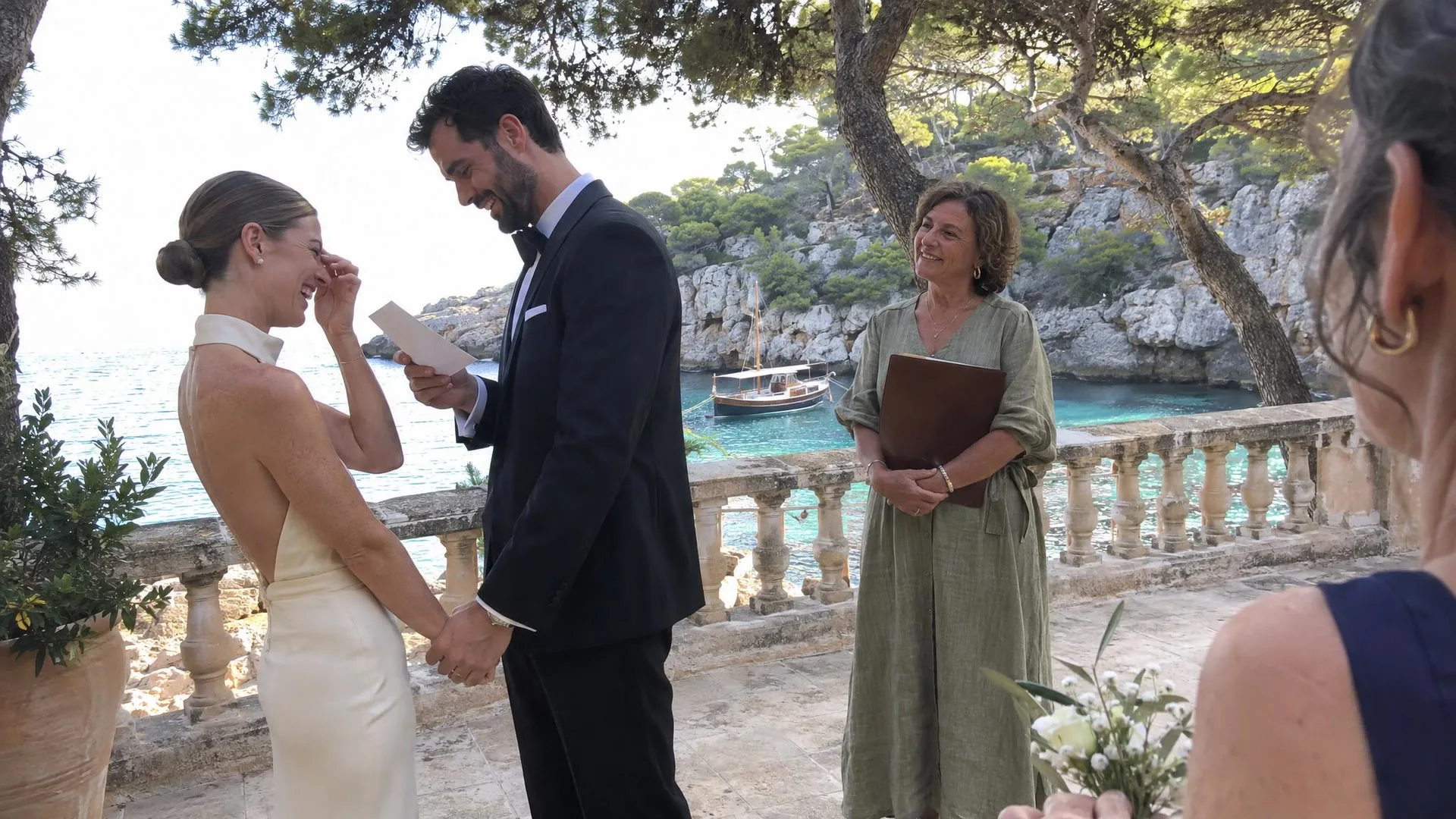
Spanish rental villas from Catalonia and Valencia to Andalusia, the Balearics, and many inland fincas keep a tall plátano de sombra—London plane or hybrid plane (Platanus × hispanica, also called plátano de paseo)—as avenue shade along drives, courtyards, and pool approaches. Guests confuse it with “the peeling eucalyptus,” collect decorative bark sheets, park under dropping fruit balls, or hang fairy lights from brittle outer limbs before the welcome drink. It is not a eucalipto, not a pino piñonero, not an encina, not an olivo, and not a free craft supply. A short briefing on bark, leaves, pollen, fruit balls, and caretaker-only pruning protects the tree—and the timeline—through the wedding weekend.
Why Plátano de Sombra Belongs in the Guest Briefing
Plane trees are classic Spanish estate and street trees: broad summer canopies that throw deep midday shade, appear in wide establishing shots, and often mark the line between parking and the house. Destination-wedding villas use mature plátanos as informal welcome landmarks, as shade for morning coffee on gravel courts, or as a green ceiling over long outdoor tables. International visitors often assume every peeling trunk is eucalyptus, that mottled bark flakes are fair-game décor, or that the maple-like leaves mean the tree is as sturdy as an oak for hanging décor. Clarify the Spanish name early so guests treat the plátano de sombra as living estate infrastructure, not a souvenir stand.
What Guests Are Looking At (And What It Is Not)
A villa plátano de sombra has a tall trunk with patchy cream-to-olive peeling bark, large lobed leaves that look vaguely maple-like, and hanging seed balls in season. It is not a eucalipto (different leaf shape, stronger leaf oil scent, and different peel pattern). It is not a pino piñonero (no needles, no pine cones). It is not an encina or alcornoque (those are evergreen oaks with hard leaves and, for cork oak, thick cork). It is not an olivo (silvery fruit canopy). If guests ask “is that the eucalyptus?”, answer with the Spanish name and one clear visual: lobed leaves and plane-tree “pom-pom” fruit, not lance eucalyptus leaves.
Bark, Leaves, and the Messy Reality of Shade
Plane bark sheds in irregular plates through warm months, leaving a mottled puzzle of pale and darker patches. Leaf drop is heavy in autumn and after wind; summer shade comes with sticky honeydew if aphids are active. Brief guests not to peel bark for place-card backings, not to rake leaf piles into fire-pit fuel without asking, and not to treat the gravel under the canopy as a clean dance floor without checking with the caretaker. The shade is a gift; the litter is part of the deal.
Pollen, Seed Balls, and Where Guests Sit
Spring pollen from planes can bother sensitive guests, and the bristly seed balls drop onto tables, towels, and pool edges later in the season. Prefer seating for allergy-prone family slightly outside the densest canopy during peak pollen weeks, and keep pool skimmers and table linens in the weekend checklist if the ceremony or lunch sits under mature plátanos. Bees may work nearby blossoms in the garden, but the plane itself is more about litter and pollen than nectar drama—still, do not place open desserts directly under heavy drip after rain.
Shade, Photos, and Furniture Placement
Plátanos give soft, even shade that flatters film and photography better than harsh open terrace sun—use them for morning coffee, getting-ready spillover, and long lunch tables when the forecast spikes. Keep heavy sofas and bars off surface roots and away from the dripline where bark flakes and fruit balls collect. For portraits, the mottled trunk is a strong vertical; ask guests not to carve initials or tape signs to the bark. Fairy lights belong on caretaker-approved frames or pergolas, not stapled into living plane limbs.
Roots, Parking, and Falling Debris
Mature planes lift paving and prefer guests not to park flush against the trunk. Falling twigs after Meltemi-style winds or Mediterranean storms can ding cars and bruise soft-tops. Mark a clear parking line beyond the canopy edge, and remind drivers that “shade parking” under the plátano is sometimes the riskiest spot after a windy night. Kids’ games with sticks should stay in open lawn, not among root flares where trips and bark damage happen together.
Climbing, Kids, and Caretaker-Only Pruning
Plane limbs look climbable; many are not load-rated for adults or hanging speakers. No climbing, no rope swings, no DIY pruning before the rehearsal dinner. Broken leaders and flush cuts invite disease and leave the estate with an emergency call on your wedding morning. Put “caretaker only touches the plátanos” in the house rules beside pool hours and quiet time. If a branch already hangs low over a walkway, request professional clearance days before guests arrive—not the morning of.
How to Phrase It in the Guest Notes
Keep it short and practical: “The tall trees with mottled peeling bark and maple-like leaves are plátanos de sombra (plane trees)—beautiful shade for coffee and lunch. Please don’t peel the bark, hang lights on the branches, or park tight under the canopy after windy nights. They’re not eucalyptus; leave pruning to the caretaker.” One Spanish name, one don’t-list, one photo tip is enough for the WhatsApp group and the welcome folder.
Weekend Checklist for Couples and Planners
- Name the trees in guest notes: plátano de sombra / plane tree—not eucalyptus, pine, or oak.
- Check seating for pollen-sensitive guests if the wedding falls in peak spring bloom weeks.
- Plan table linen and pool skim under heavy canopies when seed balls or honeydew are active.
- Keep décor frames off living limbs; use freestanding structures the venue already allows.
- Park beyond the dripline after storms; never against the trunk.
- Route any low-limb clearance through the caretaker or arborist before guest arrival.
- Use the mottled trunks for portraits; ban carving, tape, and staples.
- Repeat the “no climbing / caretaker-only pruning” line in the day-of briefing with ushers.
Treating the villa’s plátanos de sombra as shared infrastructure—shade first, décor second—keeps international guests comfortable, protects a signature Spanish estate tree, and leaves your destination-wedding film with clean canopy light instead of last-minute branch drama.