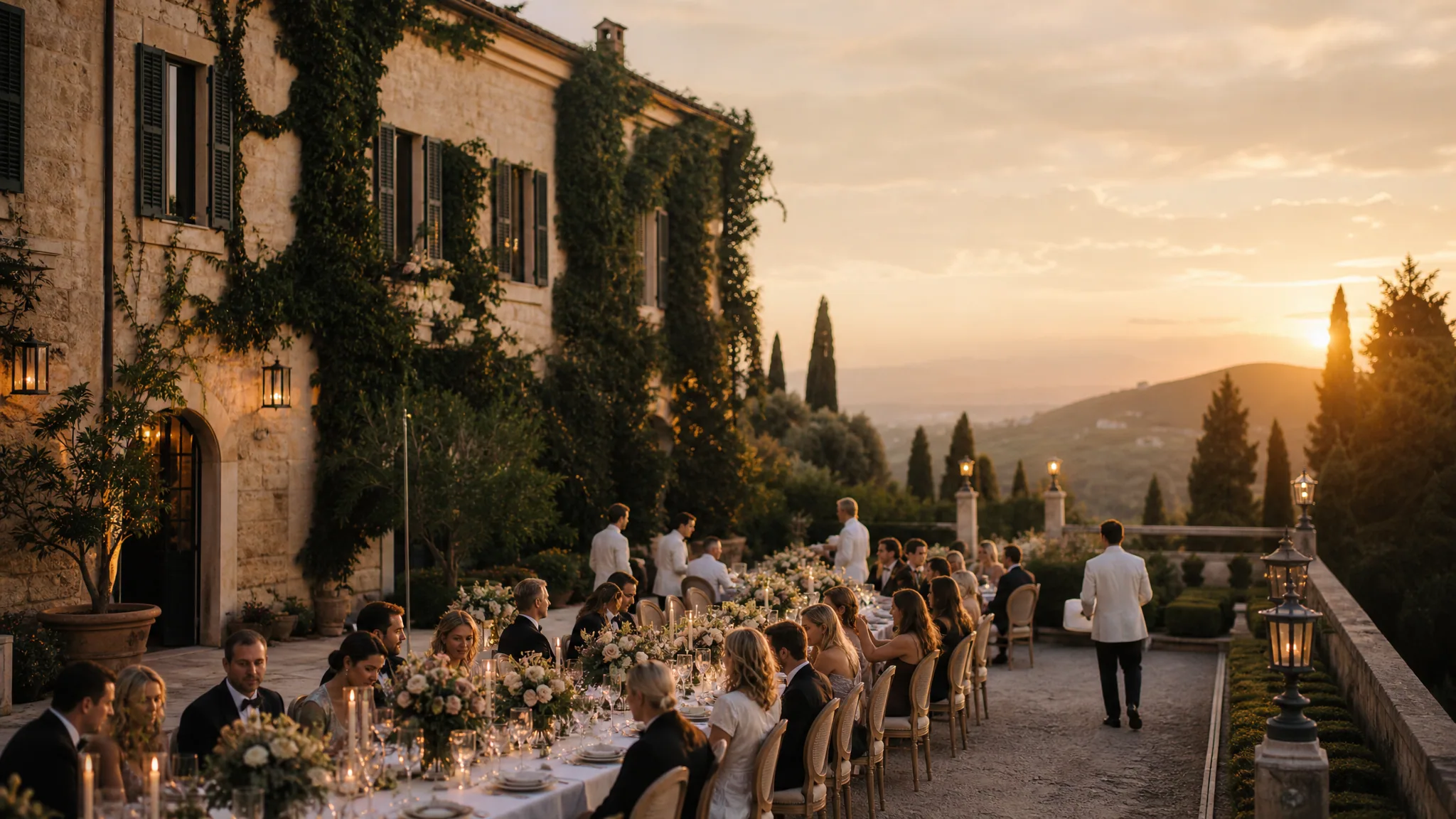
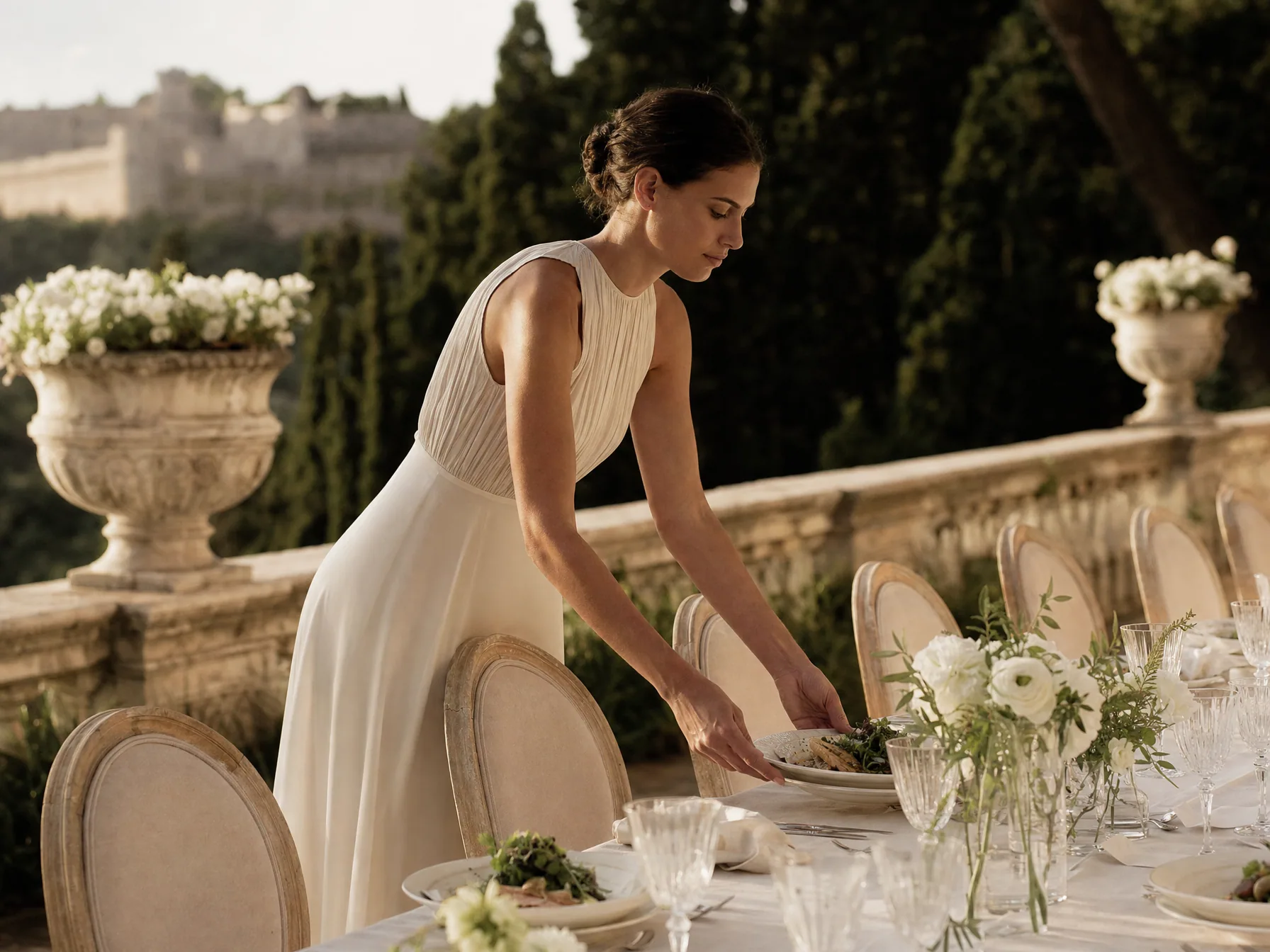
Spanish destination weddings are remembered for long tables under plane trees, late dinners, and food that feels like hospitality rather than a plated performance. For international couples, though, catering is also one of the highest-risk logistics: guests arrive from different countries, kitchens work in Spanish, and dietary needs are easy to lose between RSVPs, WhatsApp threads, and a final headcount.
If you are planning a wedding in Spain with a mixed guest list, dietary restrictions and catering communication deserve the same attention as transport or the ceremony timeline. Done well, nobody notices. Done poorly, a beautiful evening becomes stressful for the people you most wanted to celebrate with.
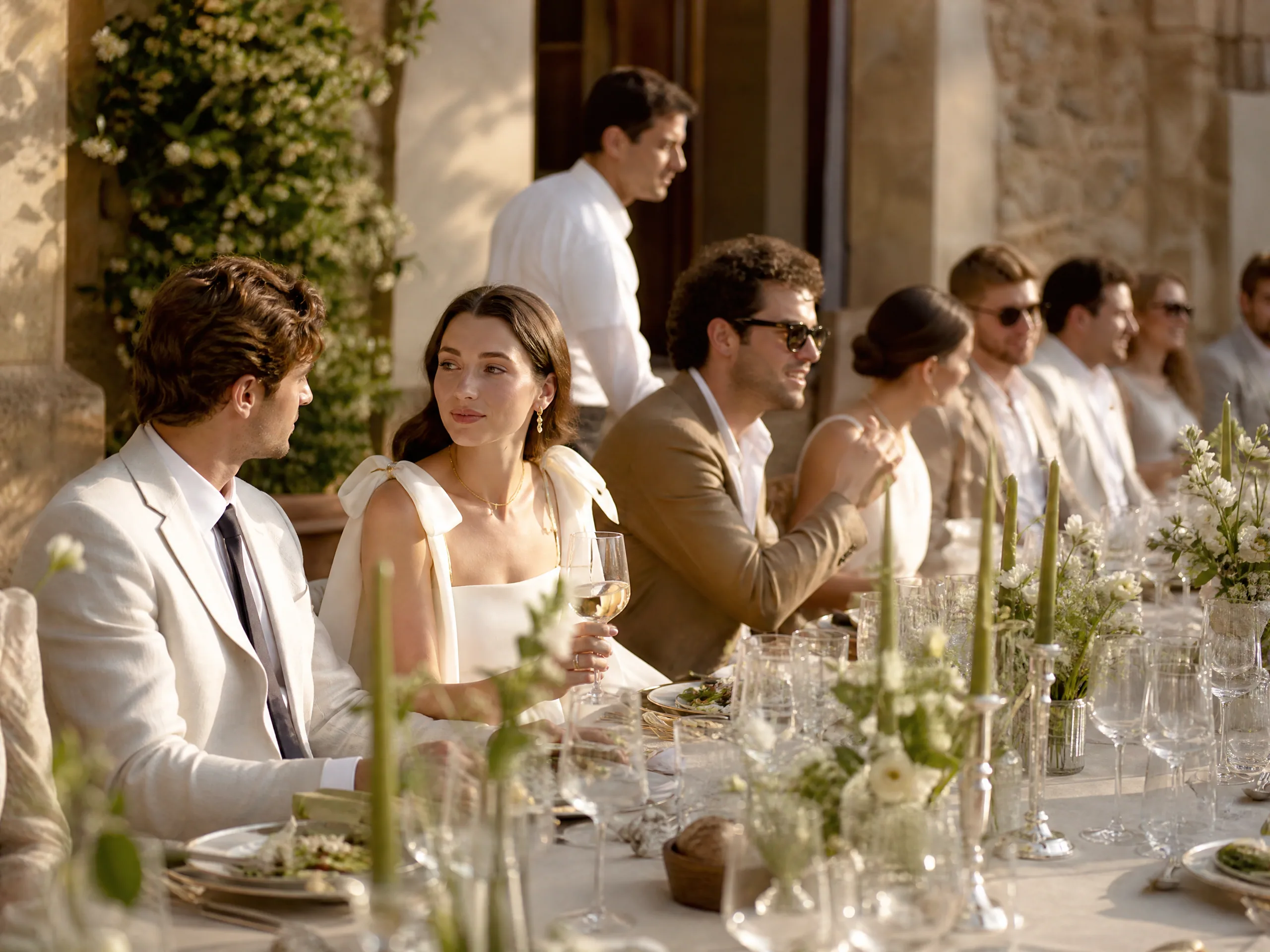
Why dietary logistics matter more at a destination wedding
At a hometown wedding, a cousin can quietly mention a nut allergy to your mother. At a destination wedding in Spain, that same information may sit in an email nobody forwarded to the venue, or arrive in English three days before the event.
Guests are also more dependent on your wedding meals. They may not know local restaurants, may have limited transport, and may have already spent heavily to travel. A dinner they cannot eat feels less like an inconvenience and more like exclusion.
Spanish venues and caterers are generally excellent at accommodating needs when they receive clear, timely information. The gap is rarely skill — it is translation, timing, and incomplete guest data.
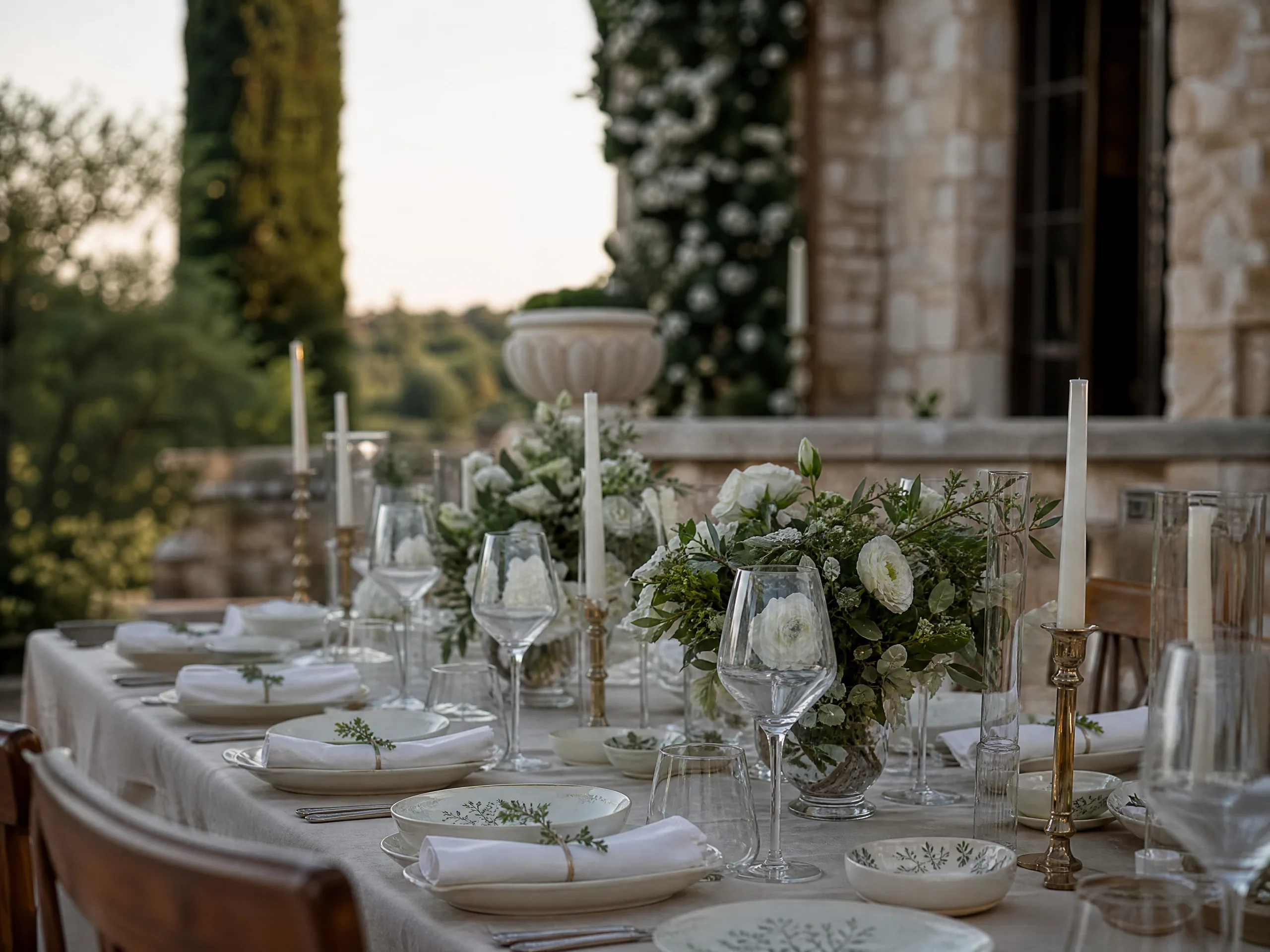
Build one source of truth for guest dietary needs
Do not collect food information across five channels. Create one system — a wedding website form, RSVP tool, or shared spreadsheet — and treat it as authoritative.
Ask for specifics, not vague labels. “Vegetarian” can mean many things. “Severe peanut allergy — cannot share fryers or sauces” is actionable. Useful fields include:
- Guest name and meal events they will attend (welcome dinner, wedding day, brunch)
- Restriction type: allergy, intolerance, religious, ethical, preference
- Severity: mild preference vs medical risk
- Cross-contamination notes
- Language of the guest (helpful when staff need to confirm at the table)
Set a hard deadline — typically 10–14 days before the first hosted meal — and send one polite reminder. Late changes are possible, but they should be the exception, not the planning method.
Translate needs into language Spanish kitchens can use
Many Spanish caterers speak some English, especially at international venues, but kitchen teams often work fastest in Spanish. Do not send a paragraph of casual English and hope it survives.
Prepare a short bilingual brief for the planner or venue coordinator:
- Guest count by restriction category
- Named high-risk allergies (nuts, shellfish, gluten with celiac confirmation, dairy)
- Religious requirements (halal, kosher-style where possible, no pork/alcohol)
- Children’s meals if relevant
- Which courses are shared vs plated
Use precise Spanish terms where you can: alergia, intolerancia, celíaco/a, sin gluten, sin lactosa, vegetariano, vegano, sin frutos secos, sin marisco. If a restriction is medical, say so clearly. Preference and medical risk are not the same instruction for a kitchen.
Understand how Spanish wedding menus usually work
Many Spanish wedding dinners are structured as a shared experience: welcome drinks and canapés, a seated multi-course meal, late-night snacks, and open or semi-open bar. That format is warm and social — and it complicates allergies if canapés circulate without labels.
Ask early:
- Is the menu fixed tasting-style, or can individual plates be swapped?
- Are canapés labeled, or will waitstaff be briefed to guide guests?
- Will vegetarian/vegan dishes be true alternatives, or side dishes upgraded?
- How are children’s portions handled?
- Is there a late-night food moment that also needs alternatives?
International couples sometimes assume the “main” plated dinner is the only meal that matters. In Spain, the welcome party and post-ceremony cocktail can be where hungry travelers actually eat first. Cover every hosted food moment, not only the wedding dinner.
Handle allergies, religion, and preference as separate tracks
Mixing everything into one “special meals” list creates mistakes. Separate your planning into three tracks:
Medical allergies and celiac needs. These require kitchen protocol, not just a different garnish. Confirm whether the venue can prevent cross-contact, especially with nuts, shellfish, and gluten. If the answer is uncertain, escalate early with your planner.
Religious or cultural requirements. Pork-free, alcohol-free, halal, or kosher-style expectations should be discussed before you lock a menu concept. Not every Spanish venue can provide certified options, but many can design respectful alternatives if asked in time.
Preferences. Vegetarian, pescatarian, low-carb, or “no cilantro” requests matter for guest comfort, but they should not crowd the allergy workflow. Keep them visible without diluting urgency.
Coordinate with the planner, venue, and creative team
Dietary planning is not only a catering conversation. Your planner needs the final matrix for seating and place cards. Your venue needs staffing notes. Your photo and film teams benefit from knowing if certain guests must be served differently or if a blessing around food will happen.
If you are working with a cinematic documentary team like KUDRYASTUDIO, dinner is often one of the richest storytelling chapters of the day: toasts, laughter, the first real exhale. Guests who feel safe eating are guests who stay present — and that presence is what reads on camera.
Practically, share the dietary matrix in the same week you finalize the seating chart. Last-minute seat changes are common; make sure allergy guests are not accidentally moved away from informed waitstaff zones.
Use place cards, quiet cues, and staff briefings on the day
Elegant service does not require announcing someone’s allergy to the whole table. Simple systems work:
- Coded place cards or discreet symbols agreed with the venue
- A printed kitchen list by table number
- A short pre-service briefing for waitstaff
- One point person (planner or coordinator) for day-of substitutions
For severe allergies, ask whether the plate will be prepared separately and delivered with confirmation to the coordinator. Guests should never have to interrogate every server in a second language while everyone else starts eating.
Also brief the bar and late-night food teams. Nut garnishes in cocktails, shared fryers for croquettes, and a single-version midnight bocadillo are common blind spots. Request at least one non-alcoholic option that feels intentional, and at least one late-night alternative that matches your main dietary groups.
A practical timeline for international couples
Use this sequence when you are planning from abroad:
- 4–5 months out: Discuss catering style and restriction capacity with venue/planner.
- 3 months out: Put dietary questions into RSVPs; explain why specifics matter.
- 6 weeks out: Send your first consolidated matrix in English + Spanish summary.
- 3 weeks out: Lock menu adaptations; confirm children’s and high-risk allergy protocols.
- 10–14 days out: Freeze numbers except emergencies.
- 48 hours out: Final briefing document to planner/venue with table map references.
- Wedding day: Coordinator owns exceptions; couple stays out of kitchen logistics.
If a guest messages a new allergy two days before the wedding, route it through the planner immediately. Do not rely on memory during getting-ready chaos.
What calm dinner service looks like
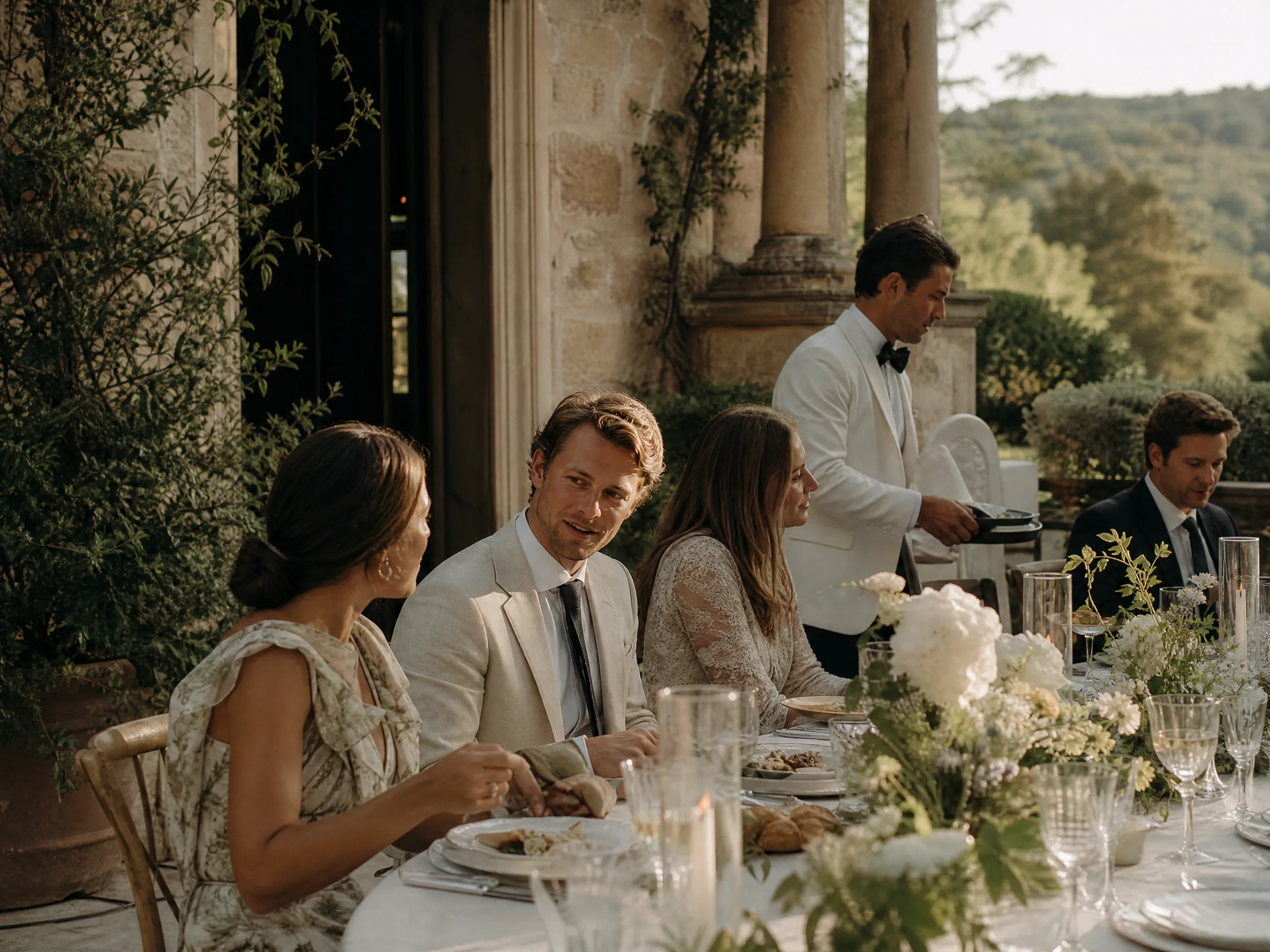
You will know the system worked when service feels calm: vegetarian guests receive complete dishes, allergy plates arrive without public fuss, waitstaff already know who needs what, and nobody is left negotiating ingredients mid-toast.
Destination weddings in Spain are meant to feel generous. Clear catering communication is one of the quiet ways you extend that generosity — across languages, cultures, and the very real needs of the people who traveled to stand with you.
Collect the details early. Translate them precisely. Brief the room once. Then let the long Spanish dinner do what it does best: turn logistics into atmosphere.


