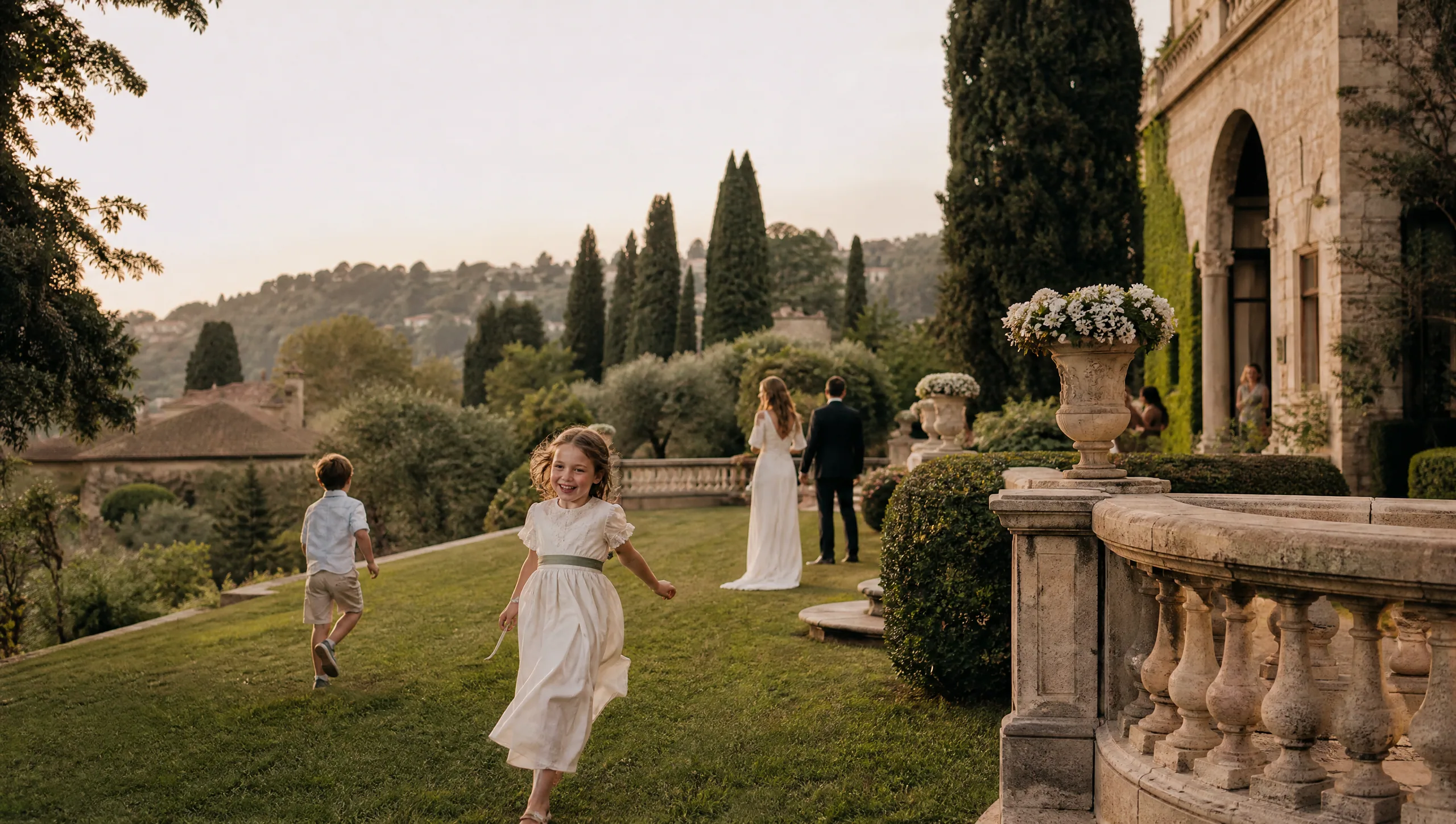

Destination weddings in Spain often become multi-generational weekends. Cousins fly in, grandparents stay nearby, and a handful of toddlers turn the welcome party into a family reunion. That energy is part of the joy — until ceremony time, dinner service, or a late Spanish evening when tired children need a plan that was never written down.
This guide is for international couples who want kids at the celebration without guessing how Spanish venues, caterers, and local childcare work. The goal is simple: give parents clear expectations so your wedding day stays warm, calm, and filmable.
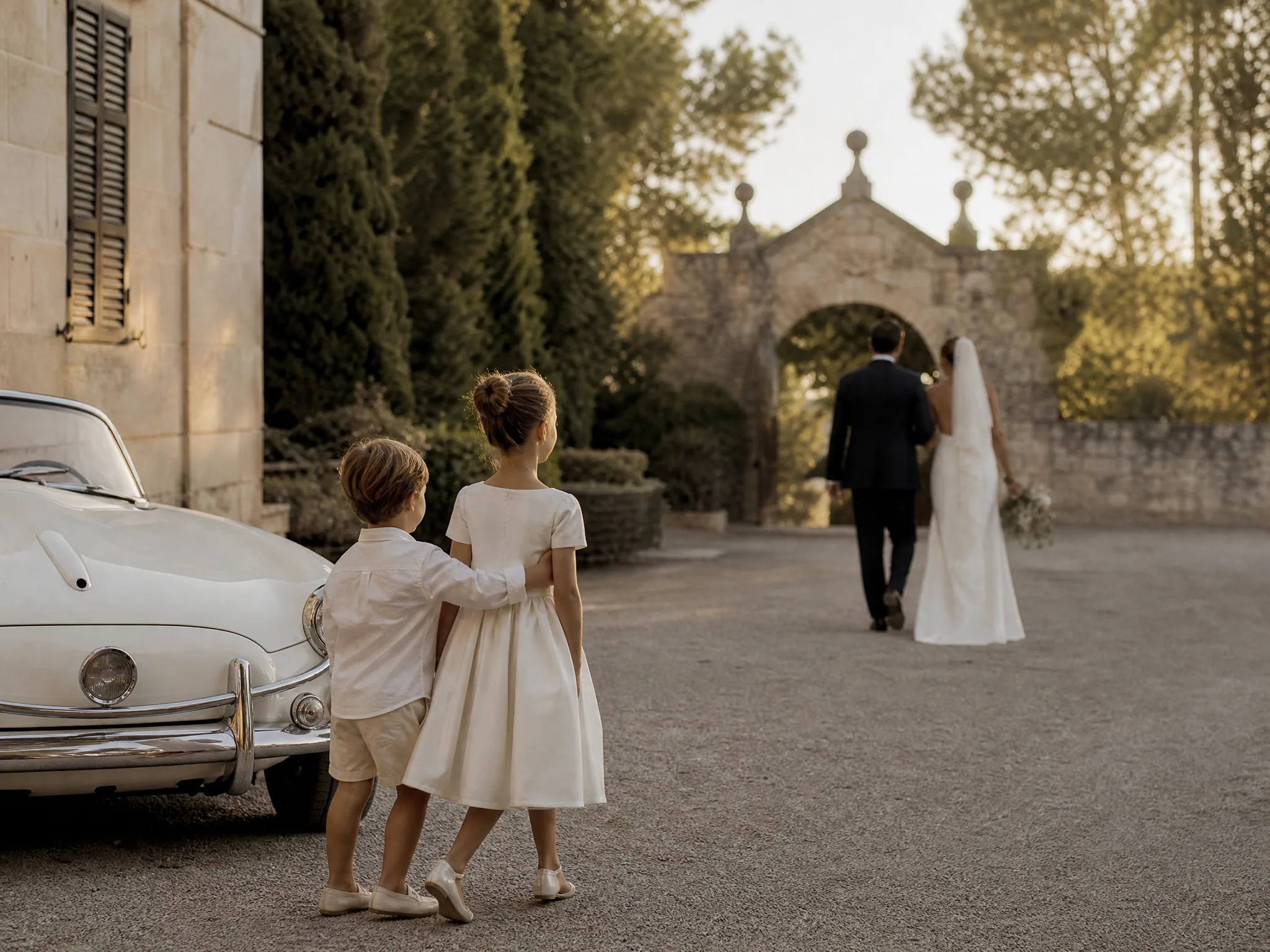
Decide What Kind of Kids Presence You Actually Want
Start with a clear policy before invitations go out. Some couples welcome children to the full weekend; others invite them to the ceremony and welcome party only; others keep the reception adults-only after a set hour. None of these choices is wrong — unclear communication is.
Put the policy in one sentence on your wedding website and repeat it in travel notes. International guests book flights early. If childcare, early dinner seating, or a kids' cut-off time is part of the plan, they need that information while arranging hotels and babysitters.
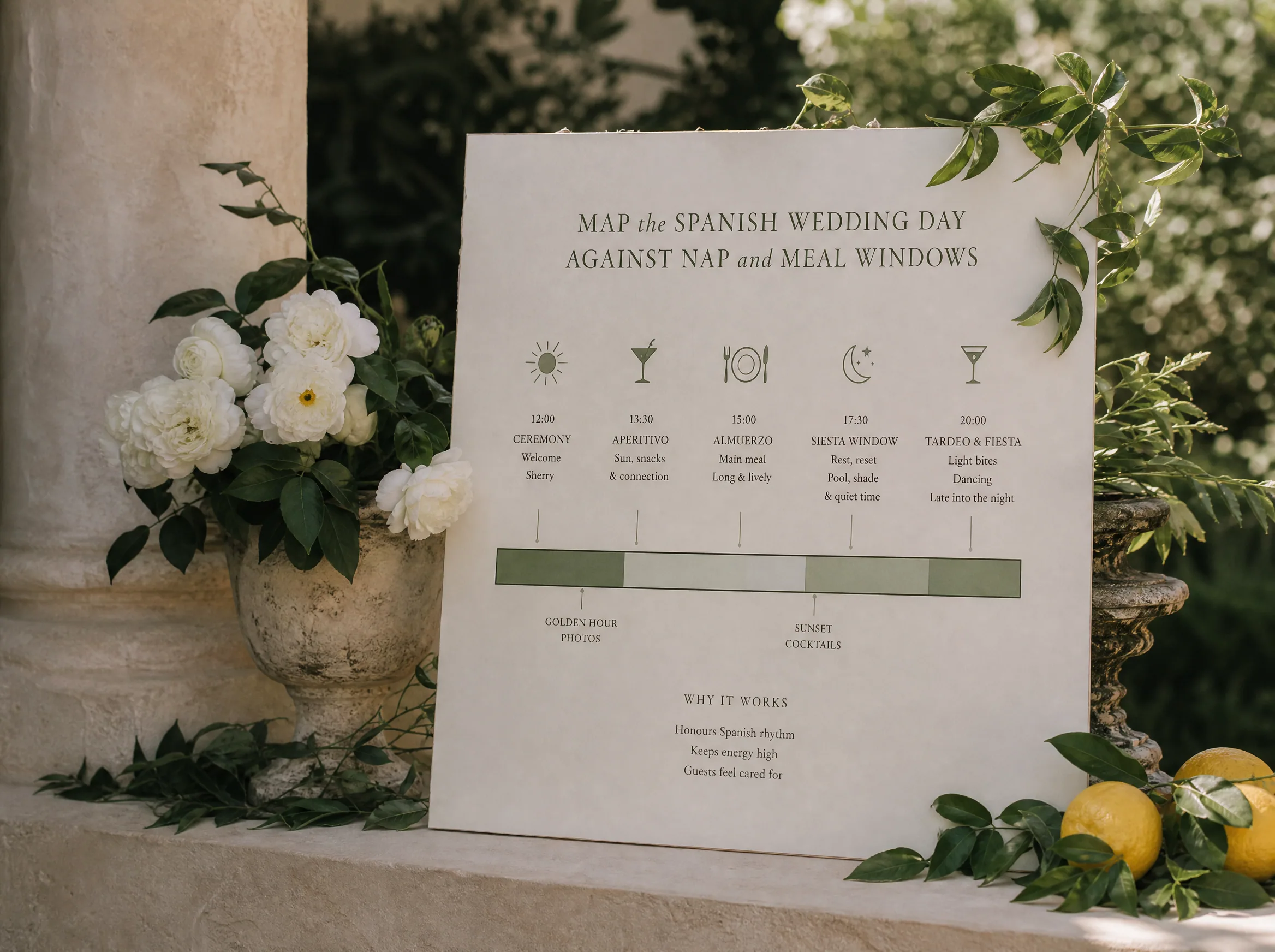
Map the Spanish Wedding Day Against Nap and Meal Windows
Spanish wedding timelines often run later than Northern European or US schedules. Cocktails may begin near sunset, dinner after 9 p.m., and dancing closer to midnight. That rhythm is beautiful for adults and hard on small children who ate lunch at noon in another time zone.
Build a kids-aware version of the day: a substantial afternoon snack, an early kids' dinner option, and a clear handoff time for parents who want to stay for speeches. Your planner or day-of coordinator can hold this parallel timeline so it does not compete with the main run of show.
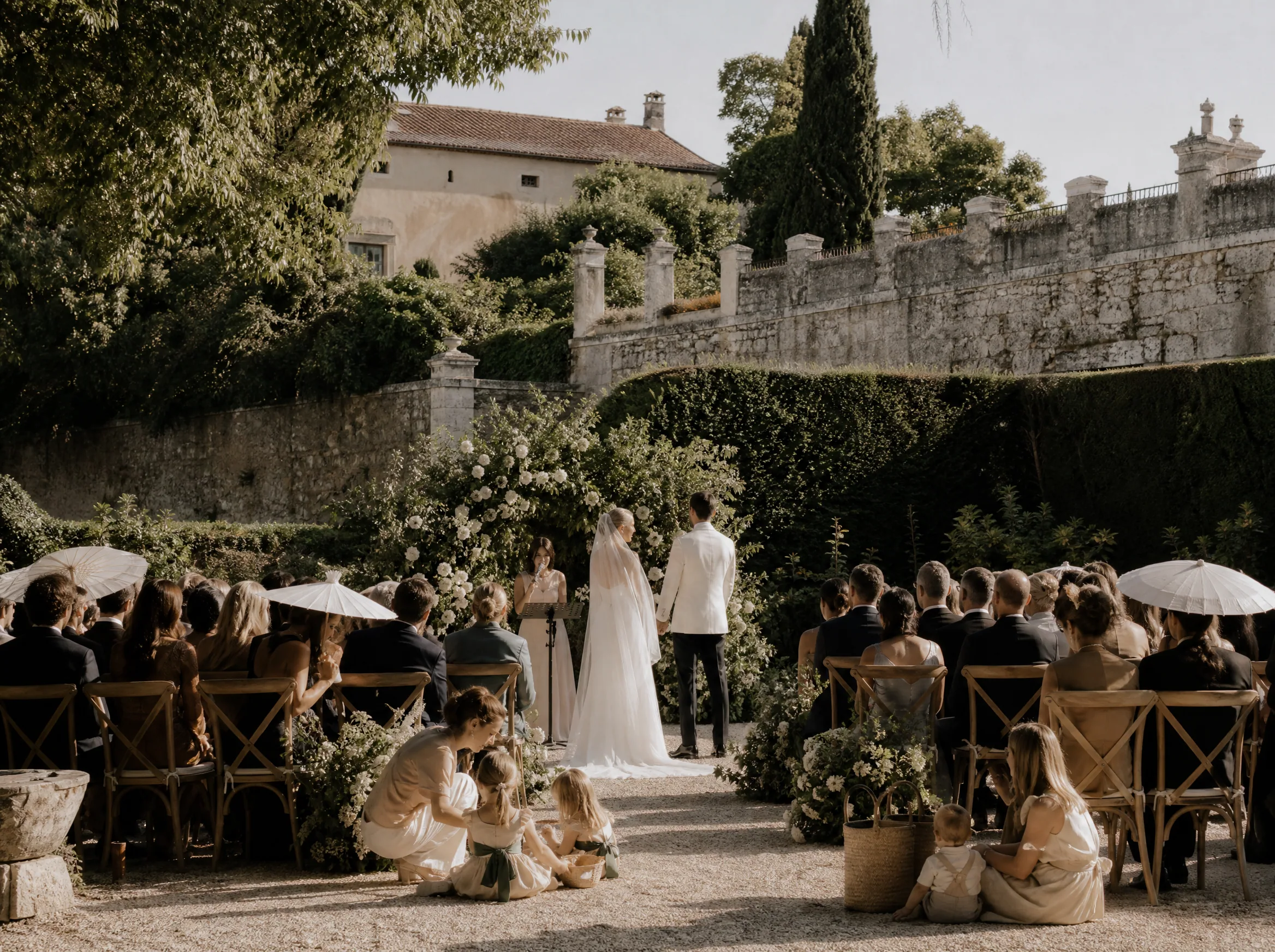
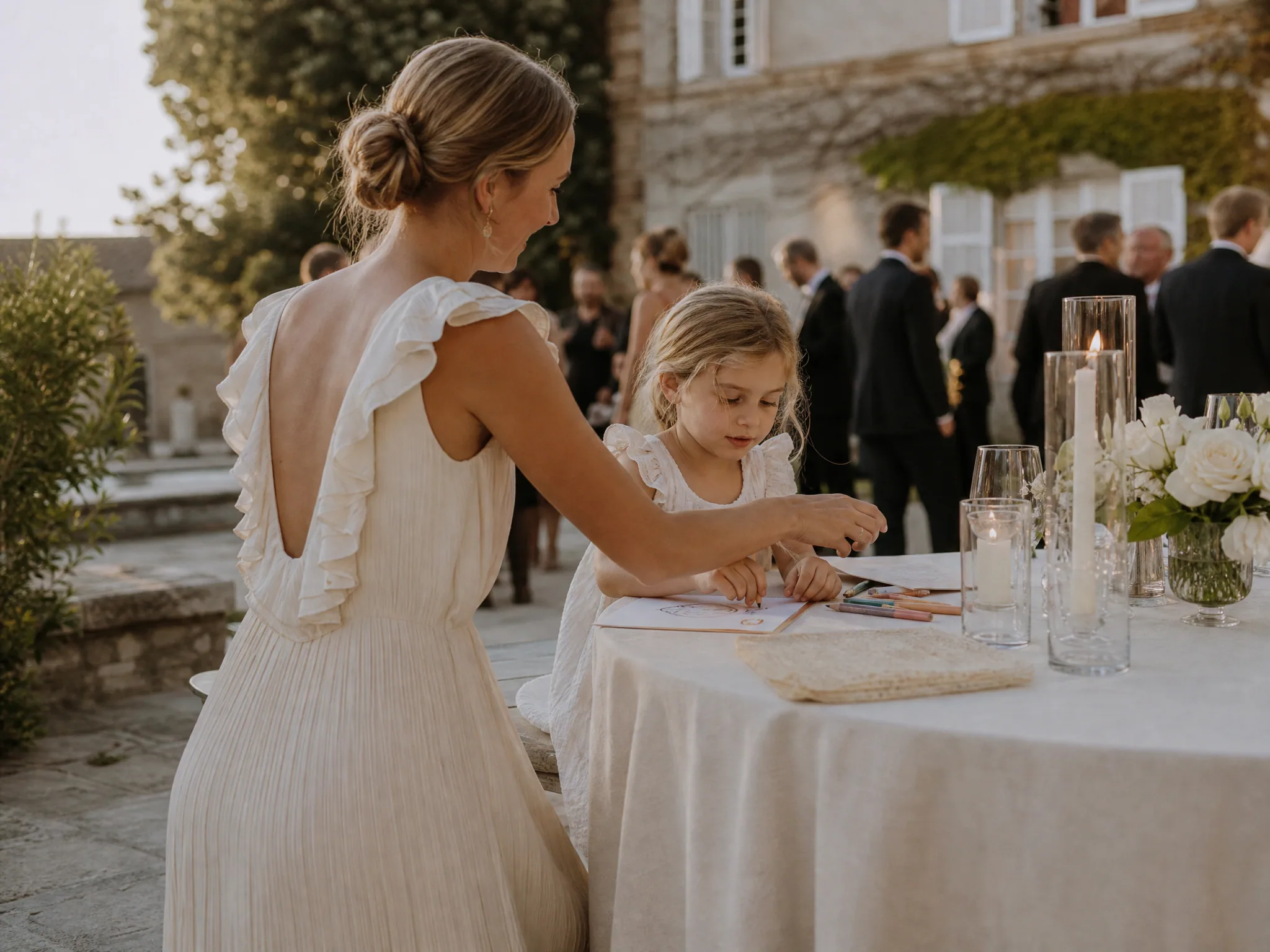
Childcare Options Couples Use in Spain
Common approaches include a vetted local babysitting agency for the reception, hotel babysitting for younger children, a shared nanny suite near the venue, or a trusted family member rotating coverage. For multi-day weekends, many couples hire help for the rehearsal or welcome evening as well as the wedding night.
Ask your planner for agencies used to wedding weekends, insurance expectations, language needs, and how many caregivers you need per age group. Confirm whether caregivers eat on-site, where they sit during the ceremony, and how parents receive updates without constant phone-checking.
Quiet Rooms, Changing Spaces, and Venue Reality Checks
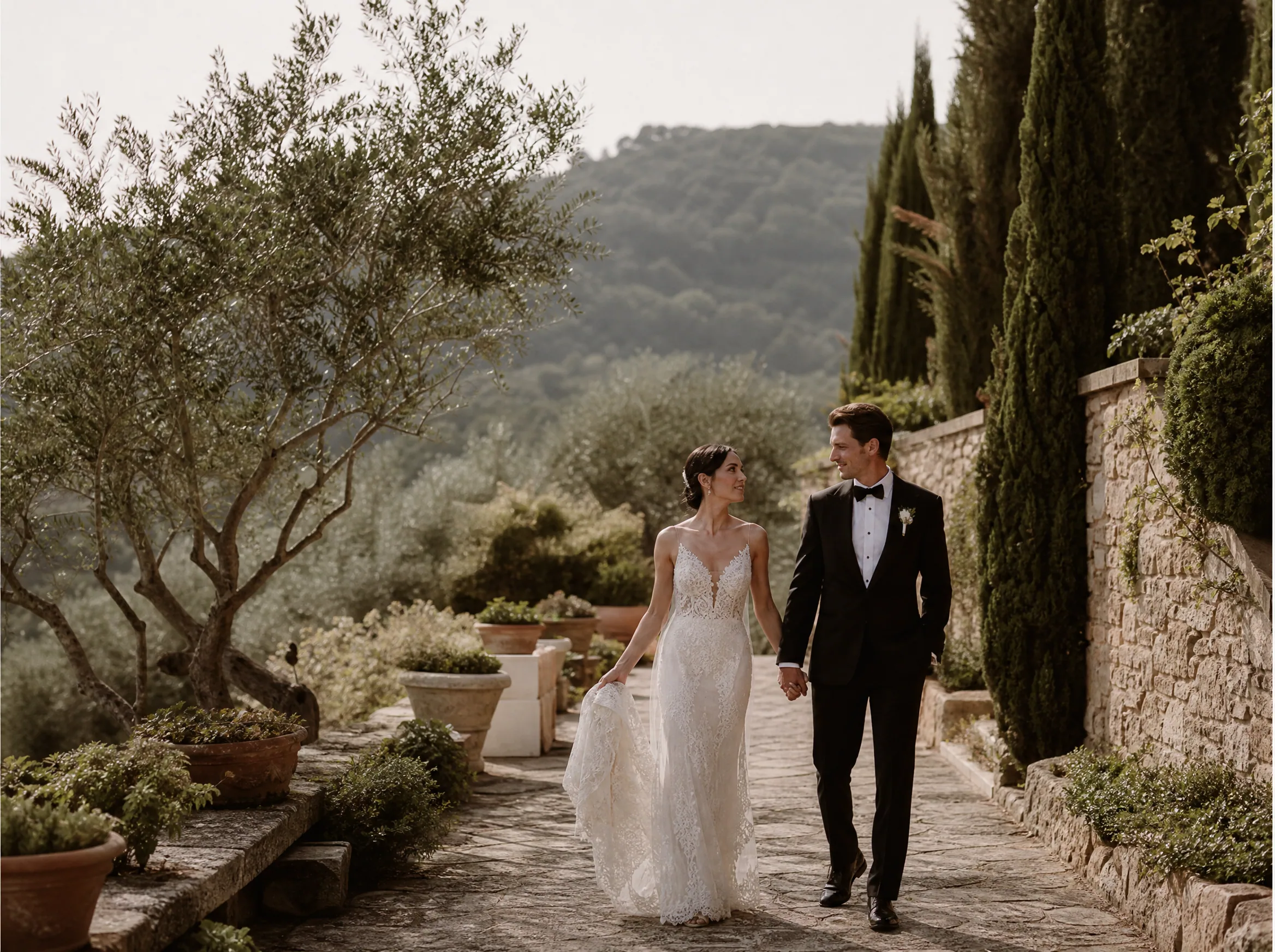
Masias, fincas, and coastal villas are atmospheric, but not every charming stone building has a discreet nursing room or a shaded indoor corner for a meltdown. During site planning, identify one calm indoor space with seating, water, and a door that closes.
Also check stairs, pool access, gravel courtyards, and evening lighting. What feels romantic for adults can be tricky for strollers and toddlers. A five-minute venue walk-through focused only on families will surface issues your romantic tour will miss.
Kids' Meals, Allergies, and Service Timing
Do not assume the adult tasting menu works for children. Ask catering for a simple kids' menu, allergy collection process, and whether kids can be served earlier than the adult main course. Early plating keeps energy steadier through speeches and first dance.
Collect dietary needs with RSVPs — including ages, not only headcount. A two-year-old and a ten-year-old are different catering problems. If many families are traveling, a small kids' snack station during cocktail hour can prevent hangry chaos before dinner begins.
Ceremony Seating, Aisles, and Photo Flow
Decide whether children sit with parents near the aisle, gather with a caregiver in a back row, or skip a long ceremony entirely. Tell ushers and your coordinator the plan so last-minute reshuffling does not block processional photos or vows.
From a photo and film perspective, restless aisle seats are less of a problem than surprise mid-ceremony exits across the frame. Give parents permission to step out quietly, and place a caregiver exit path that does not cut through the key camera angles.
Evening Transitions Without Awkwardness
The hardest moment is usually after dinner: kids are done, parents want one more dance, and nobody wants to look rude leaving. Publish a soft transition window — for example, after cake or after the first dances — and offer a shuttle or arranged pickup back to the hotel.
If you are hosting an adults-only late reception, say so warmly and early. Guests travel better when they can book childcare before they pack. A short note in the itinerary beats whispered confusion at midnight.
A Family Logistics Checklist Across Time Zones
Share one document that covers kids' policy, childcare booking contacts, kids' meal cut-off, quiet-room location, and evening pickup plan. Include local emergency numbers and the coordinator's WhatsApp for day-of questions.
When you are planning from abroad, assign one person — planner, sibling, or friend — as the family logistics point of contact. Parents should not need to message the couple about juice cups while you are getting ready.
What Couples Often Underestimate
Jet lag multiplies every childcare challenge. A child who is usually easy at home may melt down earlier in Spain. Budget more rest time on wedding morning, avoid stacking every guest activity as mandatory, and leave white space in the weekend itinerary.
Also budget for caregiver meals, overtime if speeches run late, and a backup adult if one babysitter cancels. The couples who enjoy their late Spanish reception most are usually the ones who planned the kids' exit as carefully as the first dance.