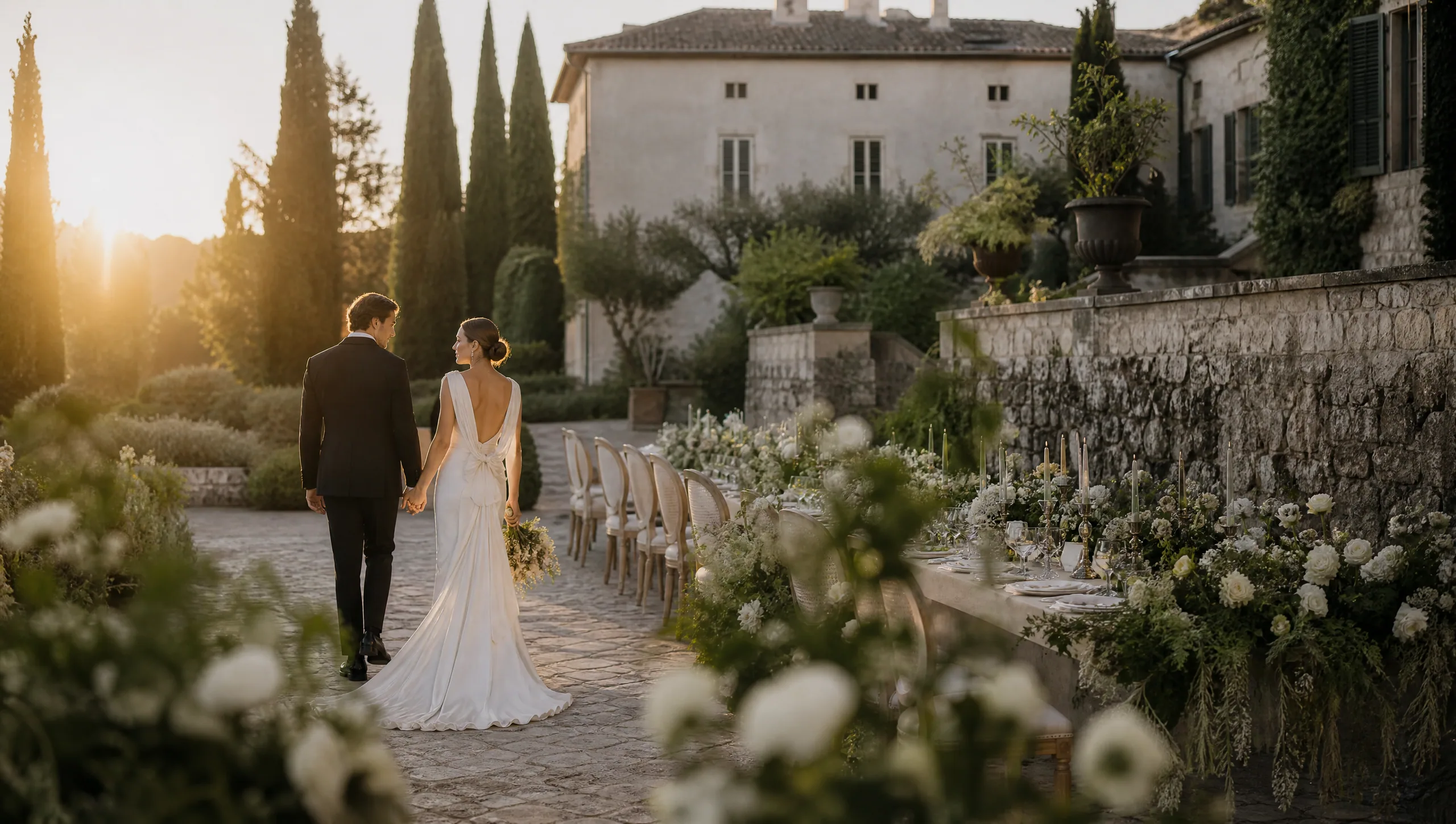
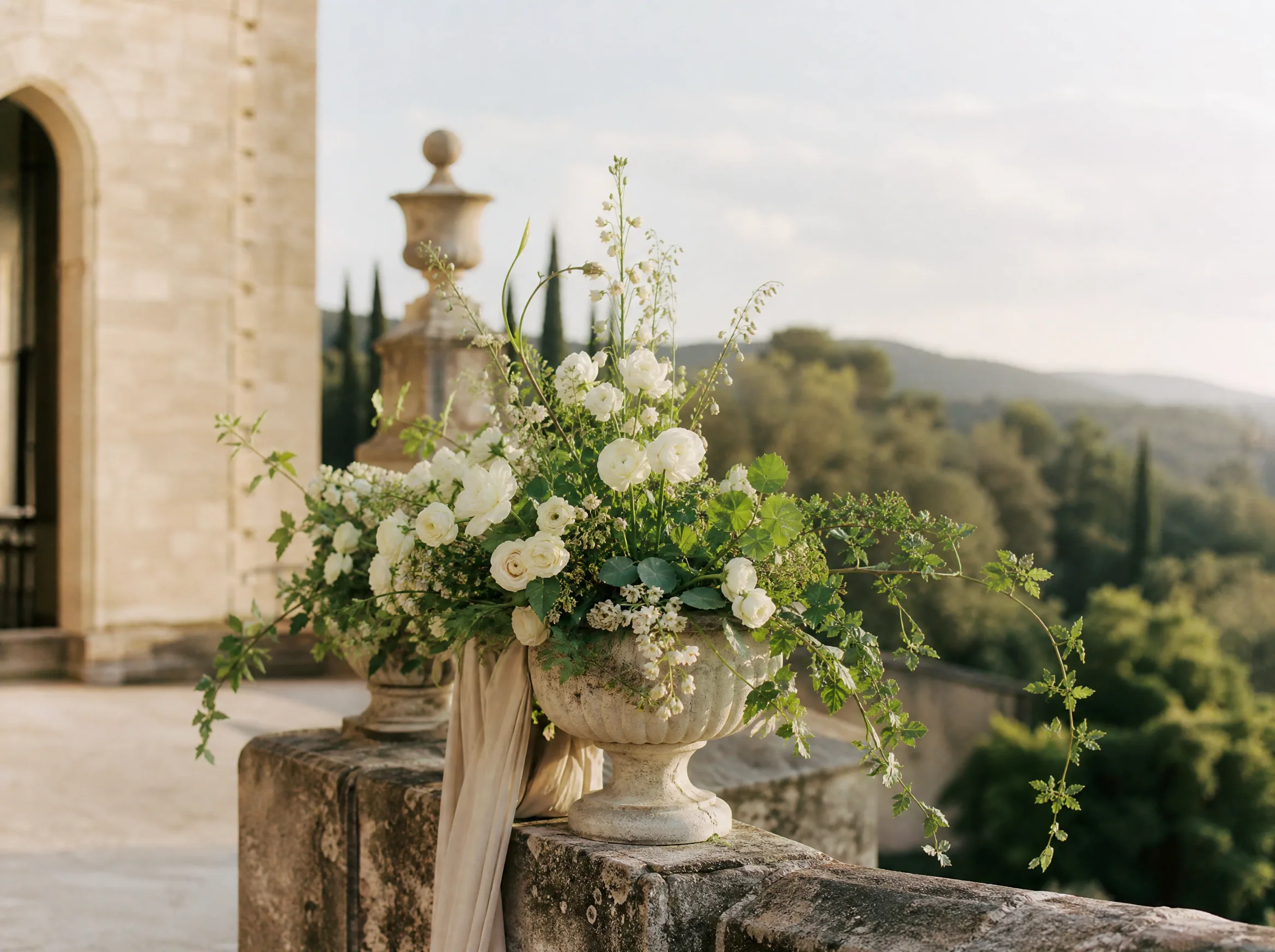
International couples often fall in love with Spanish wedding florals the same way they fall in love with Spanish light — instantly, and a little idealistically. Olive branches on stone tables. Soft garden roses against terracotta. Wilder Mediterranean textures that feel effortless in photographs. What those images rarely show is the logistics underneath: which blooms are in season, how far they travel, how quickly they wilt in July heat, and whether your venue allows early access for installation.
This guide is for couples planning a destination wedding in Spain from abroad who want florals that look intentional on the day — not fragile concepts that collapse under climate, transport, or last-minute substitutions. The goal is a clear floral brief your florist, planner, and venue can execute without constant remote decision-making.
Start With Season, Not a Mood Board Alone
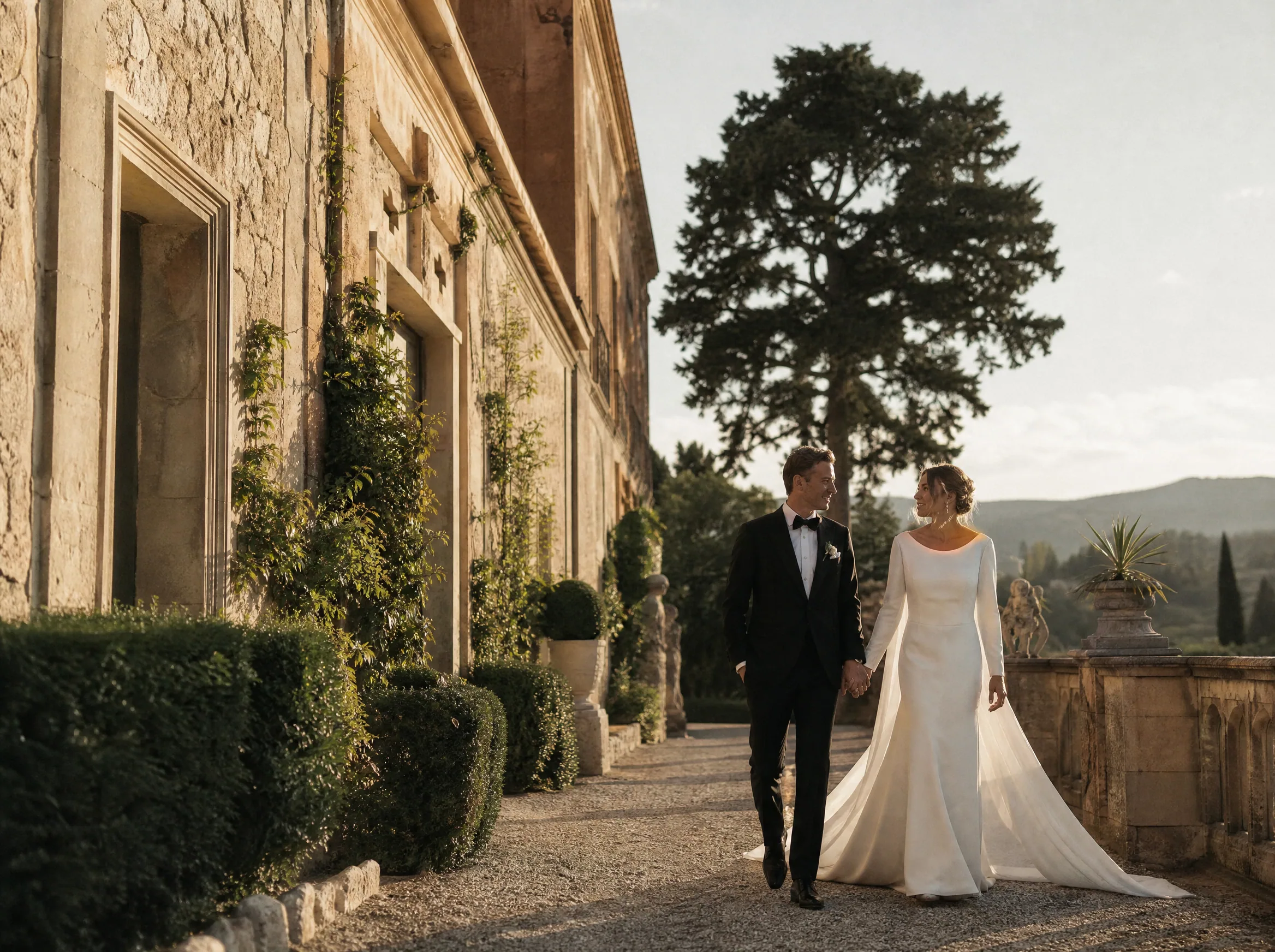
Mood boards are useful for atmosphere. They are unreliable as shopping lists. A peony-heavy look that feels natural in May can become expensive, imported, and short-lived in late August. Spain’s wedding calendar stretches across coastal heat, mountain evenings, and shoulder seasons with very different flower markets.
Before you lock a floral style, ask your florist what is strong locally in your wedding month — not only what can be ordered. Local-in-season stems usually travel shorter distances, hold better outdoors, and leave more budget for scale where guests will actually notice it: ceremony framing, tables, and the moments your film and photos linger on.
Region Changes What Feels Natural and What Survives
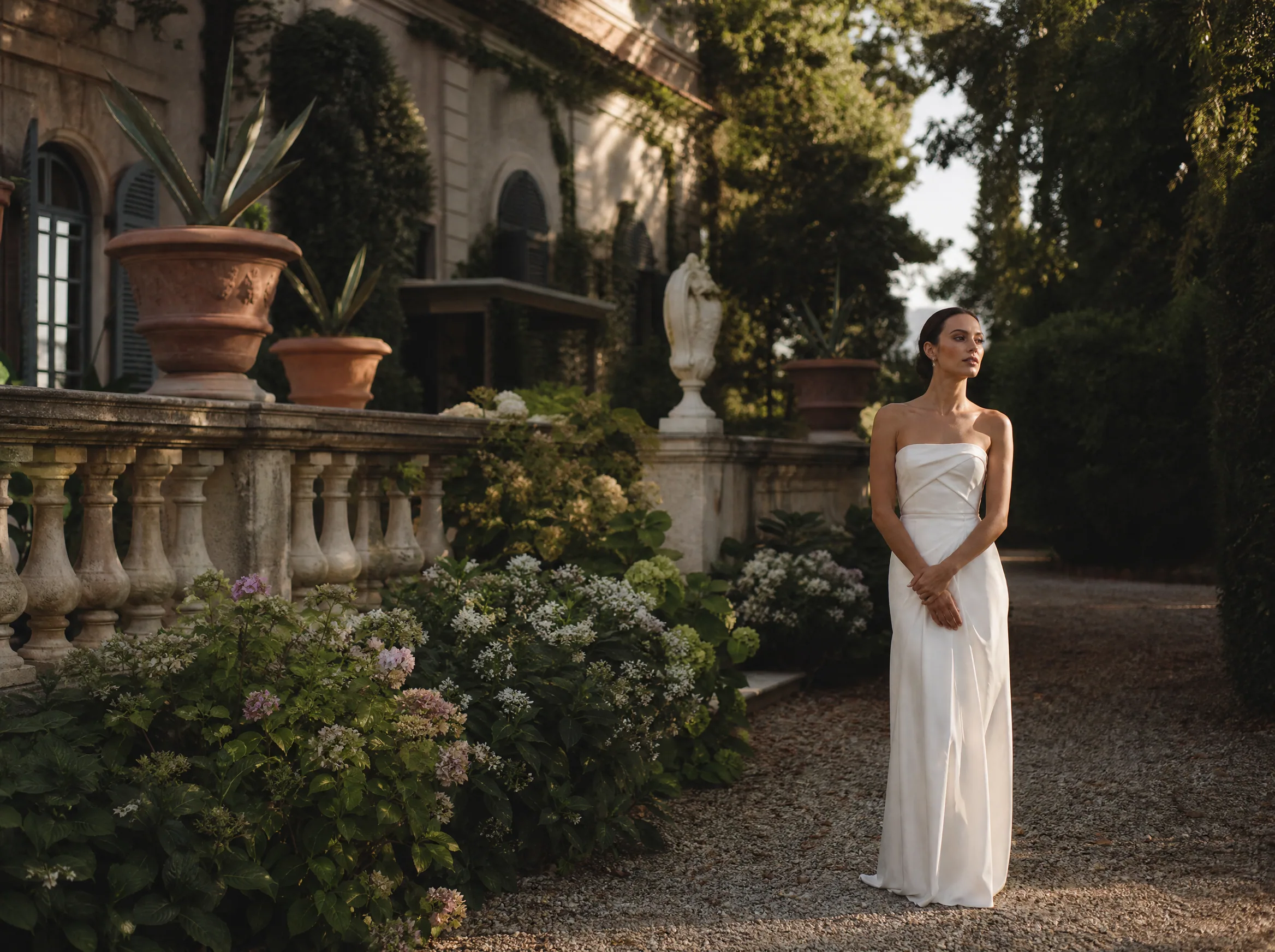
Catalonia, Mallorca, Andalusia, and inland estates do not behave like one climate. A coastal Mallorca terrace in high summer punishes delicate petals faster than a shaded masia courtyard near Barcelona. An open Andalusian patio can be hotter still after midday, while mountain or evening ceremonies may favor denser greens and fewer soft blooms.
Share venue photos and sun exposure with your florist early: full sun, partial shade, wind corridors, stone heat, and whether ceremony and dinner happen in different microclimates. The same bouquet recipe can thrive in one setting and collapse in another. Regional honesty beats aesthetic force-fitting.
Local Sourcing Versus Imported Statement Blooms
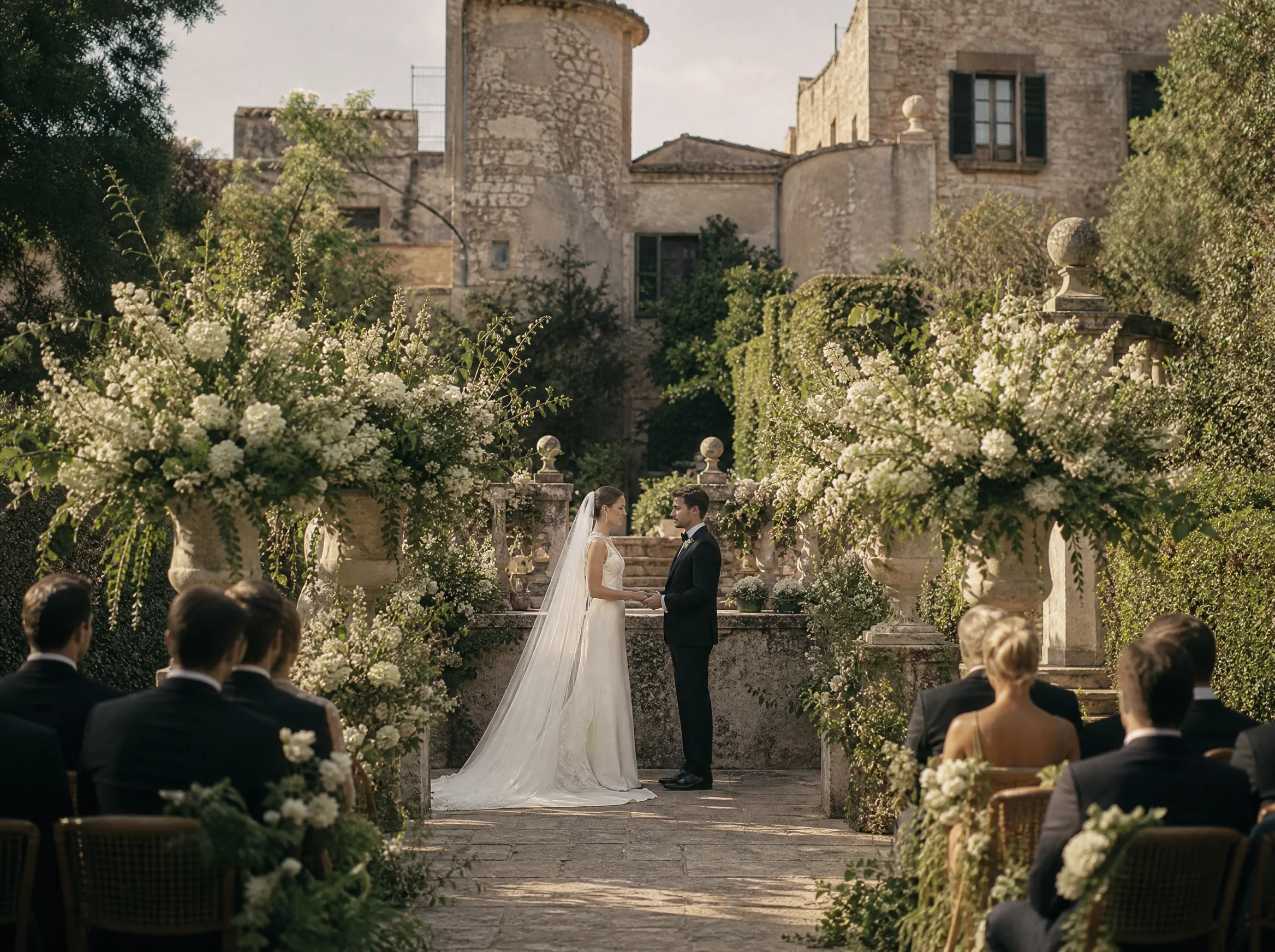
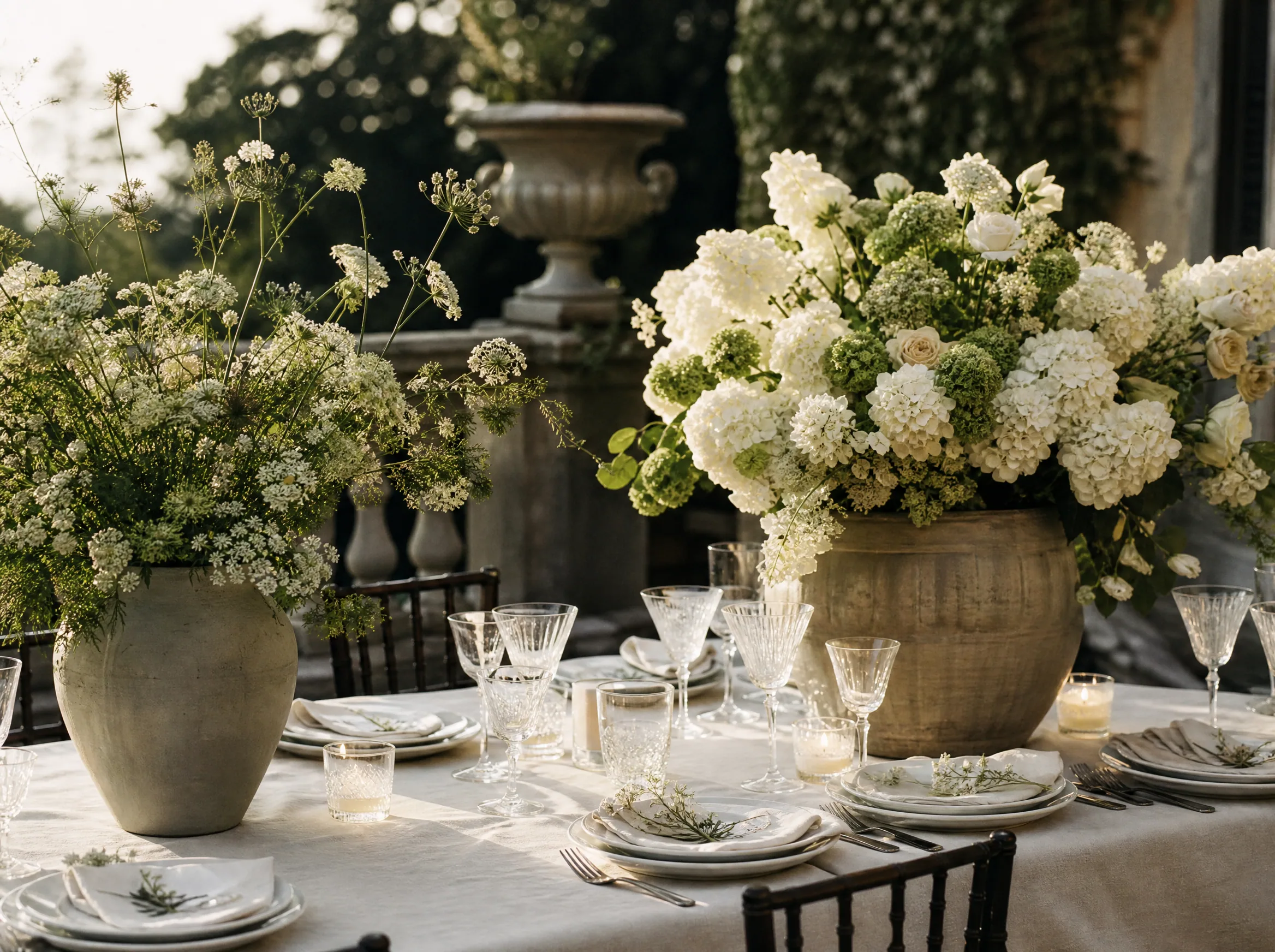
Many Spanish florists blend local greenery and Mediterranean textures with a smaller number of imported statement flowers. That hybrid approach often looks more grounded than an all-imported European spring fantasy that fights the landscape.
Decide where you want rarity and where you want resilience. A bridal bouquet can carry more delicate imported blooms if it is assembled close to ceremony time and kept cool. Large aisle installations, outdoor arches, and long table runners usually perform better with heat-tolerant local materials — olive, herbs, sturdy roses, dried elements, citrus branches, or sculptural foliage — plus accents rather than walls of fragile petals.
Heat, Transport, and the Quiet Enemies of Fresh Flowers
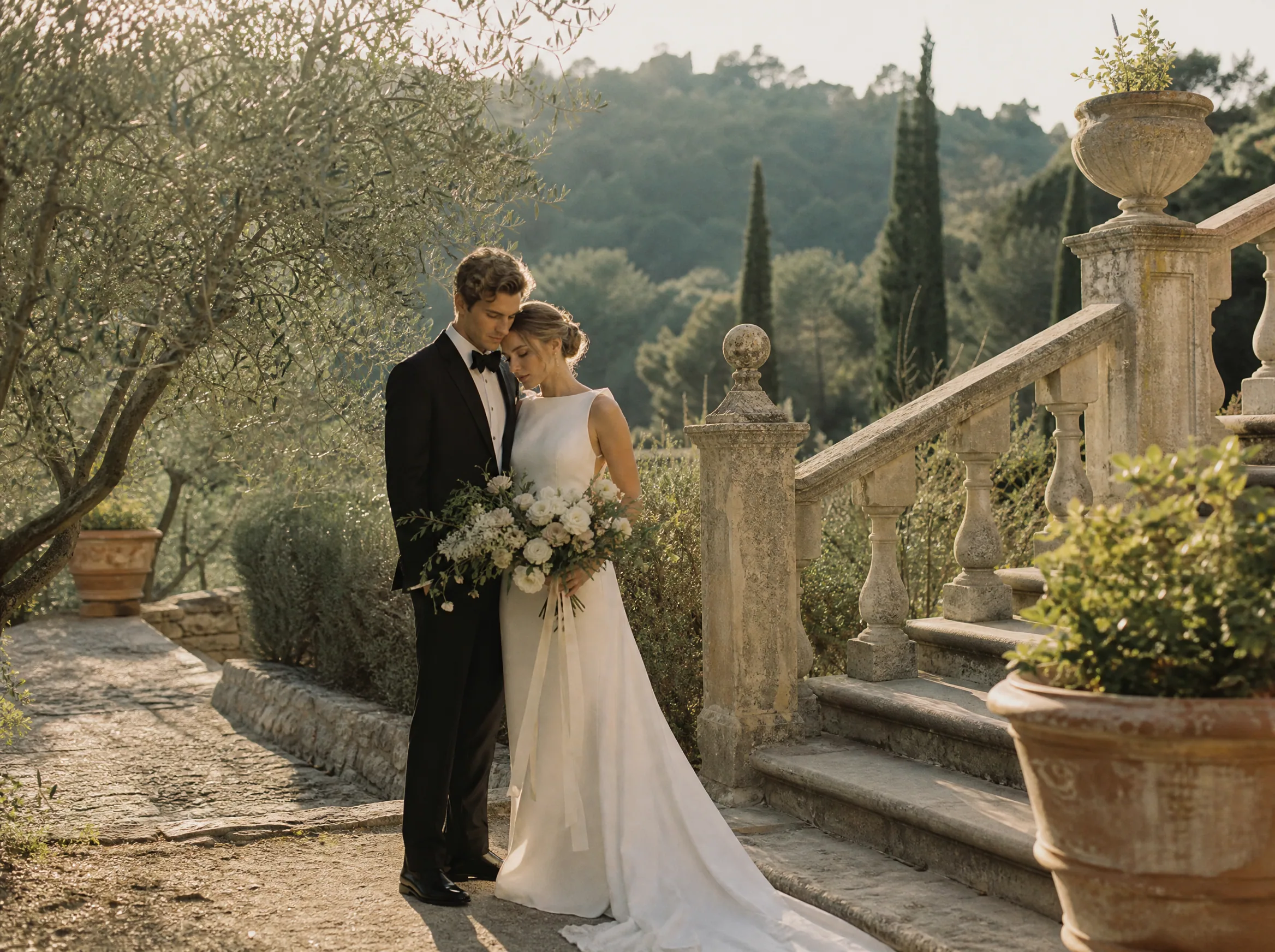
Spanish summer weddings are beautiful and hard on florals. Flowers sit in vans, wait through guest arrivals, bake near reflective stone, and then need to still look alive for dinner portraits. Transport time from the florist’s studio to a rural venue can be longer than couples expect, especially with winding estate roads and limited vehicle access.
Ask explicitly about cold-chain handling, on-site hydration, shade staging before ceremony, and what gets installed last. If your venue is remote, build florist arrival and unload into the day-of schedule the same way you would build hair and makeup — as a timed production step, not a vague “morning setup.”
Install Timelines Your Venue Must Actually Allow
A floral concept is only as good as the access window. Some Spanish venues allow full morning installs; others restrict early entry, share spaces with other events, or require that ceremony structures go up only after guest areas are cleared. Rooftop, cliff, and historic sites may also limit anchoring methods, water use, or how long arches can stand in wind.
Have your planner confirm florist access hours, power/water availability, parking for load-in, and tear-down rules. If ceremony and reception are in different zones, ask whether flowers move between spaces or whether you need two lighter installs instead of one heavy design that must be relocated mid-celebration.
Briefing a Spanish Florist From Abroad Without Endless Revisions
Remote planning works when the brief is specific. Send: wedding date and ceremony start time, venue name and outdoor/indoor mix, guest count and table shapes, color palette with “must / nice / never,” must-have personal flowers (couple, parents, wedding party), and photos of the exact ceremony and dinner locations — not only brochure images.
Then ask for a proposal in packages: ceremony structure, personal flowers, cocktail accents, and reception tables. Request two substitution tiers for heat or supply issues so approvals do not stall on WhatsApp the week of the wedding. One focused video call after the written proposal usually prevents five rounds of vague “more romantic” feedback.
Prioritize What Guests and Cameras Actually See
Destination wedding budgets get strained quickly. Florals look expensive in close-up and invisible from ten meters away if the spend is scattered. Put money where presence matters: the ceremony frame guests face for twenty minutes, the bouquet and boutonnière in portraits, and table landscapes where people sit for hours.
Be cautious with dozens of tiny dispersed arrangements that photograph weakly and wilt unevenly. A cleaner hierarchy — strong ceremony moment, cohesive tables, restrained cocktail touches — usually reads more elegant on film and feels calmer in person, especially in already dramatic Spanish venues.
Sustainability, Waste, and End-of-Night Decisions
Destination weddings generate more transport and more leftovers. Ask what happens after dinner: donations, guest takeaways, composting, or reuse for brunch. Some couples prefer designs that intentionally shift from ceremony to tables so materials work twice. Others choose more potted plants or olive branches that can live beyond one night.
These choices are not only ethical branding; they affect install complexity and tear-down labor. Clarify expectations in the florist contract so “end of night” does not become an awkward negotiation while guests are still dancing.
A Practical Floral Logistics Checklist for Couples Abroad
Confirm season-true stem direction for your month and region. Share sun, wind, and venue access constraints before design lock. Decide which blooms may be imported and which must stay resilient. Put florist load-in, hydration, and final bouquet assembly on the day-of timeline. Approve substitution tiers in writing. Prioritize ceremony and table impact over scattered accents. Decide tear-down and leftover plans early.
When florals are planned as logistics — season, climate, transport, access — they stop being a stressor and start doing what you wanted in the first place: framing the day in a way that feels native to Spain, not imported at the last minute from a screenshot.