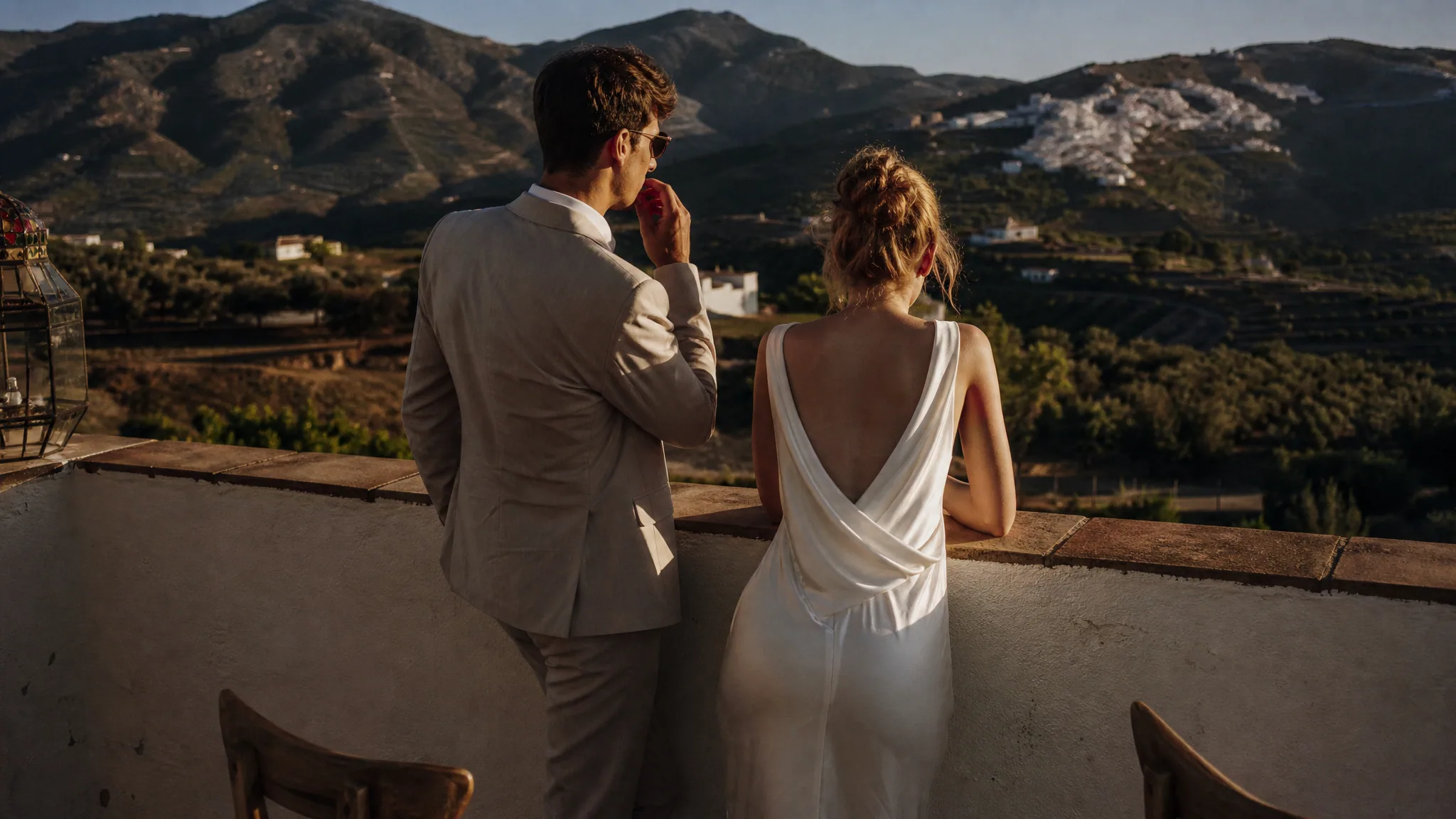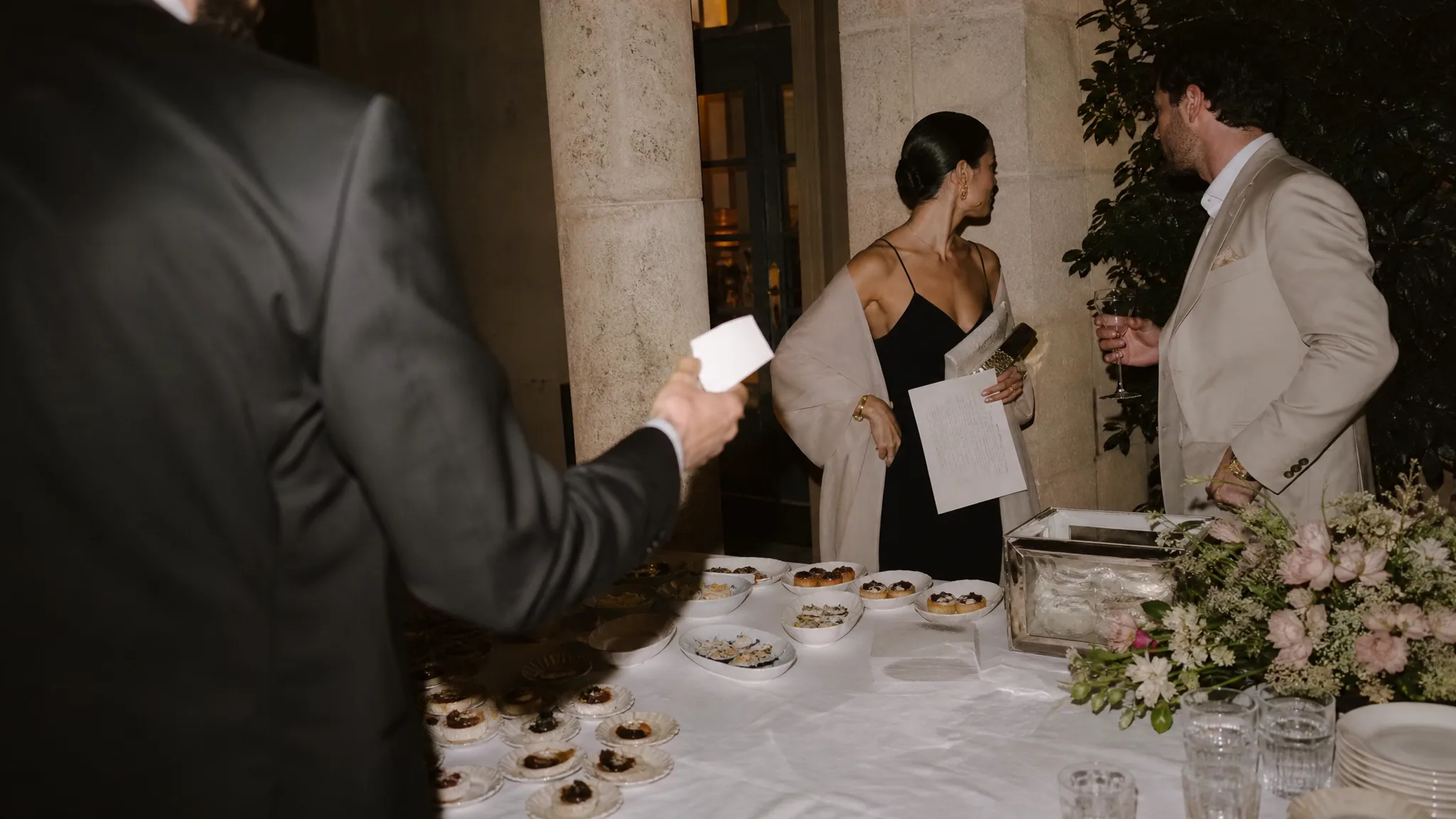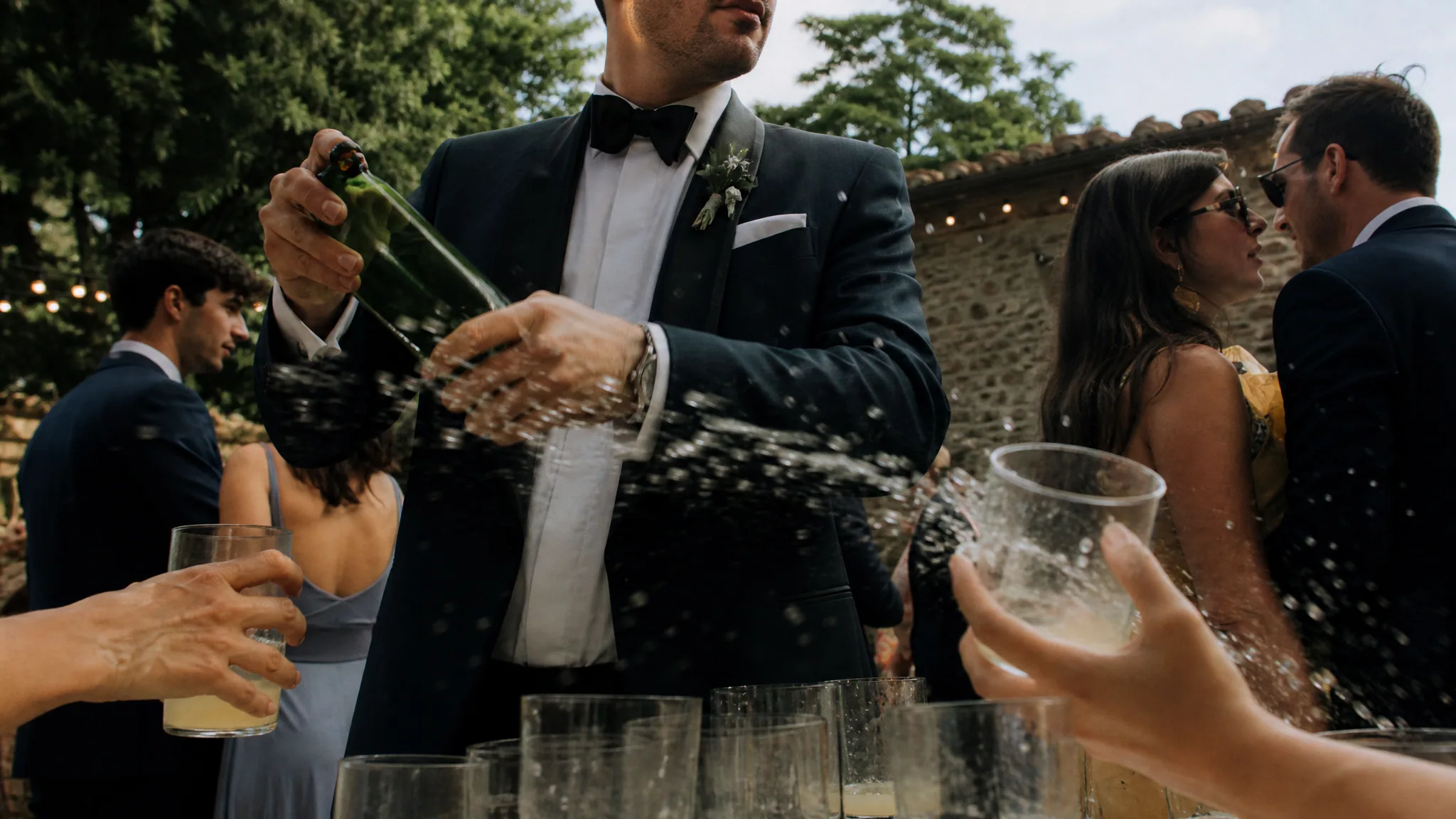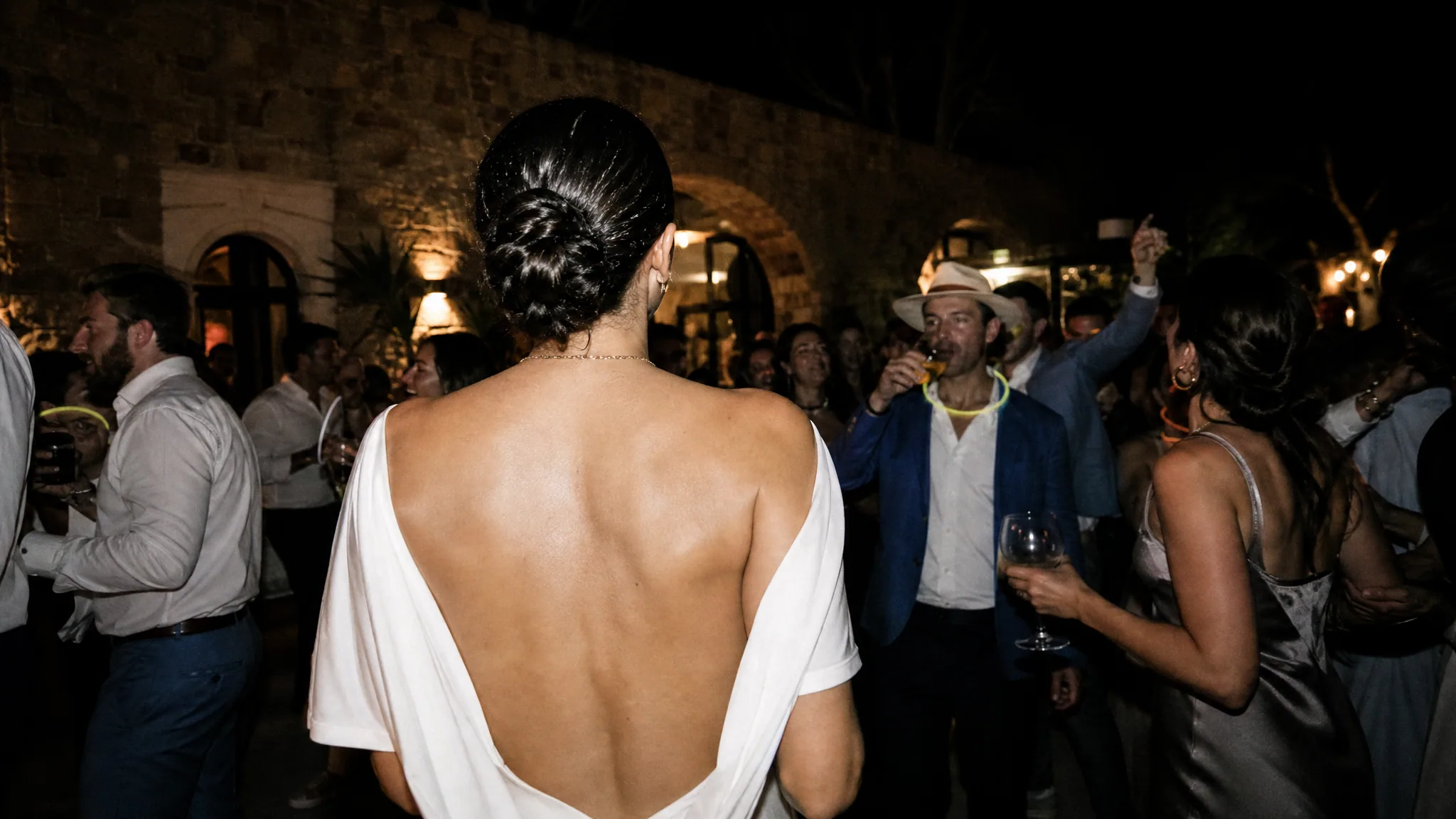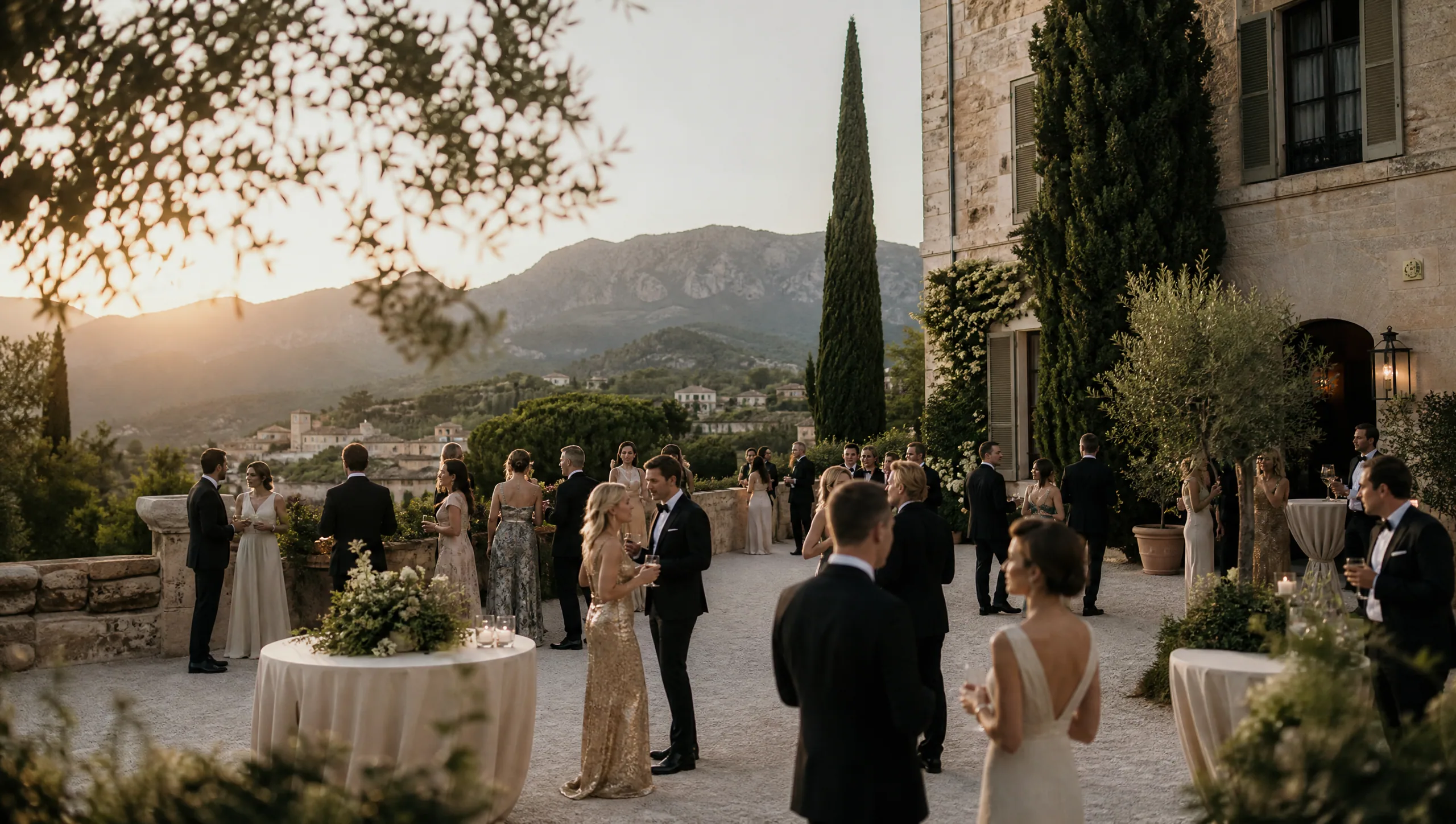
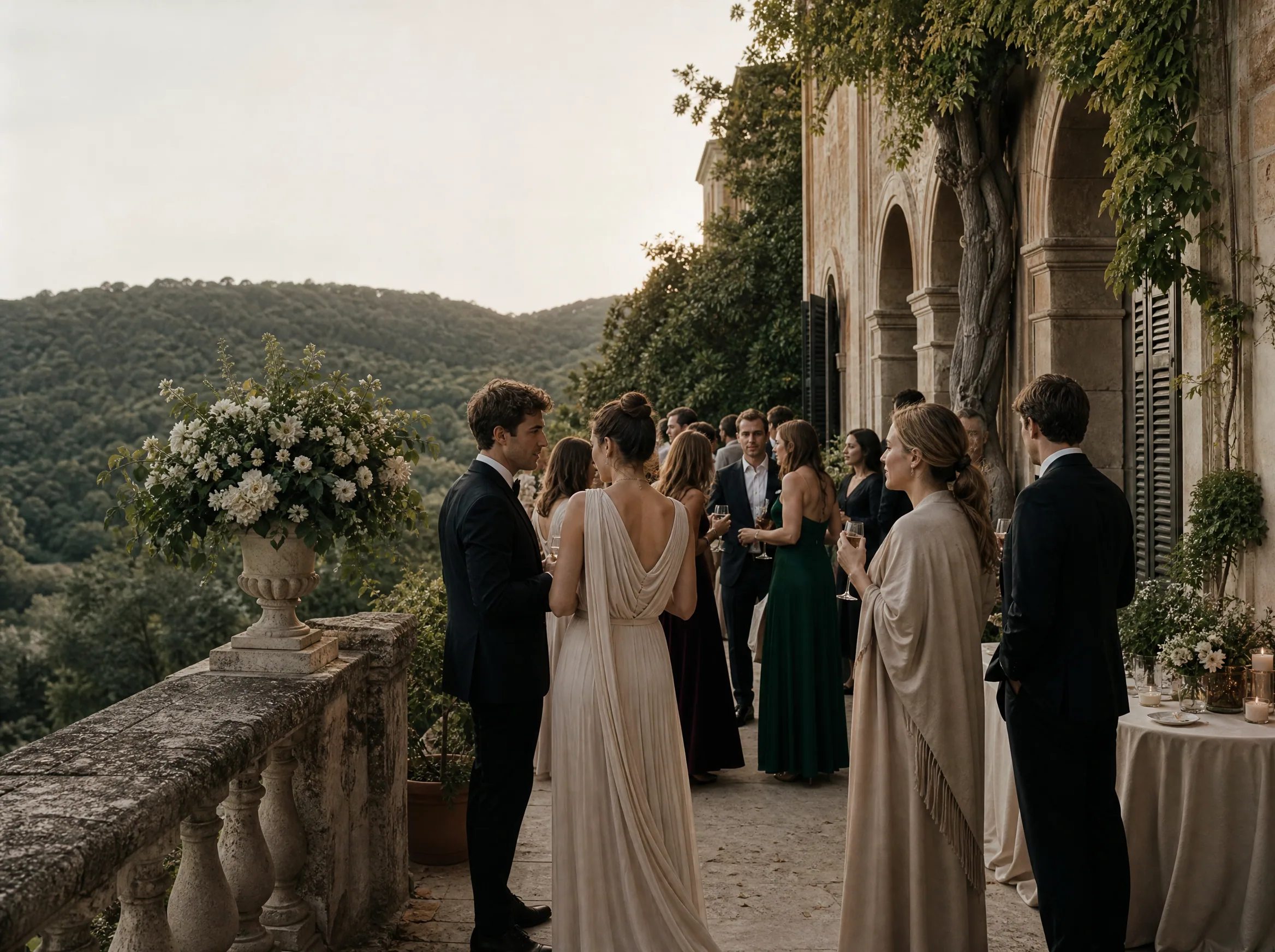
For international couples, the cocktail hour is often treated like a soft intermission — pretty drinks, a few canapés, time for photographs. In Spain, it is usually the first real test of guest flow. Guests may have traveled across time zones, walked uneven paths to a masia courtyard, waited through a bilingual ceremony, and suddenly need shade, water, bathrooms, and a clear sense of what happens next.
This guide is for couples planning a destination wedding in Spain from abroad who want the cocktail hour to feel intentional: timed to ceremony and dinner, comfortable in heat or breeze, and simple enough that your planner, caterer, and venue can run it without constant remote decisions.
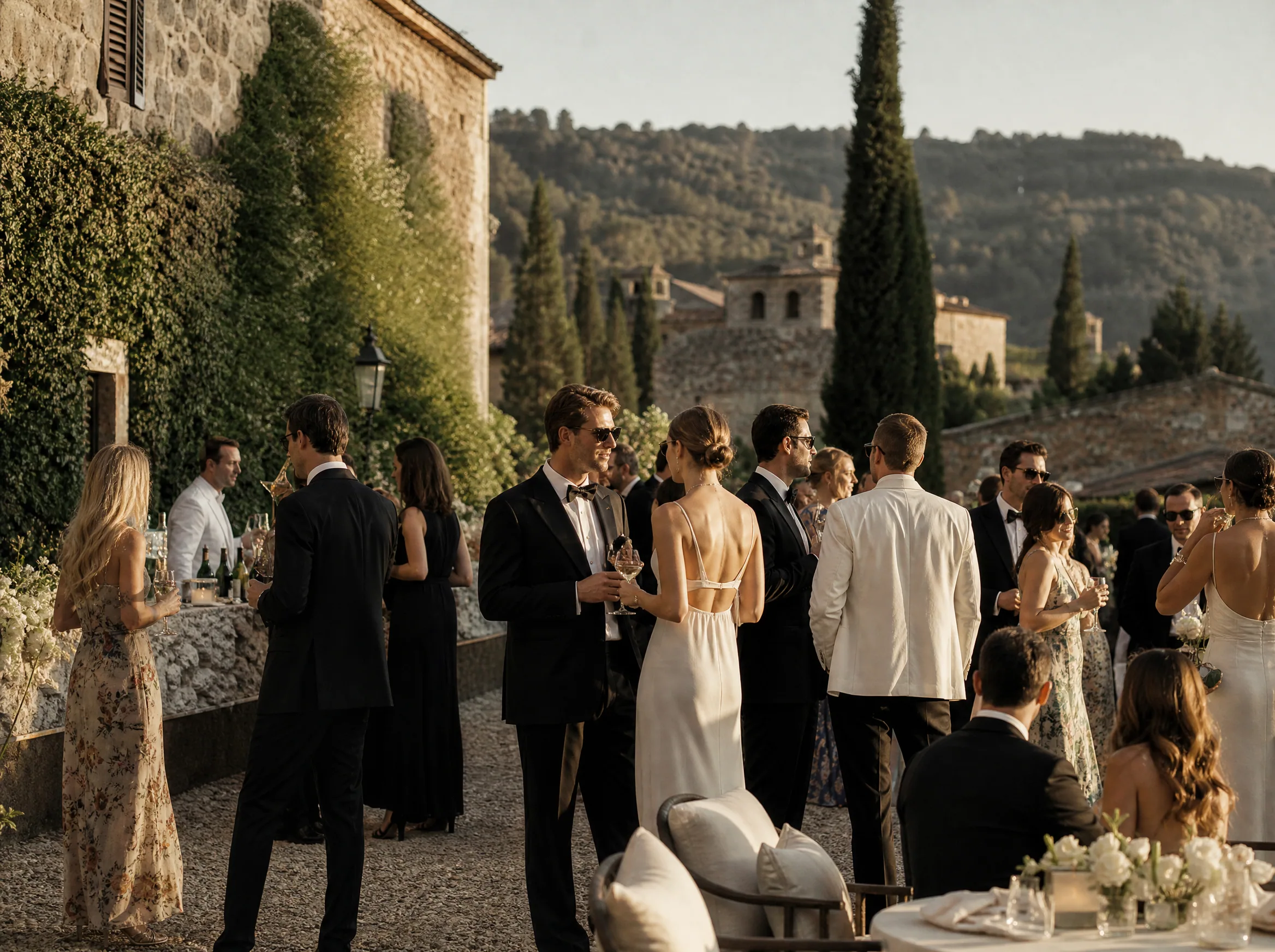
Treat Cocktail Hour as Guest Infrastructure, Not Just Ambiance
Ambiance matters. Infrastructure decides whether guests enjoy it. Before you choose a signature cocktail or playlist, map the practical layers: where guests exit the ceremony, how far the cocktail space is, whether the path is shaded, where bathrooms are, and whether elderly guests or children need a shorter route. In Spanish venues — especially rural estates, hillside gardens, and coastal terraces — that transition can be longer and more exposed than couples expect from photos alone.
Ask your planner for a simple guest-flow diagram: ceremony end → drinks → bathrooms → seating clusters → dinner entrance. If that sequence is vague, the cocktail hour will feel improvised no matter how beautiful the styling looks.
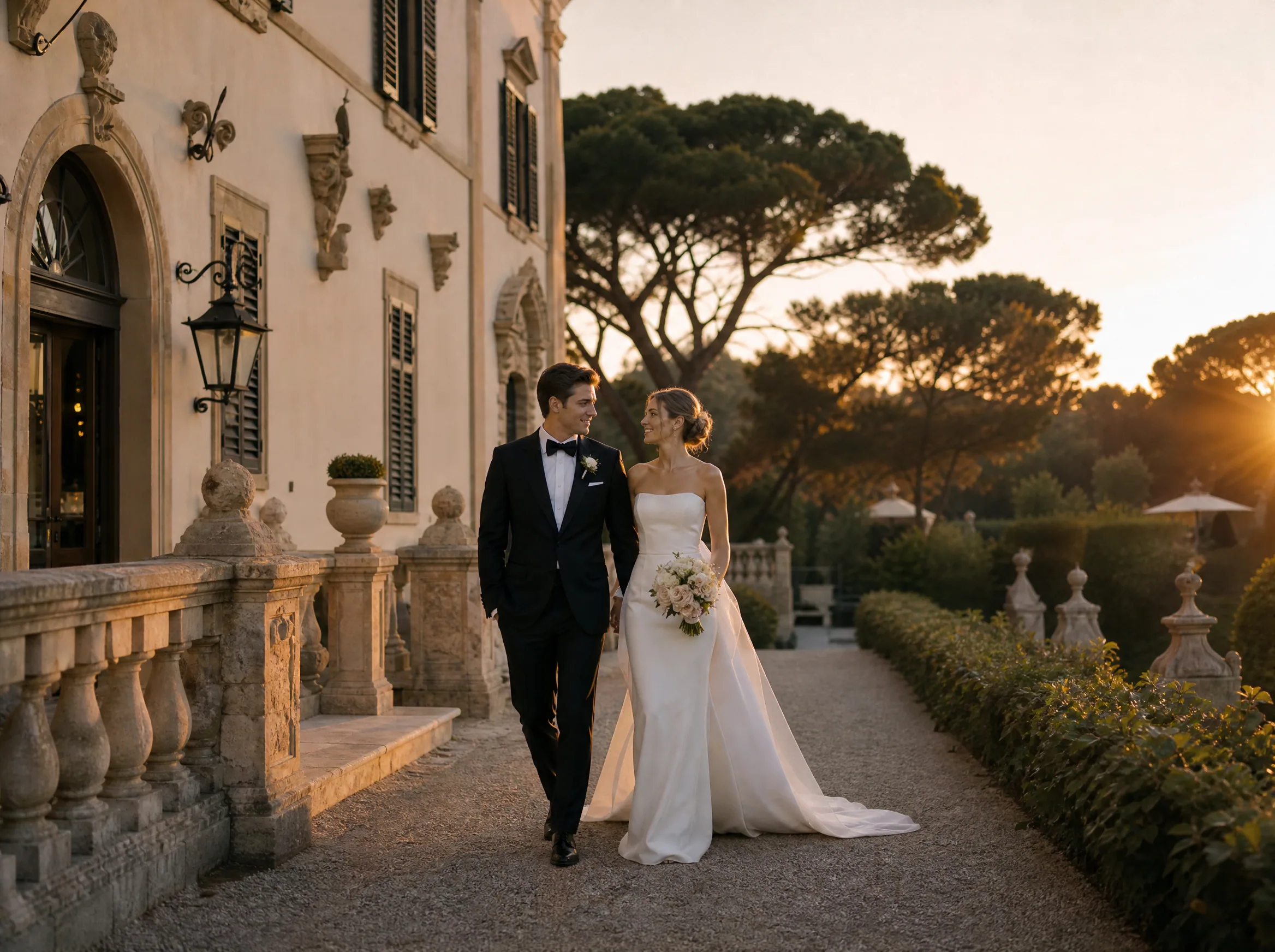
Time It Against Ceremony End, Golden Hour, and Kitchen Reality
Spanish wedding days often run later than Northern European or US schedules. Ceremony end times, sunset, and dinner service all pull against each other. A 60–90 minute cocktail hour can be perfect — or stressful — depending on whether portraits need golden hour light and whether the kitchen needs that window to reset from ceremony canapés to seated service.
Build the cocktail block as a flexible range, not a fixed minute. Give photography and videography a protected window if needed, but leave buffer for late ceremony starts, long family greetings, and venue transitions. Guests should never feel abandoned while the couple disappears for an undefined stretch of portraits.
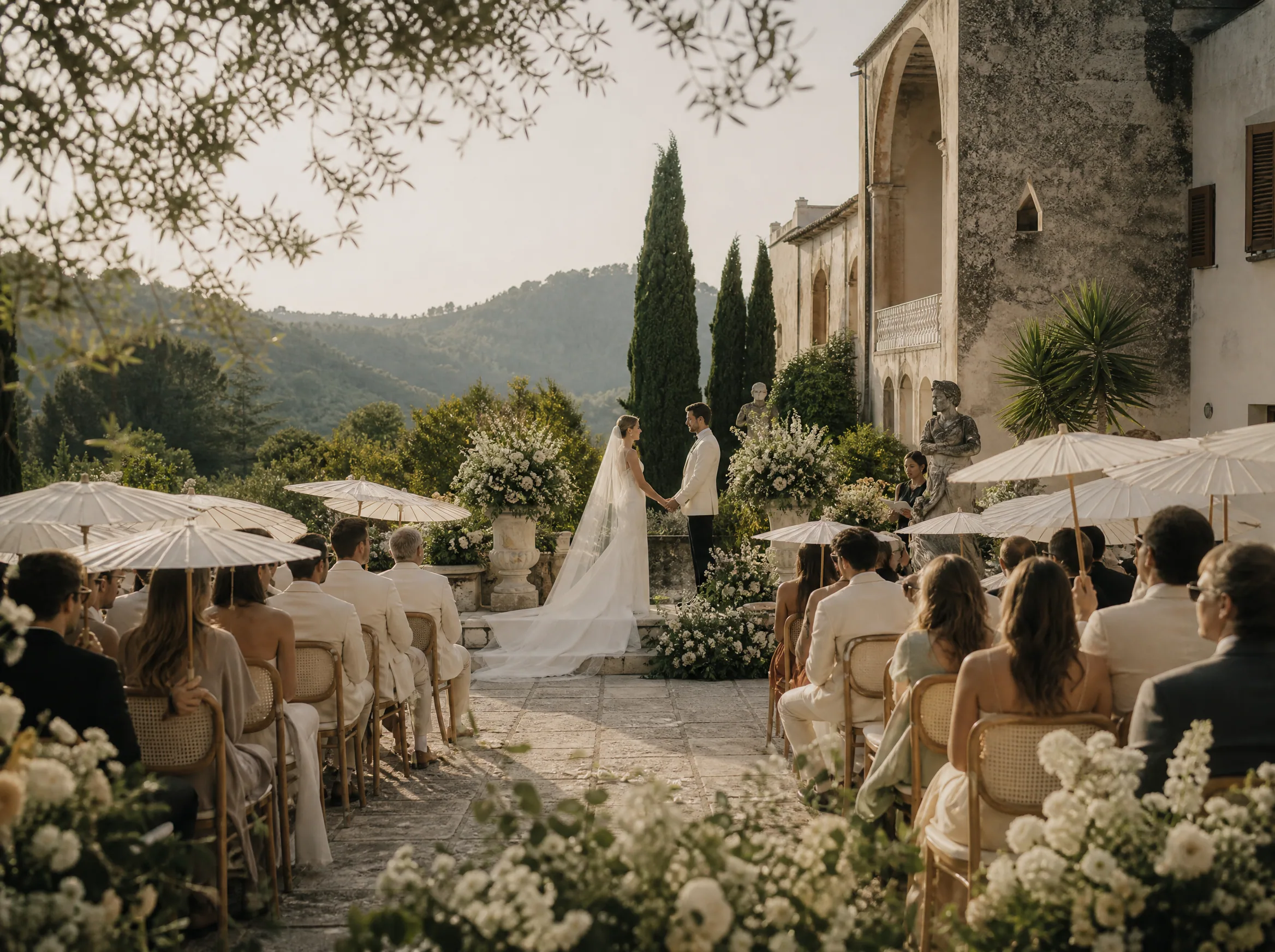
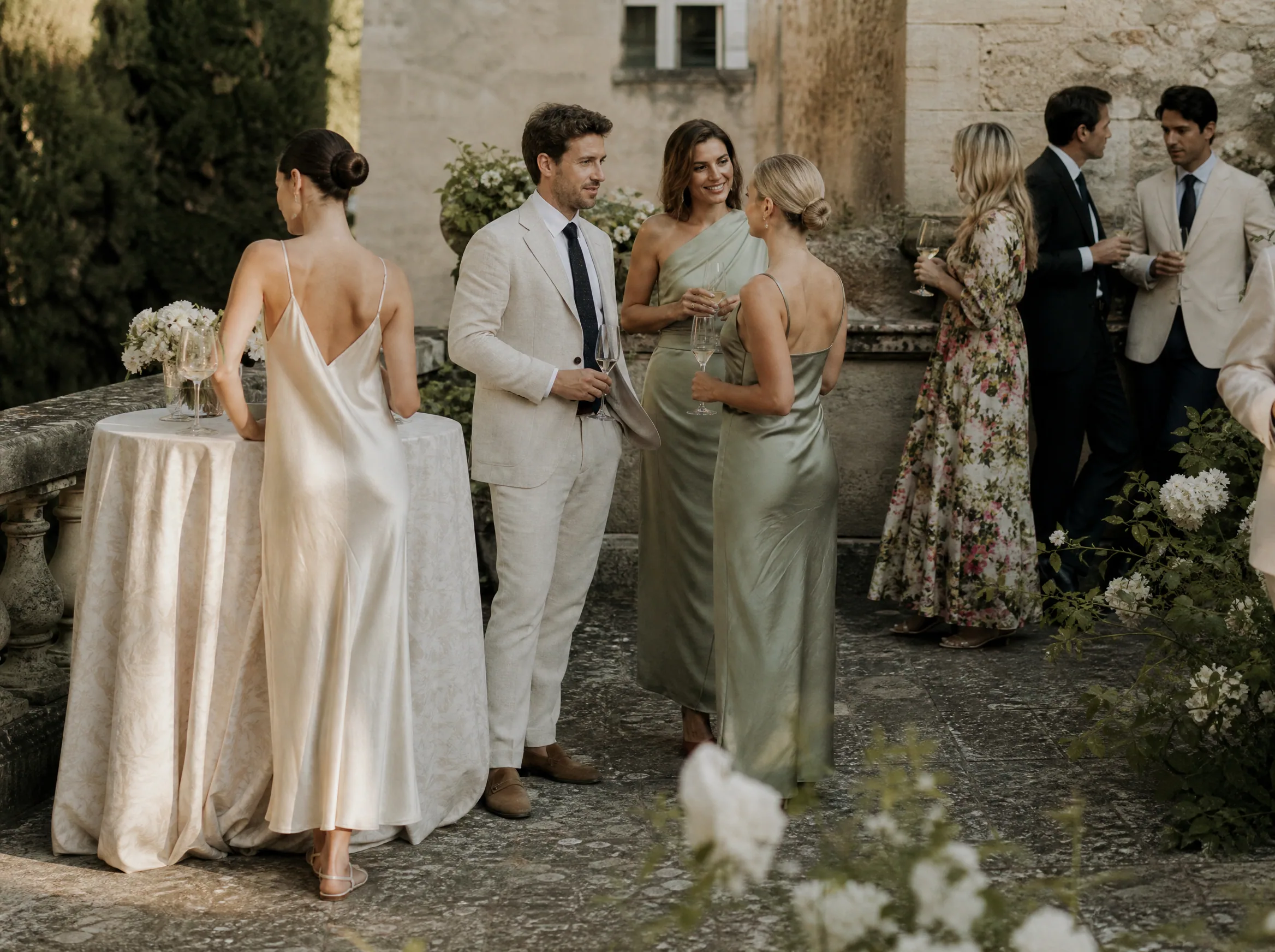
Design for Spanish Heat, Wind, and Standing Fatigue
Summer cocktail hours in Barcelona, Costa Brava, Mallorca, or Andalucía can turn stylish quickly into uncomfortable. Guests in formal shoes on gravel, direct sun on open terraces, and limited seating are common friction points. Plan shade first: umbrellas, trees, sail shades, or a move into a cooler courtyard. Add water stations immediately — not only alcohol — and enough seating so roughly a third of guests can sit without hunting for chairs.
Wind matters too on coastal and hilltop venues. Lightweight signage, candle concepts, and tall floral arrangements need practical anchoring. If your cocktail space is exposed, ask the venue what usually fails there after 5 p.m. Local teams know the pattern; use that knowledge early.
Food and Drink Strategy for International Guest Lists
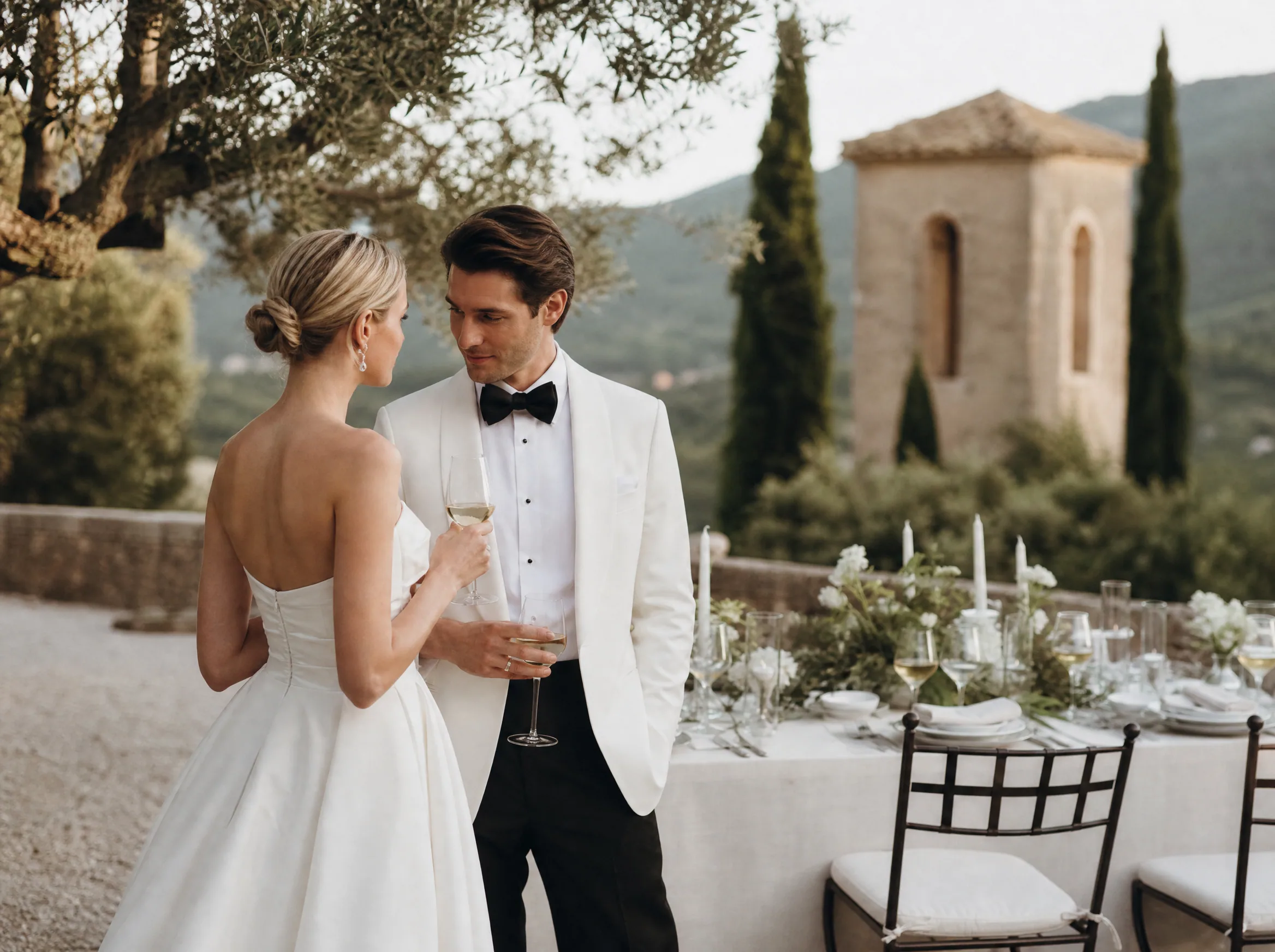
A destination guest list usually mixes travel fatigue, dietary restrictions, and uneven alcohol preferences. Offer a clear non-alcoholic path that feels considered, not afterthought. Keep canapés substantial enough to bridge a late dinner — especially if ceremony-to-dinner stretches past 90 minutes. Label allergens in English and Spanish when possible, and brief serving staff on the major restrictions you already collected through RSVPs.
Signature drinks are lovely when they are operationally simple. One or two featured cocktails plus wine, cava, beer, and strong zero-proof options usually outperform a complex bar menu that slows service. In Spain, cava toasts and local wine service often feel more natural than forcing a long cocktail list onto a rural venue bar.
Place Photography Needs Inside the Guest Experience
Cocktail hour is prime time for candid coverage, family greetings, and detail frames — but only if the couple’s portrait plan does not empty the room of hosts for too long. Decide in advance whether you will make a short appearance, do a structured receiving-style loop, or stay for the first half and leave for portraits with a clear return time.
Tell guests what is happening. A simple note from the planner or MC — “The couple will join you shortly; dinner begins around…” — prevents the restless energy that happens when nobody knows whether to wait, eat, or wander. Your film and photo team can then capture real hospitality instead of managing confusion.
Sound, Music, and Neighbor Constraints During the Gap
Cocktail music seems minor until a venue has noise limits, thin courtyard acoustics, or a ceremony DJ who needs time to reset for dinner. Confirm whether background music is allowed in the cocktail zone, who provides the speaker system, and whether neighboring properties or local ordinances restrict volume before a certain hour.
If speeches are planned during cocktail hour, keep them short and acoustically planned. Outdoor courtyards swallow sound. Without a microphone plan, guests at the edges miss everything and start conversations over the toast — which looks and feels chaotic on camera.
Brief Your Vendors With One Shared Cocktail-Hour Sheet
Remote planning creates version drift: the caterer thinks cocktail hour is 45 minutes, photography thinks 75, the venue thinks guests stay near the ceremony lawn. Create one shared sheet with start window, end window, location, shade/seating plan, bar menu summary, dietary flags, bathroom locations, portrait window, and dinner call time.
Send that sheet to planner, venue, catering, bar, photo, and video. Ask each vendor to confirm one thing that could break the plan at their venue — transport delay, kitchen pass timing, sun angle, or staircase bottlenecks. The goal is fewer WhatsApp clarifications in the final week.
Plan the Handoff Into Dinner So Energy Does Not Drop
The end of cocktail hour is where many destination weddings lose momentum. Guests are asked to move, find seats, and settle while light changes and children get restless. Use clear cues: a gentle bell or MC announcement, ushers for key family tables, and visible table assignments in both English and another guest language if needed.
If dinner is in a different space, light the path and stage the entrance. A beautiful dinner room means little if the walk there feels like an evacuation. When the handoff is calm, speeches, courses, and dancing start from a higher emotional baseline.
A Practical Cocktail-Hour Checklist for Couples Abroad
Confirm ceremony-to-cocktail walking time and surface conditions. Lock a flexible cocktail duration against sunset and kitchen needs. Prioritize shade, water, bathrooms, and seating before styling details. Simplify the bar and make non-alcoholic options visible. Align portrait timing with guest hospitality. Verify music and microphone constraints. Share one vendor sheet with timing, flow, and dietary notes. Design the dinner transition as carefully as the first drink is poured.
Handled well, cocktail hour in Spain becomes more than a pause between ceremony and dinner. It becomes the first chapter where your guests feel looked after — and where your wedding day starts to breathe.