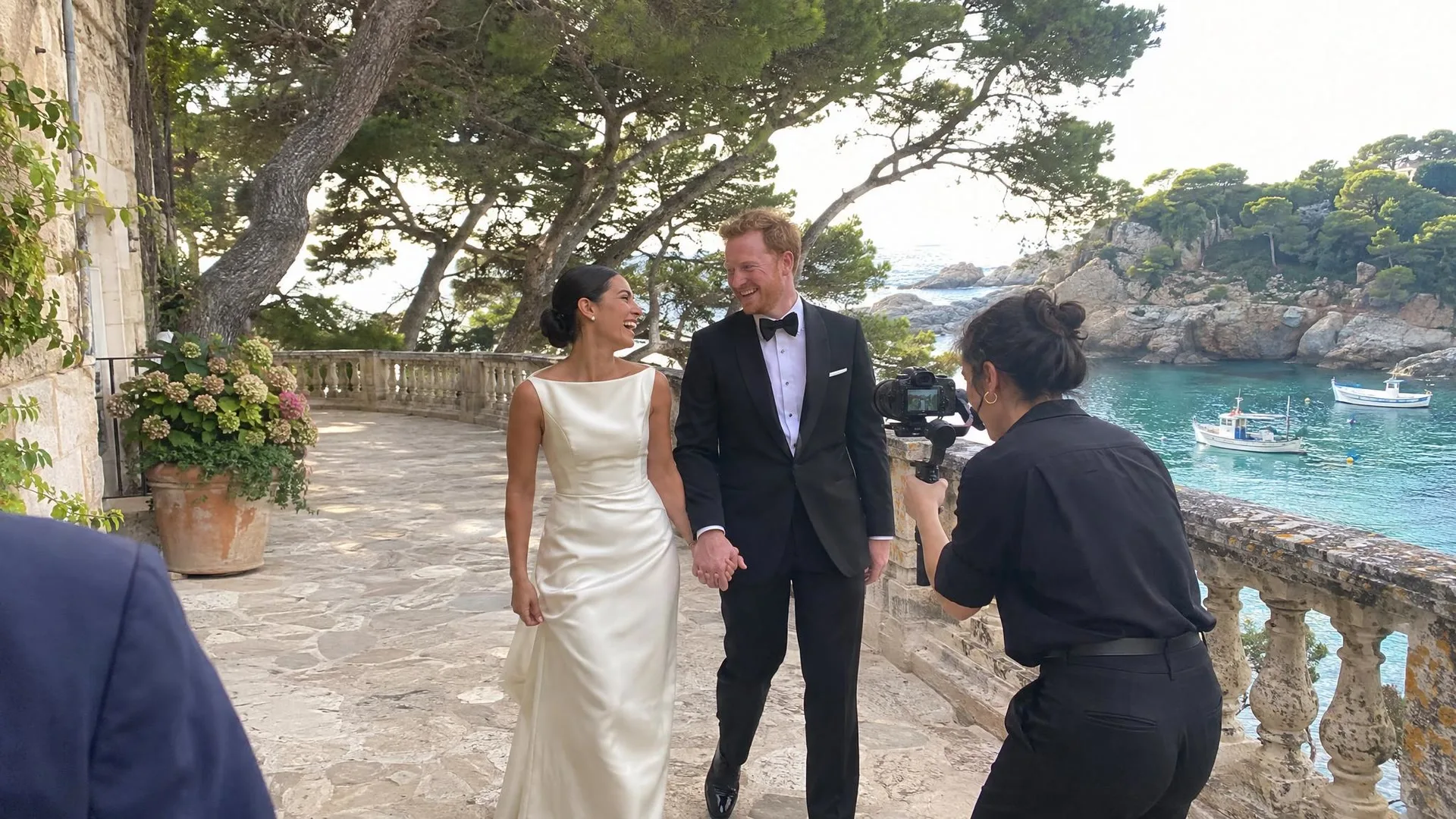
Sooner or later, almost every couple planning a wedding abroad asks the same thing: do we fly in the videographer we already know from home, or do we trust someone who works where the wedding is? It sounds like a budget question. In practice it is about style, logistics, paperwork and who you want walking next to you with a camera all day.
A long discussion this summer in a big-budget bridal community started from the other side. A bride planning a wedding in the south of France wrote a warning about local vendors at famous European destinations: slow replies, quotes full of mistakes, and prices that felt set for foreigners rather than for the work. More than seventy comments followed. Some agreed. Plenty of others said their local team in Tuscany or northern Italy was the best decision they made. Smaller threads in destination wedding groups asked the reverse question, whether flying a photographer or videographer from home is worth it, and whether that person is even allowed to work abroad.
Put together, those conversations give a fairly honest picture. Here is what couples said, and how it applies if your wedding is in Spain.
What couples in those threads agreed on
Your planner and your shortlist matter more than the passport of the vendor. The bride who had a bad experience said her biggest regret was not choosing the other venue, the one with a short list of trusted vendors at fair prices. Many commenters with good stories had one thing in common: a planner who charged a flat fee and did not push them toward bigger quotes.
Where in the country you marry changes everything. Several people pointed out that the most famous spots attract the highest prices and the most "destination" mark-ups. Couples who married in less obvious regions often found better value and more relaxed vendors. Spain works the same way: a castle near Barcelona in June is a different market from a finca inland in October.
Flying someone in is rarely as simple as paying a ticket. A destination planner in one thread said that a third to half of her couples bring their photographer from home. The upsides were real: a style you already trust, more coverage around the wedding day, a contract under your own country's rules and quick previews. The downsides came up just as often: flights, hotels, meals and travel days on top of the fee, equipment that can be questioned at customs, and drone rules the vendor may not know.
Permission to work is a real question. In the visa thread, people argued about how strictly rules are enforced, but the practical advice was consistent: ask your venue. Some venues now ask every outside vendor for local liability insurance, and a vendor who is not allowed to work in the country may not be able to get it.
Local knowledge shows up on the day. One videographer who got married away from home said she hired local teams instead of her own colleagues and was glad she did. A couple who flew their photographer said the photos were lovely but that next time they would hire locally, because it was more expensive and more work than they expected.
How this plays out for a wedding in Spain
Spain is one of the easier countries in Europe for this decision, for three reasons.
First, English is common among wedding vendors on the coast, in Barcelona and on the islands, so the language barrier that pushes some couples to fly people in is smaller here.
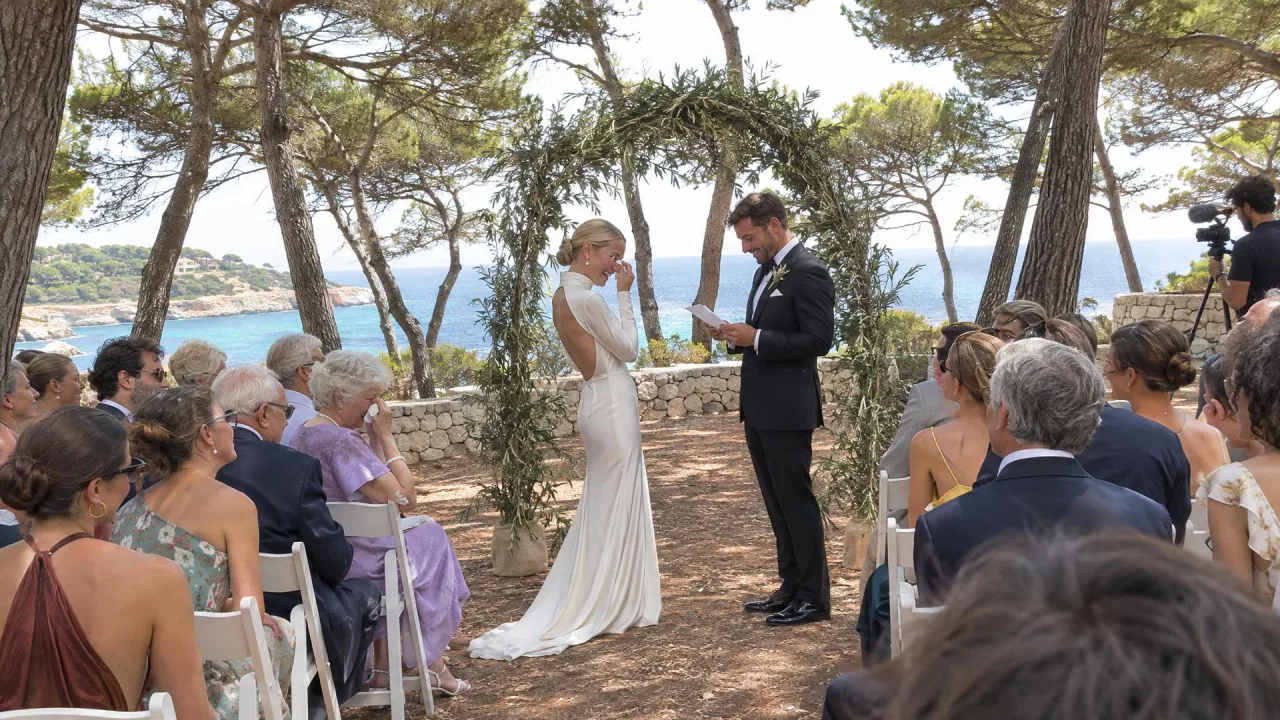
Second, the light and the timing are specific. Summer weddings often start late in the afternoon to avoid the heat, dinner runs into the night, and coastal venues get wind in the afternoon. A team that works here every season plans for that. A team flying in for one weekend learns it on your wedding day.
Third, the paperwork is easier to check than people fear. If you are bringing a videographer from outside the EU, including the UK, ask them directly how they are allowed to work in Spain and whether their insurance covers it. If they want to fly a drone, they need to follow European drone rules and Spanish airspace limits, and many coastal areas near airports, ports and towns are restricted. We wrote a separate guide to drone permits for weddings in Spain if aerial shots matter to you.
When bringing your own videographer makes sense
There are good reasons to fly someone in, and they are worth being honest about:
- You have already worked with them, for an engagement film or a family wedding, and you love how they tell a story.
- You want one person to film several events in different countries, for example a ceremony at home and a celebration in Spain.
- Most of your guests speak a language that few local teams speak, and the film depends on understanding speeches and conversations.
- You found nobody in Spain whose full films you like. Not reels, full films.
If one of these is true, budget for the whole trip rather than the fee alone: flights, two or three nights of accommodation, transport between hotel and venue, meals, and often a travel day before and after. Ask how much equipment they bring and how they handle audio, because sound gear is what most often gets cut when people travel light.
When a team based in Spain is the better choice
Hiring locally tends to win when:
- the venue is one your videographer already knows, or similar to places they film every season;
- the day is long, and you want a second operator without paying for two flights;
- you care about vows and speeches, which depend on microphones, backup recorders and someone who has worked with that venue's sound before;
- you want raw footage soon after the wedding and a finished film within a clear deadline.
Local does not mean "whoever is closest". The French thread is a good reminder that location alone guarantees nothing. Vet a Spanish team exactly as you would vet one at home.
Questions to ask either option
Whoever you choose, these questions separate a calm wedding day from a stressful one:
- Can we watch two or three complete wedding films, not only highlight reels?
- Have you filmed at our venue or a similar one, and what do you plan for the light and wind there?
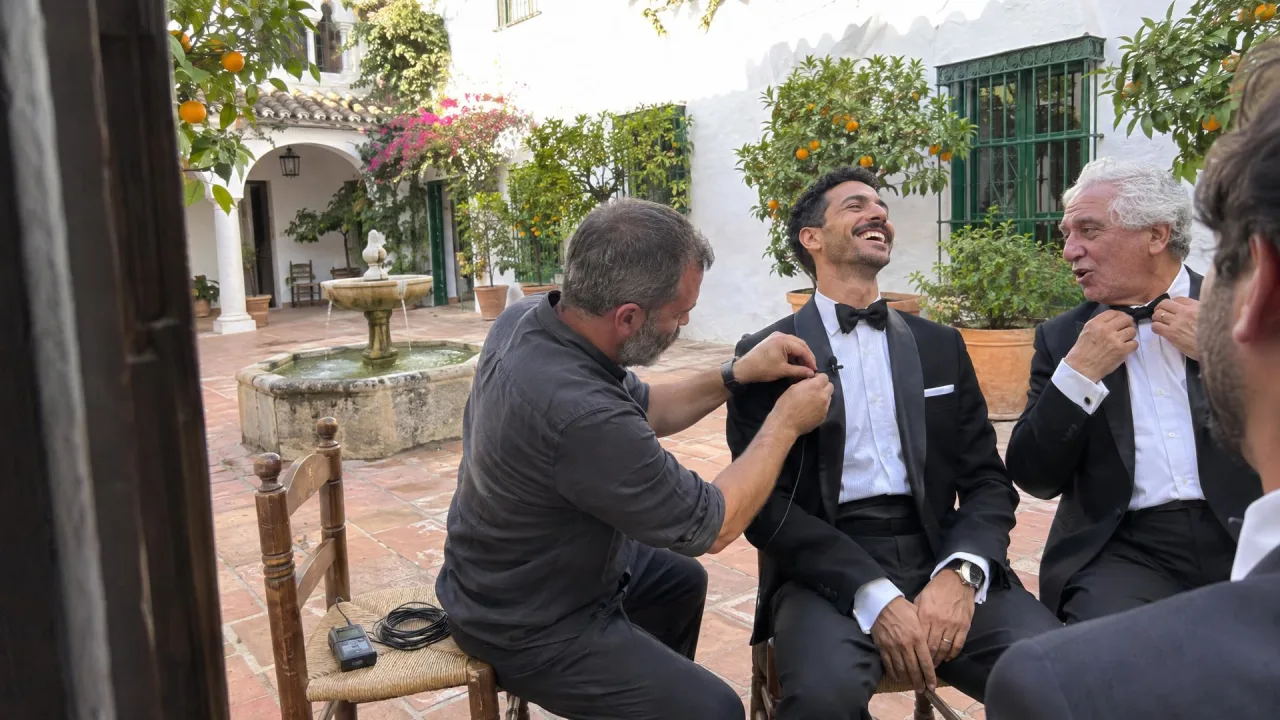
- How do you record the vows and speeches? Lavalier microphones, a separate recorder, a backup?
- Who exactly will be filming, and is there a replacement if someone is ill?
- What does the price include, and what is quoted separately, such as travel and accommodation?
- Are you insured and allowed to work at our venue? Will you send the venue what it needs?
- When do we get the raw footage, and when do we get the finished film?
Our longer list of questions to ask a wedding videographer before a Spain destination wedding goes deeper into contracts and delivery, and our guide to ceremony audio, vows and speeches explains why sound is the part couples miss most.
How we work with couples coming from abroad
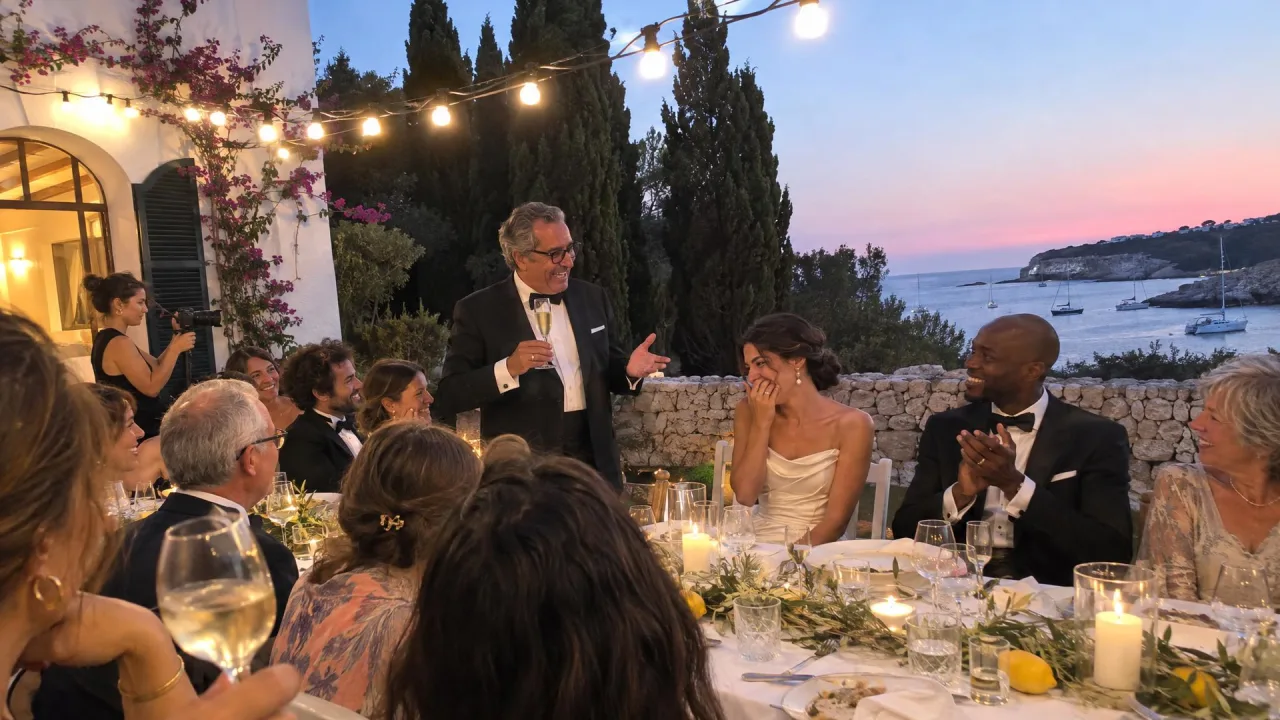
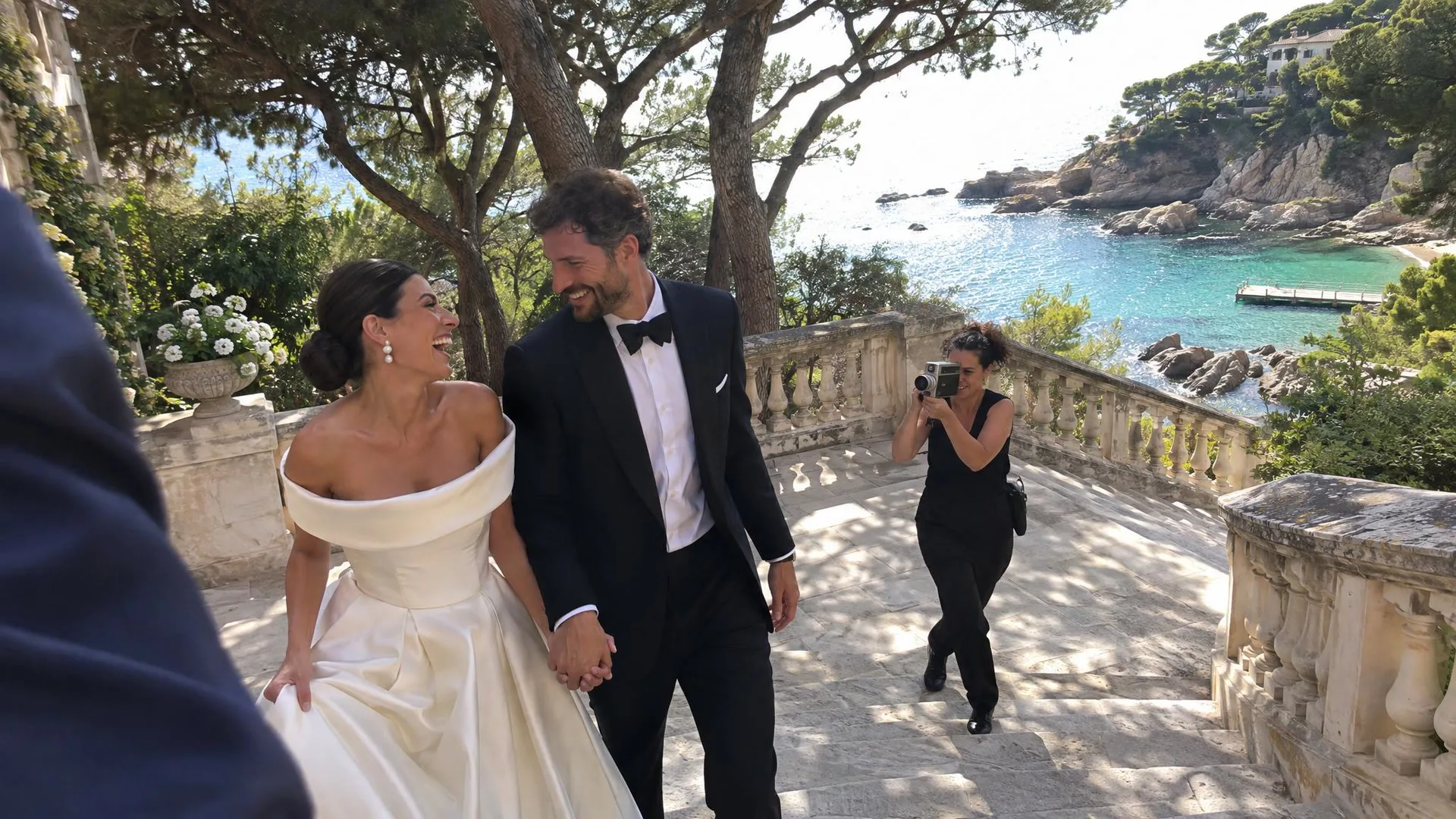
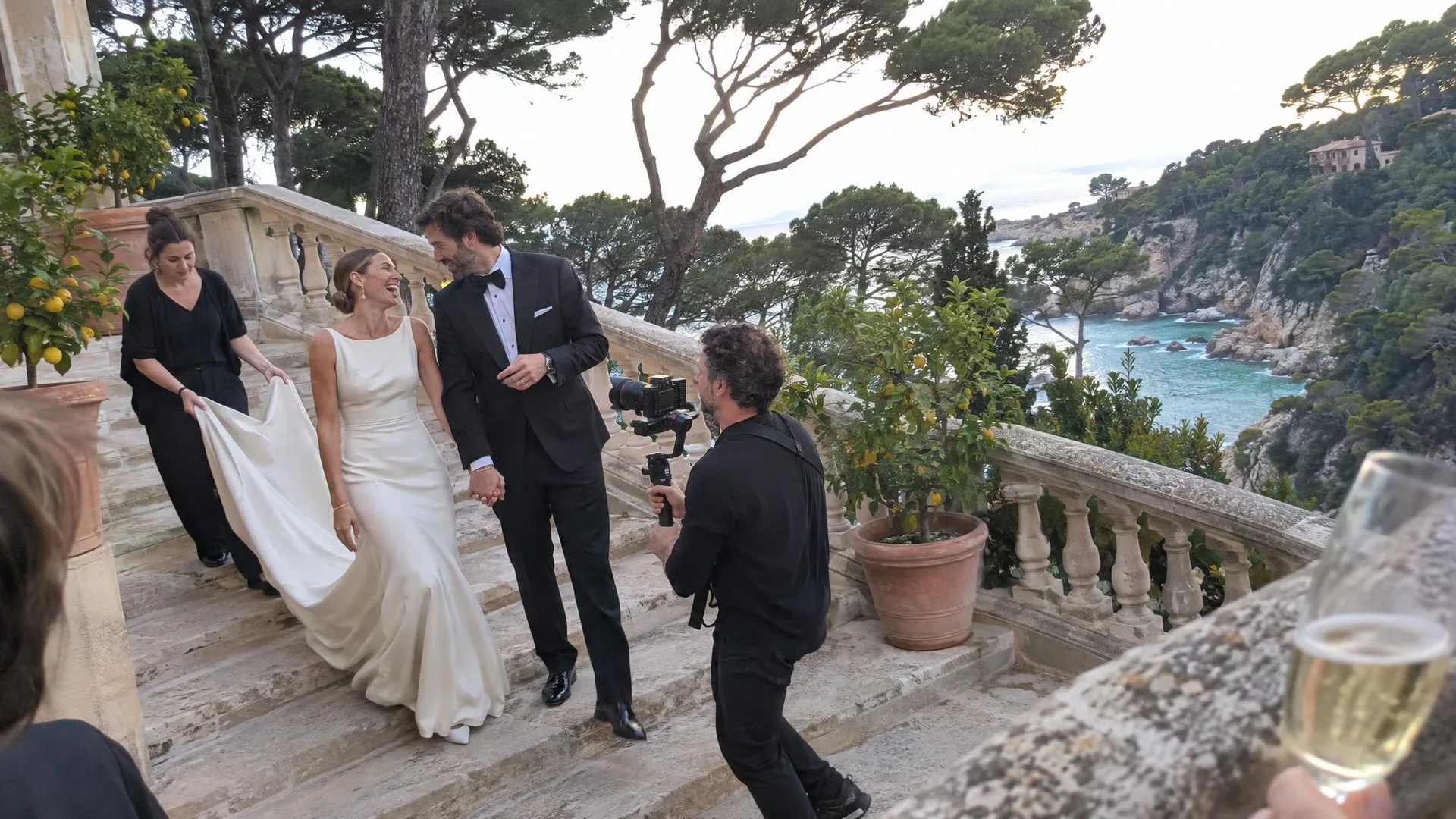
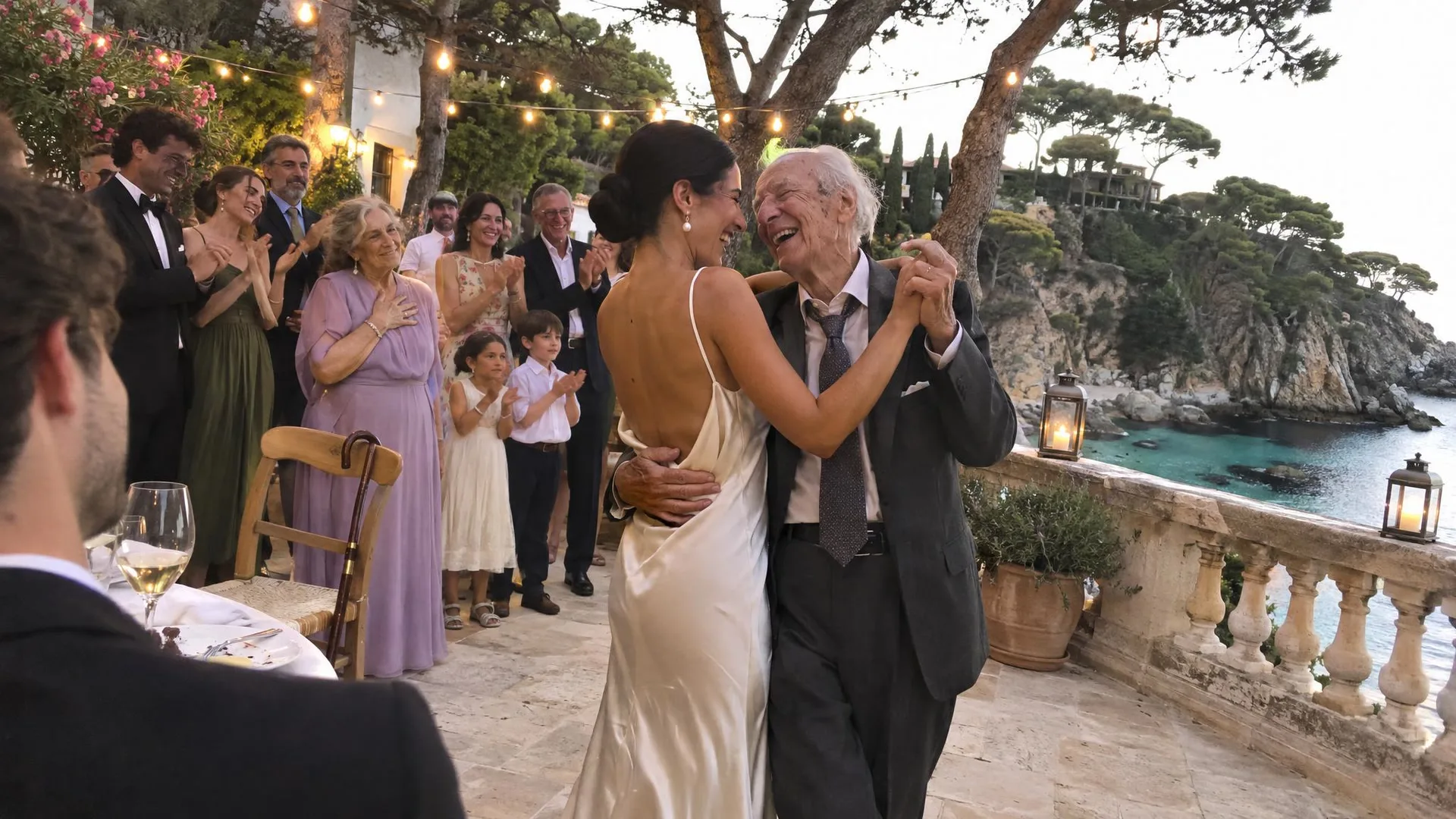
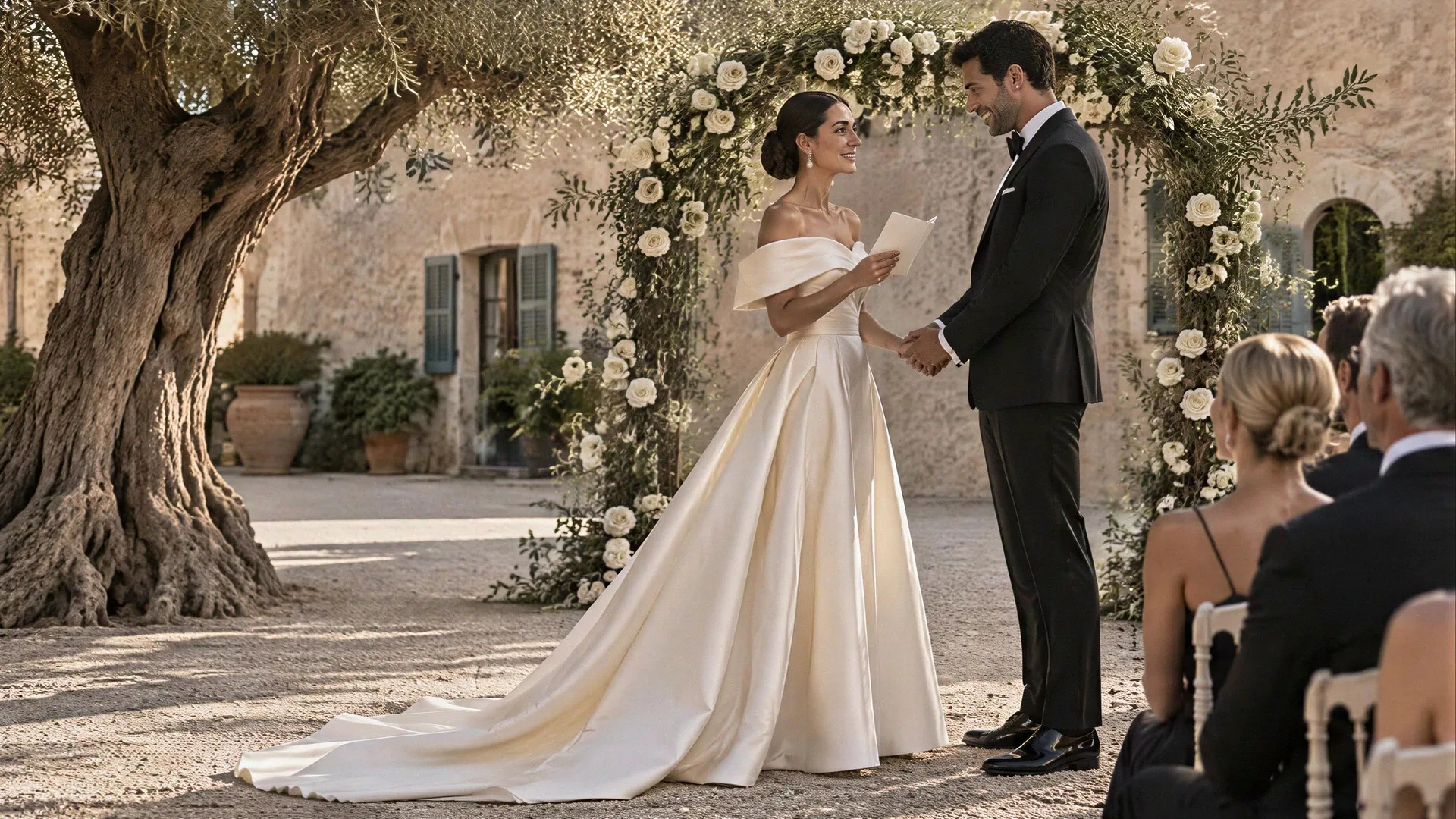
We are Sam and Alisa, wedding filmmakers based in Barcelona. We make documentary and cinematic wedding films in Spain built around each couple's story: real conversations, reactions and the people around you, edited with care for rhythm, music and pauses.
If you are planning from another country, a video call well before the wedding, with the timeline in front of you and your planner in the loop, saves a lot of guesswork. On the day, we put lavalier microphones on the key people during the ceremony and dinner and record sound separately as a backup. You can ask for the raw footage the day after the wedding, and the finished film arrives within two months. Travel and accommodation are quoted separately, so you see the real cost before you decide.
If your wedding is far from any big city, it also helps to have someone on the ground. Our article on day-of coordination when you plan from abroad covers that side.
So, which one?
If you already have a filmmaker you love and the budget for the trip, bringing them can work well, as long as you check the paperwork and the venue's rules early. If you are starting from zero, look first at teams who film in Spain every season and judge them by complete films, not by their country.
Either way, the film you will watch in twenty years depends less on where your videographer lives and more on whether they hear the vows clearly, understand your day and stay out of your way while it happens.
If you would like to talk about your date and venue, write to us and tell us a little about your plans.