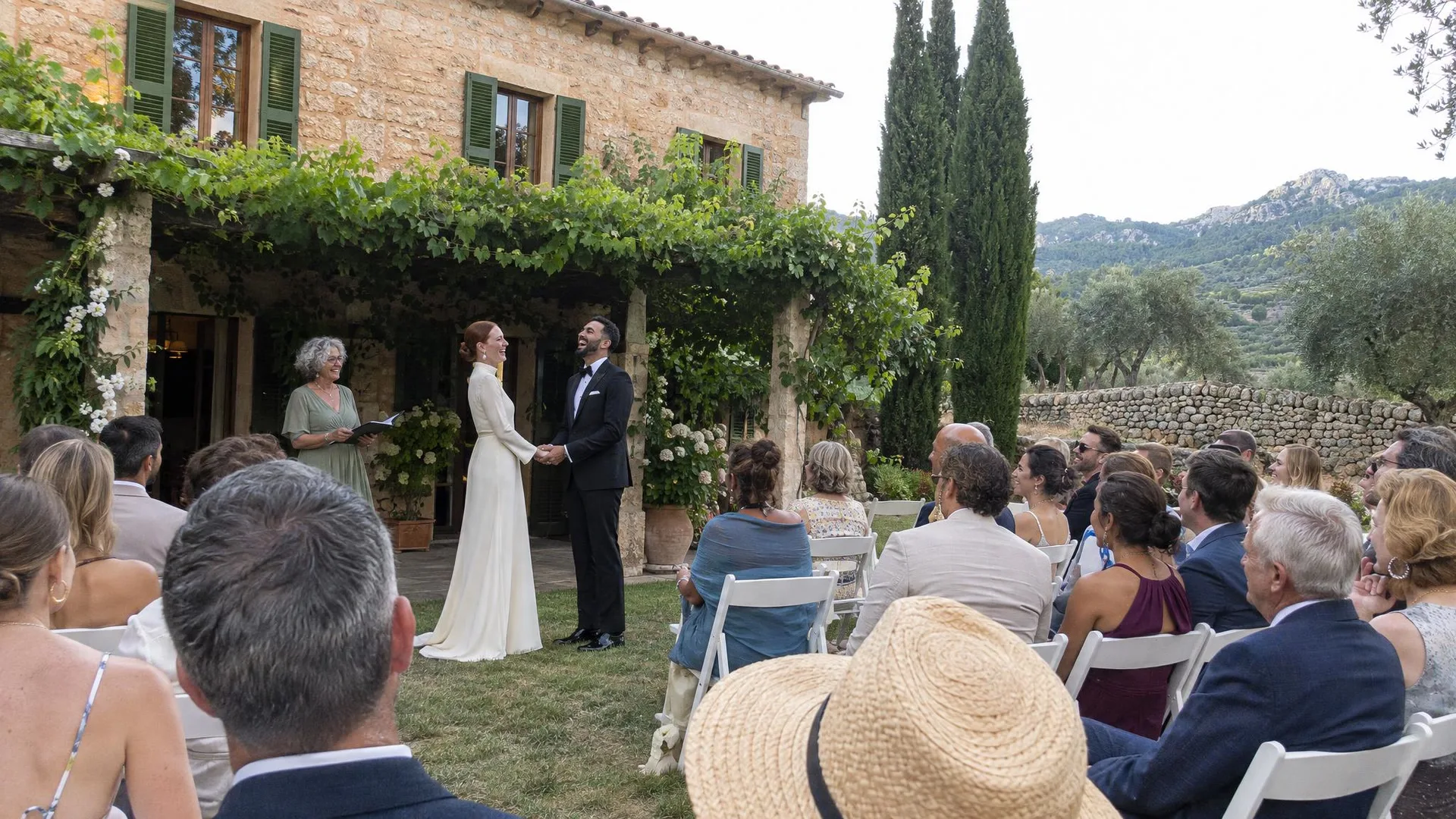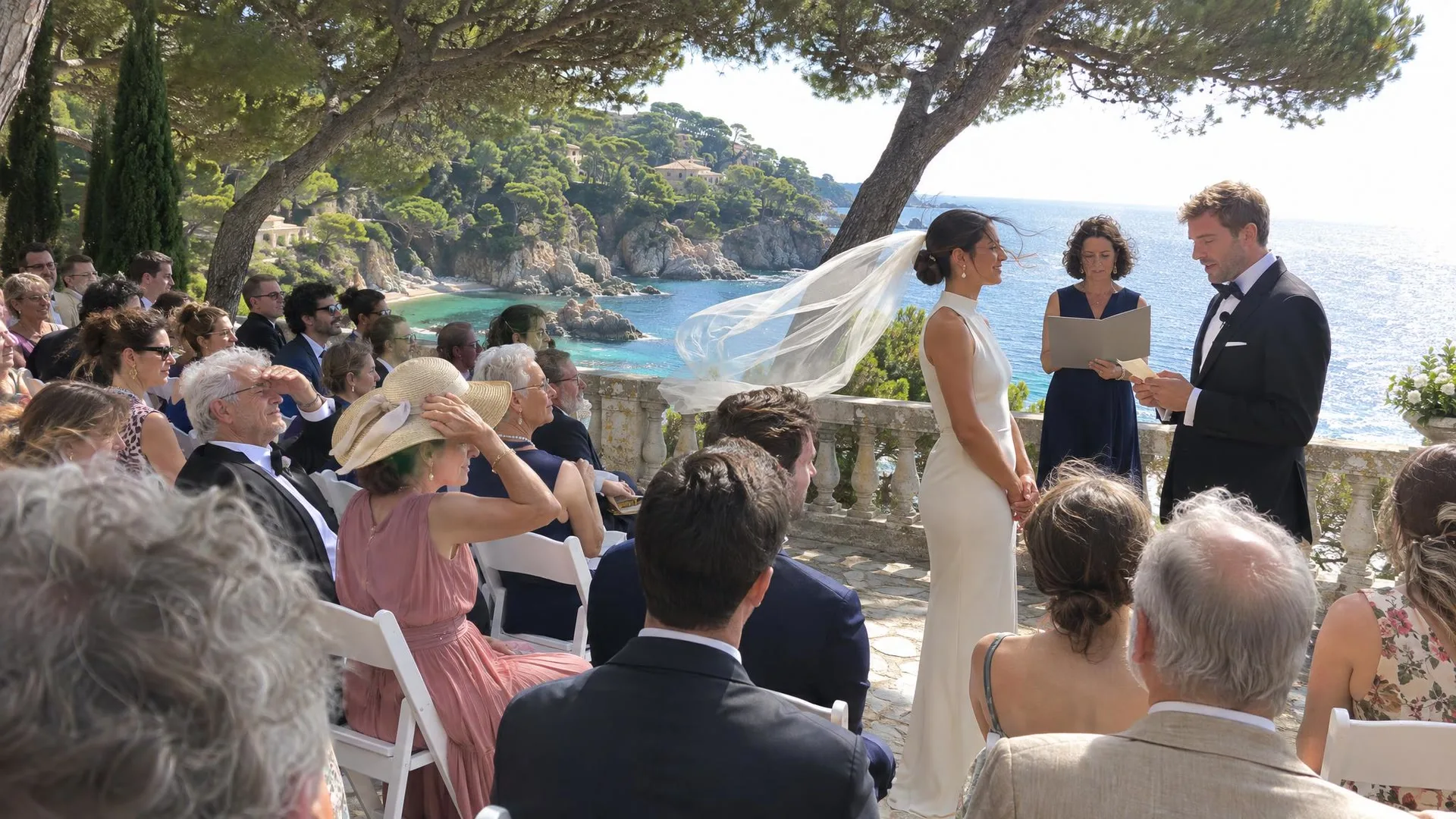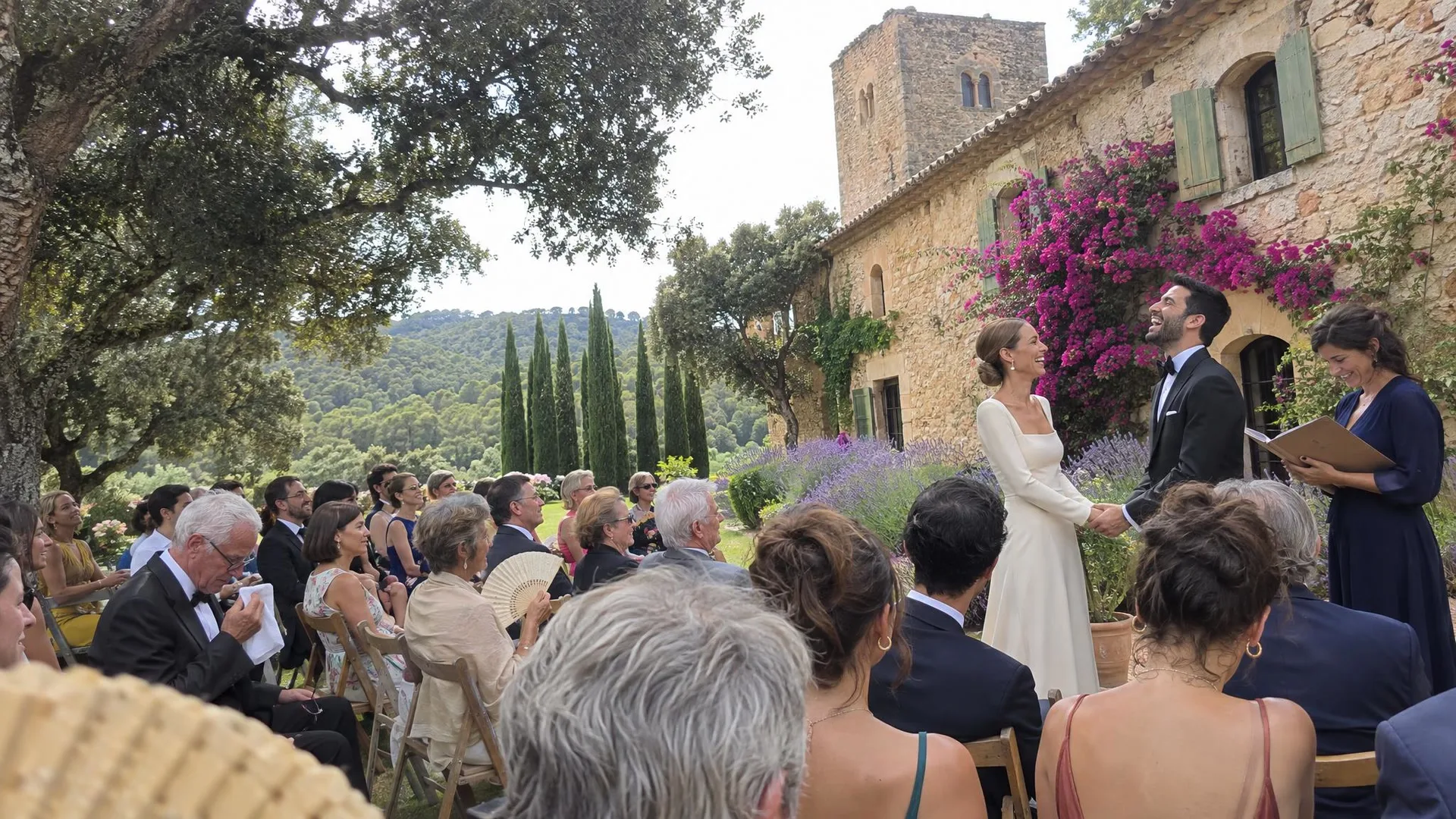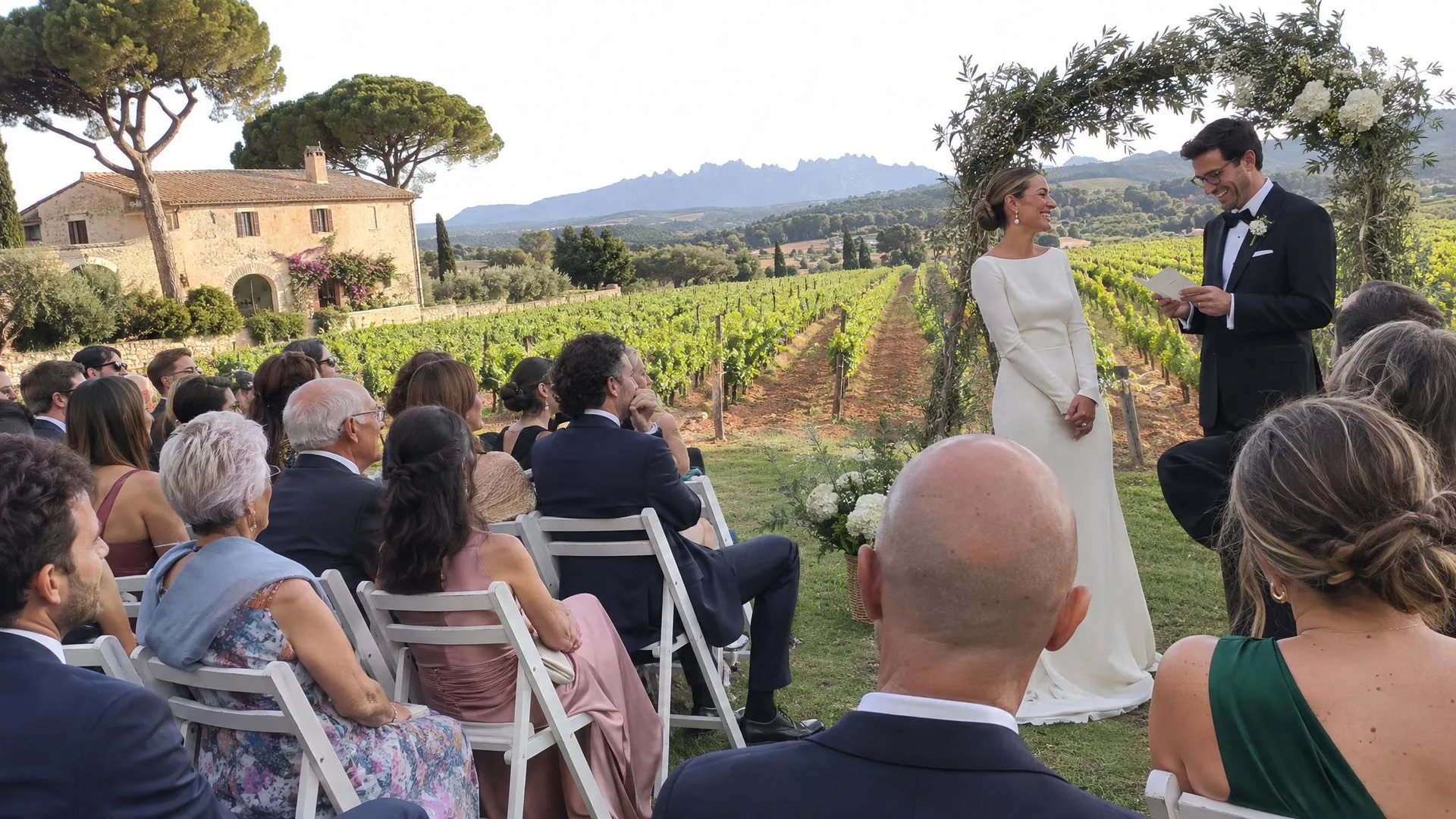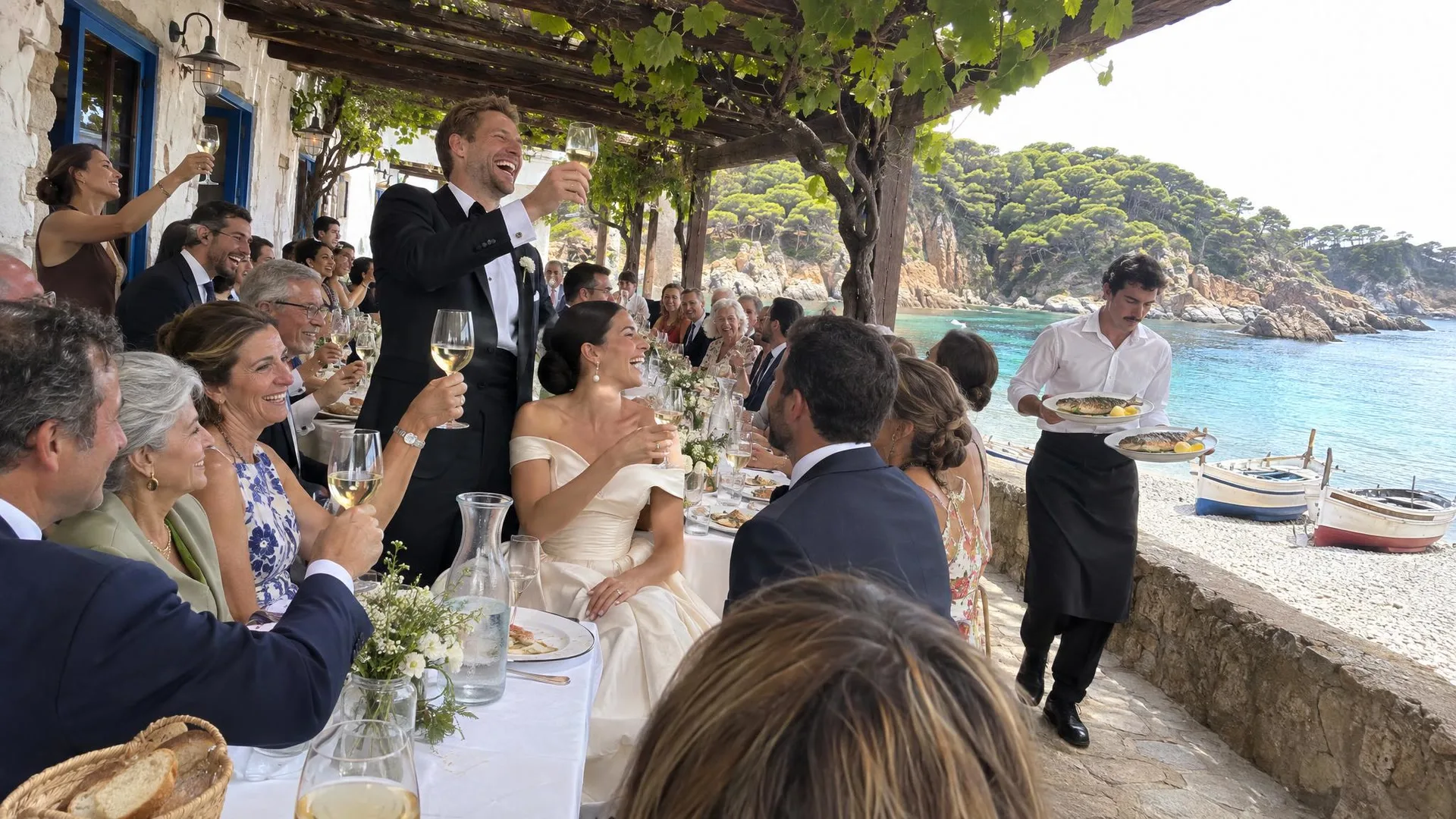
A restaurant wedding in Spain makes more sense than it might at home. Food sits at the centre of almost every celebration here, long lunches turn into evenings without anyone checking the time, and many of the best places to eat already have a private room, a terrace or a garden that works for twenty, forty or a hundred people. For a small wedding, a restaurant can give you better food, professional service and a room that already looks good, without renting chairs, linen and a kitchen.
It also comes with its own rules. A restaurant is a business that serves other customers, closes at a set hour and has a kitchen that works in a certain way. Knowing those rules before you sign is what separates a relaxed dinner from a night of small compromises.
What a big planning thread taught us about minimum spend
One of the most discussed venue threads this year came from a couple planning a micro wedding of about twenty people in the private room of their favourite restaurant. The only charge was a food and drink minimum, and they knew they would end up well under it. Their question was simple: can we just pay the difference?
The answer, from well over a hundred replies, was almost unanimous: yes. A restaurant cares that the minimum is met, not how many people walk through the door. Several people with years in hospitality said a venue would be glad to be paid in full for less work. But the comments added three tips worth remembering:
- Tell the restaurant early. If they know you will be fewer, they will not prepare food for a crowd that is not coming.
- Check how the service charge is calculated. Some places apply it to the full minimum, not to what you actually ordered.
- Spend the gap instead of paying it for nothing. The most popular advice was to put the difference into things guests remember: better wine, a proper sparkling wine for the toast, an extra dessert, late-night snacks, or bottles to take home as favours. A few people said they had extra meals packed to donate.
Other threads on restaurant receptions add the trade-offs. People loved the food, the experienced staff and the chance to do a tasting simply by booking a table for dinner. The downsides they mentioned: limited space for a dance floor unless you book the whole place, music kept low if other diners are next door, and fixed seating such as booths that makes it hard to see the speeches.
How restaurant weddings usually work in Spain
The logic is the same, but the vocabulary changes. Instead of a dollar minimum, Spanish restaurants more often work with a set group menu priced per guest and a minimum number of guests for a private room or for closing the restaurant. Before you compare places, ask which model you are looking at.
A few things worth knowing:
- One menu for the table. Many restaurants ask the whole group to choose the same menu in advance. In Barcelona, the historic 7 Portes, open since 1836, says on its own site that its group menus start at six people, that the chosen menu must be the same for the whole group, and that bookings over 40 people have their own conditions.
- Private, semi-private or the whole place. 7 Portes lists nine private and semi-private rooms, from tables for two or three up to rooms for about a hundred guests. A semi-private room shares the atmosphere, and sometimes the noise, of the main dining room.
- Masia restaurants with gardens. Can Travi Nou, a 17th-century masia in the Horta district of Barcelona, publishes its spaces on its website: small dining rooms for 12 to 30 people, rooms for 60 to 160, and a garden for up to 400. That kind of place lets you hold drinks outside and dinner inside without changing venue.
- Ask whether IVA is included. Some quotes include tax, some do not. Ask in writing.
- Tipping is lighter in Spain. Service is not normally added as a percentage the way it is in the US. Our guide to tipping vendors in Spain covers what is usual.
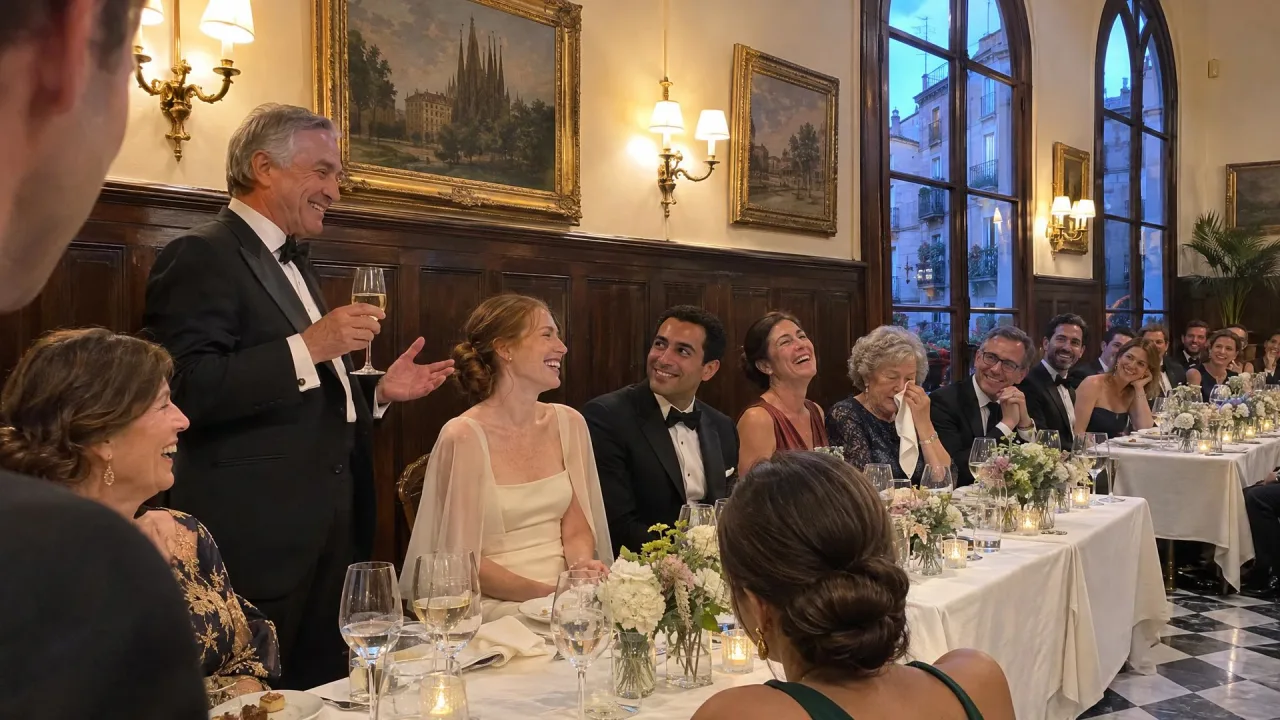
Timing: the Spanish clock works in your favour
Restaurants here eat late. Can Travi Nou, for example, lists its kitchen hours on its own site as 19:30 to 22:15 for dinner, with the restaurant open until midnight. That shapes the evening:
- A lunch wedding (from around 13:30) gives you daylight for the terrace, a long sobremesa and time for a second stop or a party elsewhere.
- A dinner wedding starts later than many guests from abroad expect. Plan a drink beforehand so nobody waits hungry.
- Closing time is fixed. If the restaurant closes at midnight, the party ends there or moves on. Ask about music and closing hours together, and read our notes on noise curfews and after-parties.
Where does the ceremony happen?
Another common question from the forums: if dinner is at a restaurant, where do you get married? In Spain you have a few options:
- At the restaurant itself, if it has a garden, a courtyard or a terrace that can be closed for twenty minutes.
- Somewhere nearby with a short walk, such as a garden, a viewpoint or a private terrace, so guests arrive at dinner together.
- A legal wedding at home and a symbolic ceremony in Spain, which many couples from abroad choose to keep the day simple.
If you are still choosing between a restaurant and a dedicated venue, our guides on how to choose a wedding venue in Spain and on a small wedding in Spain help you compare both. If you like the idea of a farmhouse feel, see our piece on a masia wedding outside Barcelona.
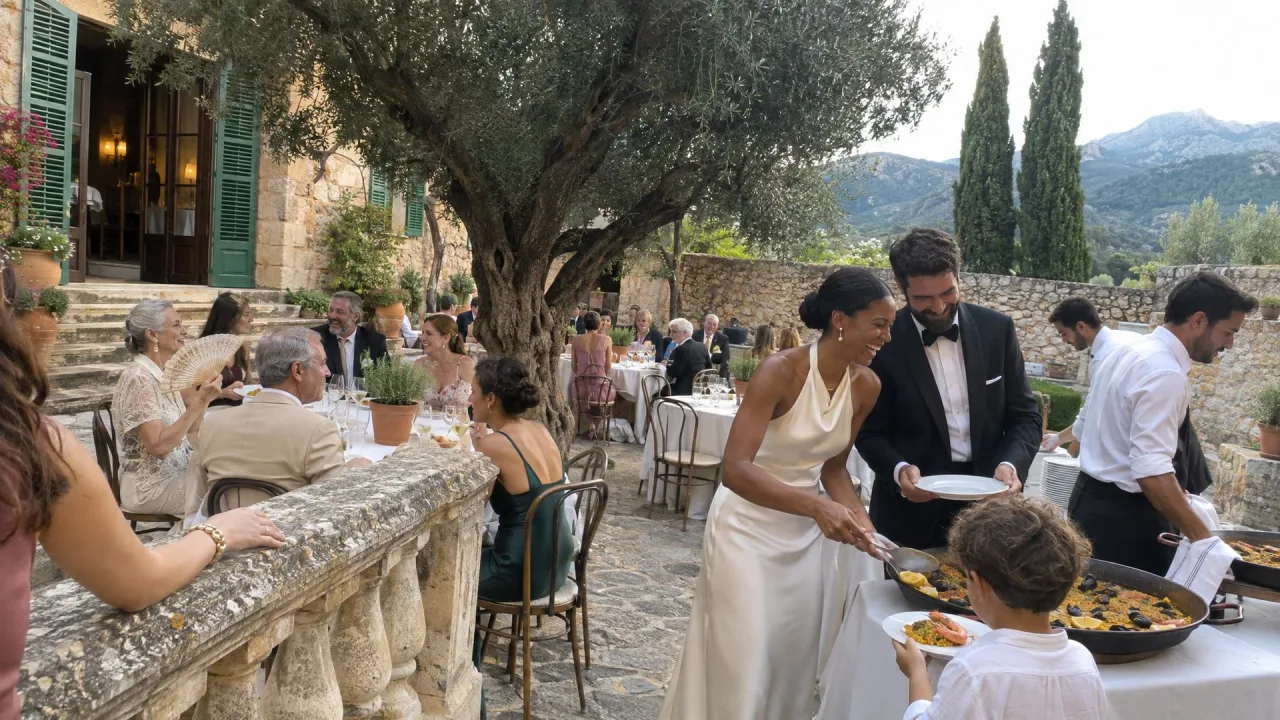
How a restaurant wedding looks on film
From behind the camera, a restaurant wedding is closer to real life than almost any other format. Nobody is performing for a dance floor; people are talking, toasting, passing plates and leaning across the table. That is exactly what documentary and cinematic wedding films in Barcelona and on the coast are made of, and a long table gives a lot of it.
A few practical things we check:
- Light. Many old dining rooms are beautiful but dark. If dinner is in the evening, we ask where the couple will sit and whether a small lamp or candles can be added near the table.
- Sound. Speeches in a busy room are hard to hear later. For vows and speeches we use lapel microphones and a separate audio recorder, so the words are clear even with plates and glasses around.
- Space. In a small private room, one quiet operator is often better than two. Our Mini package covers up to six hours with one cinematographer, which suits many restaurant weddings; larger days with a separate ceremony usually need more.
If your restaurant is in the city, our page for a wedding videographer in Barcelona shows how we work there.
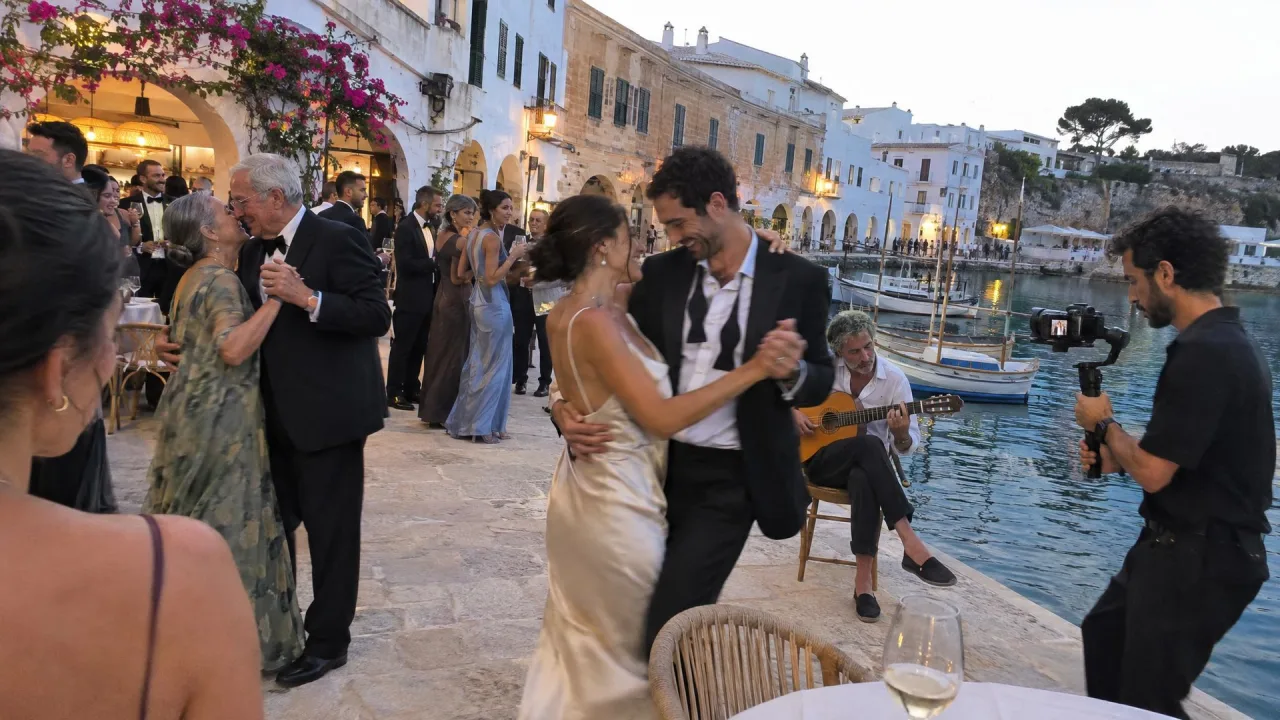
Ten questions to ask a restaurant before you book
- Is there a room fee, a minimum spend or a minimum number of guests?
- If we are fewer, can we pay the difference, and how is service calculated?
- Is the room private, semi-private or a full buyout?
- Does the whole group have to choose the same menu, and by what date?
- Is IVA included in the price?
- What time does the kitchen close, and what time do we have to leave?
- Can we play our own music, and how loud?
- Is there space for a short ceremony, speeches and a little dancing?
- Can we bring our own cake, flowers or decorations?
- Can our photographer and videographer move around the room during service?
The short version
A restaurant wedding in Spain works beautifully for small and medium groups who care about food and conversation more than a long dance floor. Ask how the price is built, agree what happens if you are fewer, use any gap on things guests enjoy, and plan the evening around the kitchen and closing times. If you have a restaurant in mind and want to talk about filming the day, send us your date and the place.