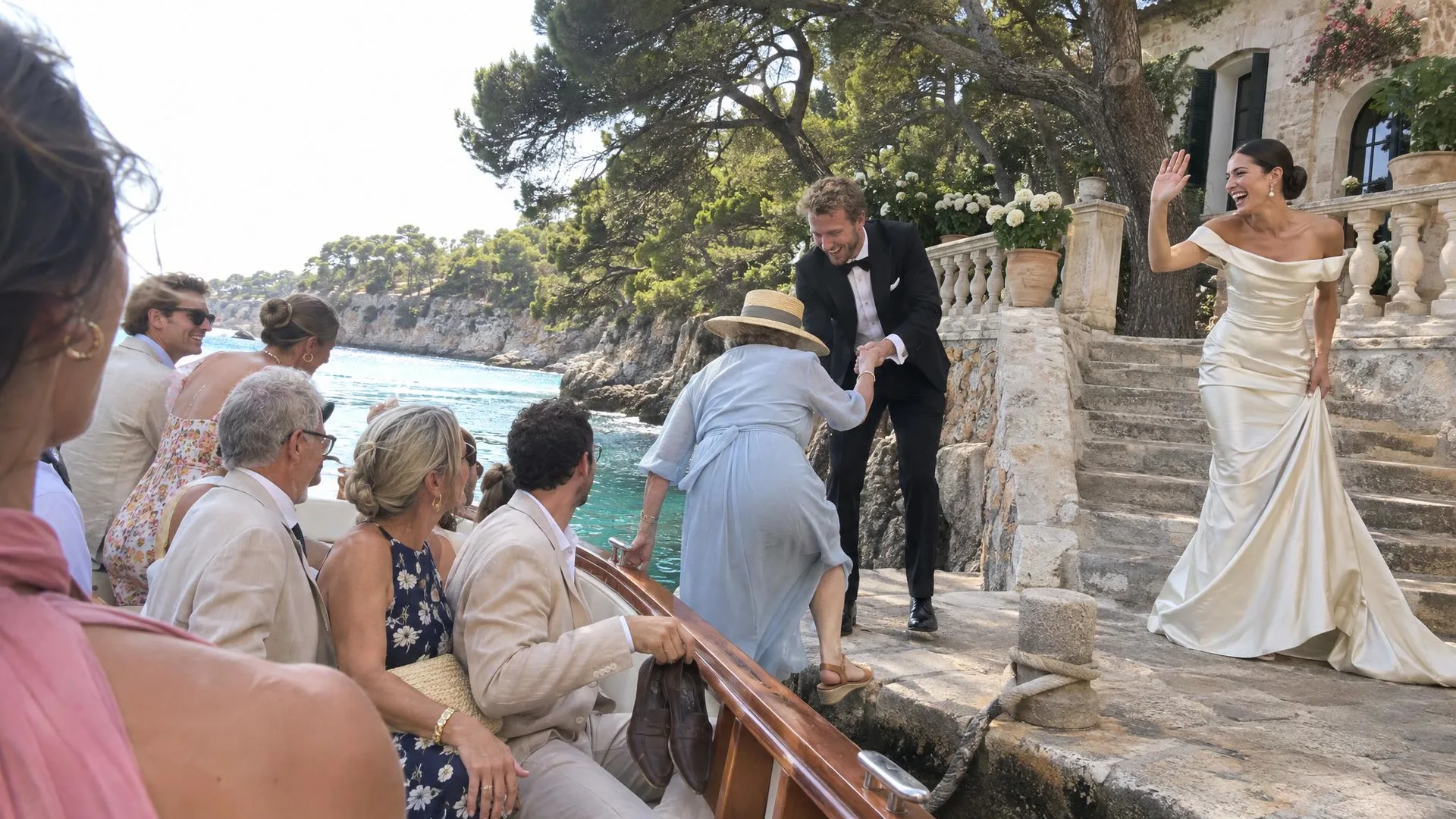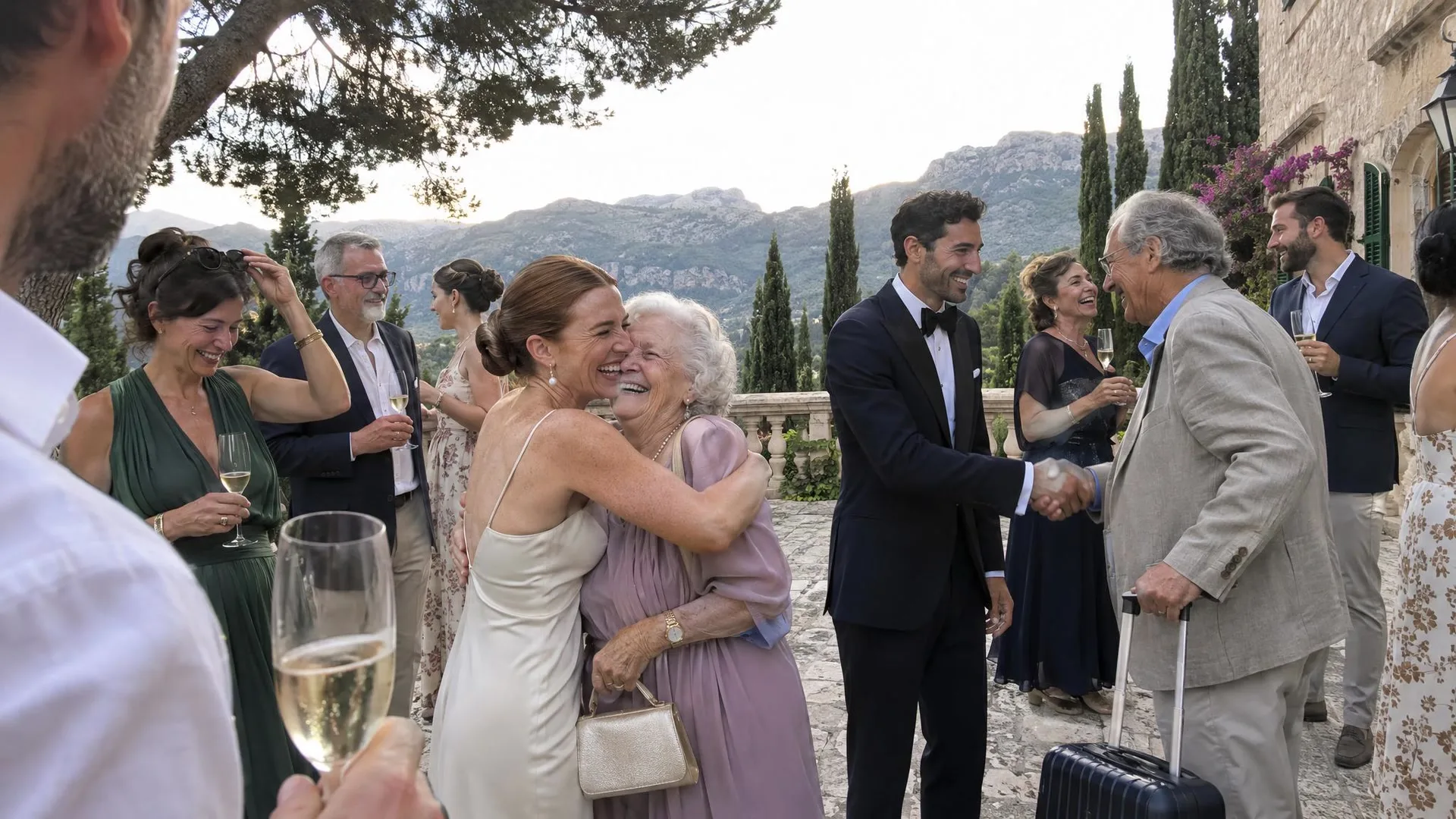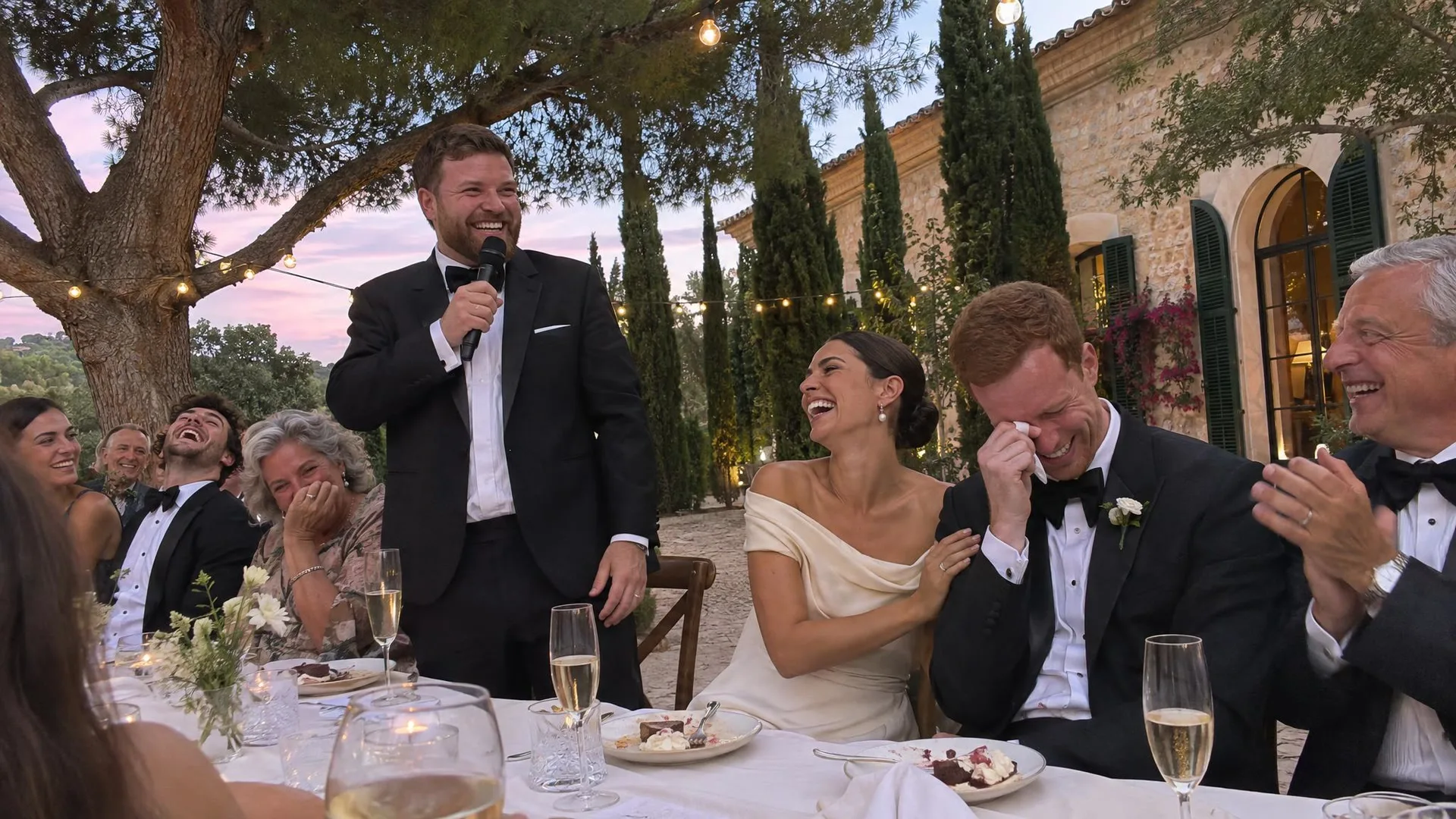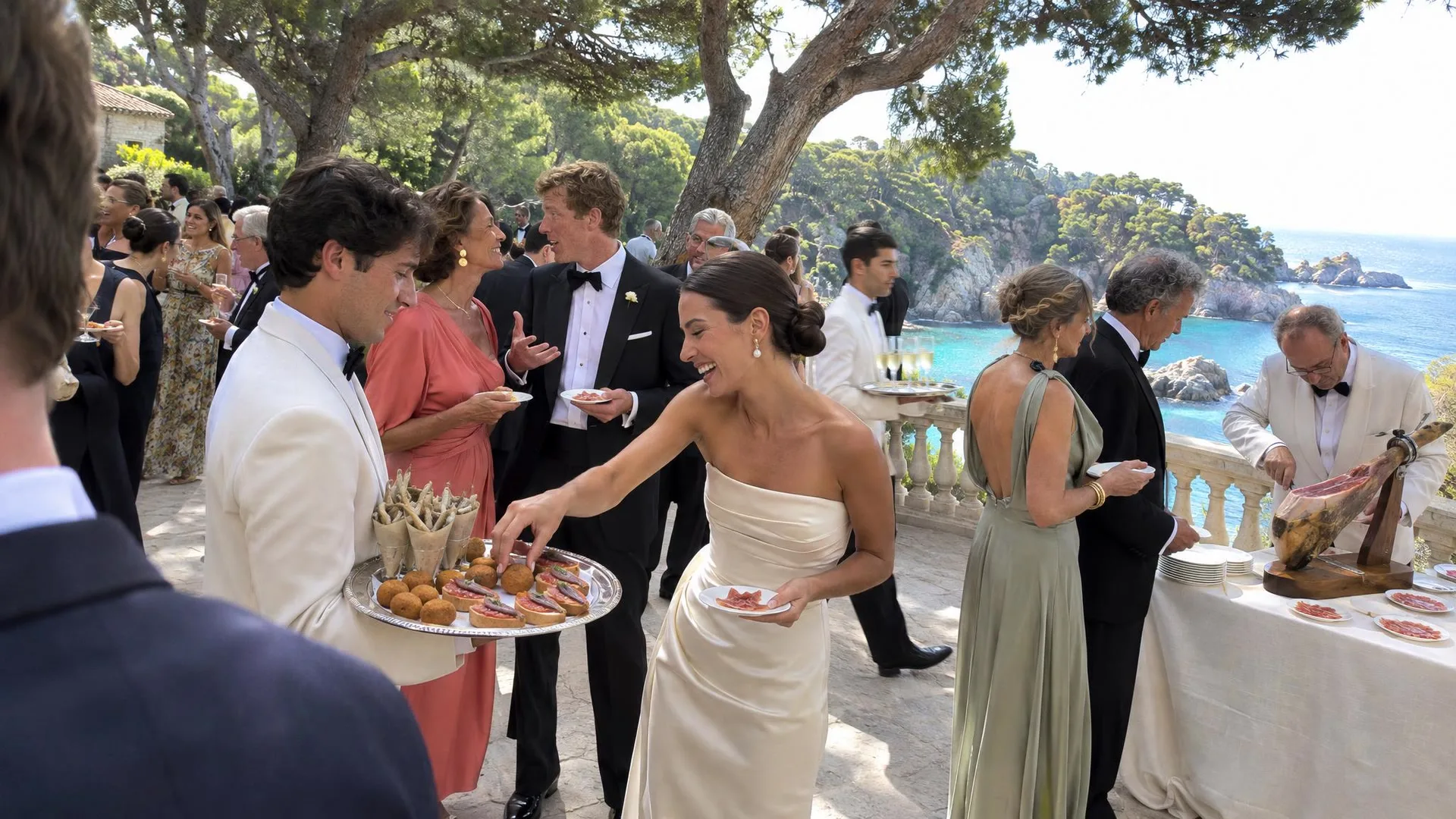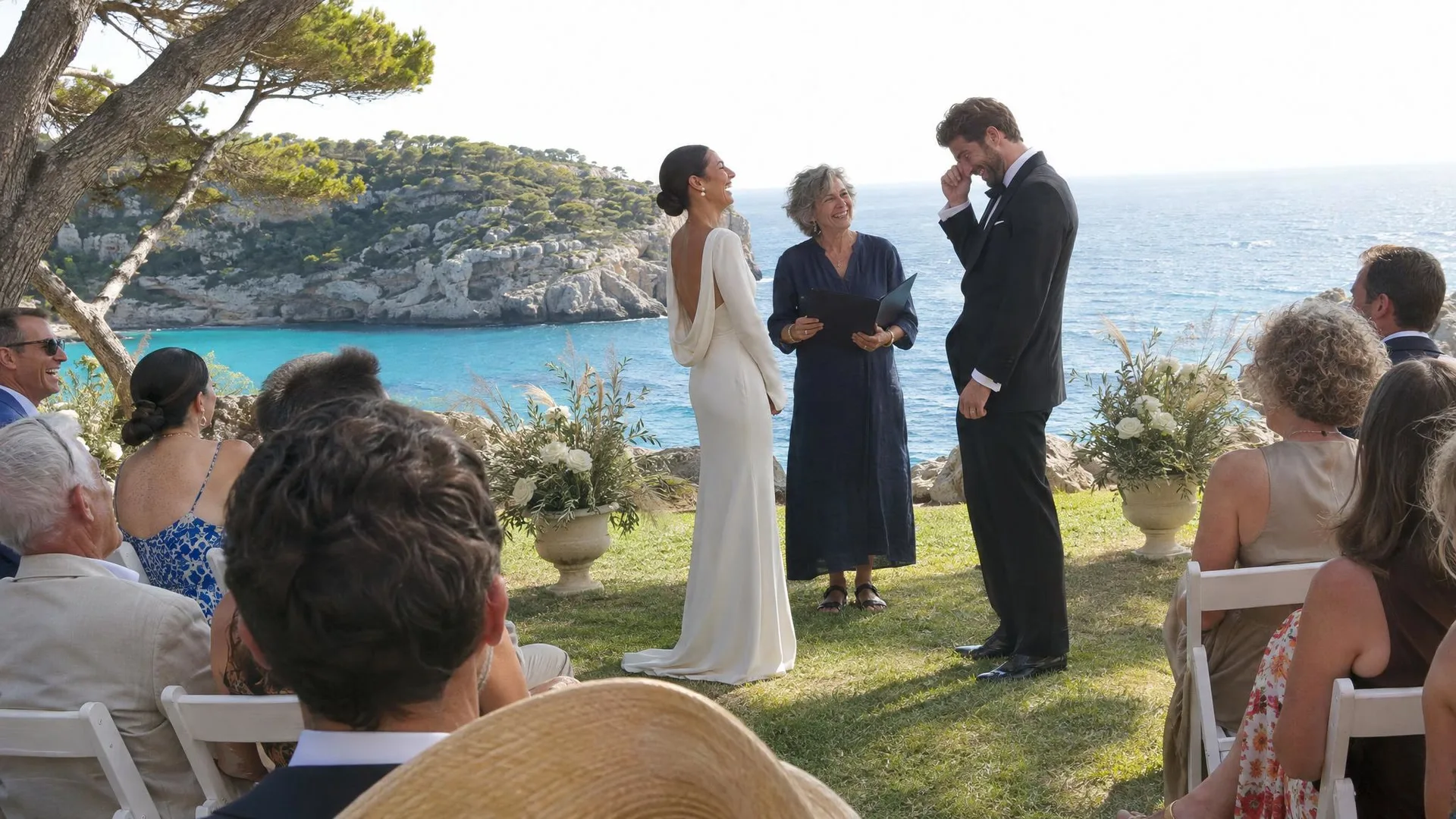
Somewhere along the way the ceremony arch became a default. Couples book a clifftop lawn in Menorca or an old olive grove in Andalusia, then find themselves pricing a metal frame, fabric and two florist hours to put something in front of the view they fell in love with. If you are looking for wedding arch alternatives, the good news is that most outdoor venues in Spain already have a backdrop. Your job is to frame it, not hide it.
This guide pulls together what couples and guests said in several recent planning threads, then adds what matters for a wedding in Spain: light, wind, late sunsets and the way a ceremony looks on camera.
What the planning threads agreed on
The most active discussion was a bride asking whether a ceremony decorated only with candles, with no flowers and no arch, could work. It drew well over a hundred upvotes and dozens of replies. Two smaller threads asked a simpler question: whether it is fine to skip the arch entirely. The answers lined up surprisingly well.
- A great view does not need a frame. The most upvoted replies to the no-arch questions said the same thing in different words: if the mountains, the sea or an old tree are behind you, an arch only blocks them.
- Arches create an off-centre problem. A wedding photographer pointed out that couples almost always end up standing a little to one side under an arch, which makes the wide ceremony shot look crooked. Without a frame, nobody notices.
- If you want something, frame the sides. Two pillars or urns with flowers, a low semicircle of flowers on the ground, a single branch in a simple vessel or fabric draped between two trees were the favourite alternatives.
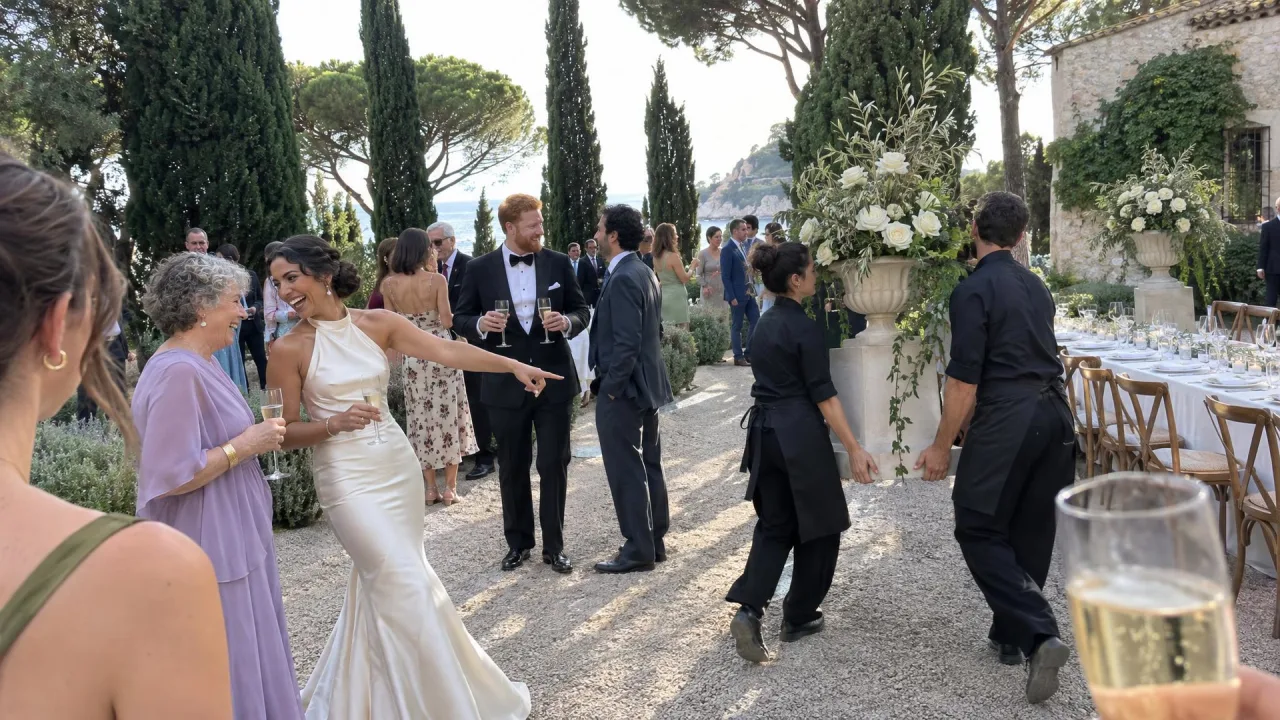
- Reuse is the smart money. Several couples moved their ceremony arrangements to the dinner table or the bar after the ceremony, so they paid for flowers once and saw them for hours.
- Candles are beautiful and not cheap. People who had priced a candle-lined aisle warned that hurricane glass, enough candles to read as "abundant", lighting them and clearing them up can cost as much as flowers. Battery candles were the popular compromise, and some venues ban open flames.
- Dark ceremonies need light. Commenters warned that a candlelit ceremony after sunset needs extra lighting so faces show up in photos and video, and that older guests need to see where they are walking.
One reply also noted that candle-only ceremonies suit cultures that eat and party late. That is exactly the case in Spain, which makes some of these ideas easier here than in most places.
Six wedding arch alternatives that work in Spain
1. Nothing at all, with the view centred
On a clifftop in Menorca, a terrace above a Mallorca cove or a garden on the Costa Brava, the simplest option is often the strongest. Place the couple so the horizon sits behind them, keep the area clear and let the officiant stand slightly back. Ask your planner to mark the spot on the ground so you stay centred.
2. Two urns or pillars on either side
Pale stone urns with olive branches, white roses and grasses suit Spanish estates and look intentional without closing the view. Keep them lower than the horizon line if the sea is your backdrop. Make sure they are heavy enough or fixed, because coastal wind can tip a tall arrangement.
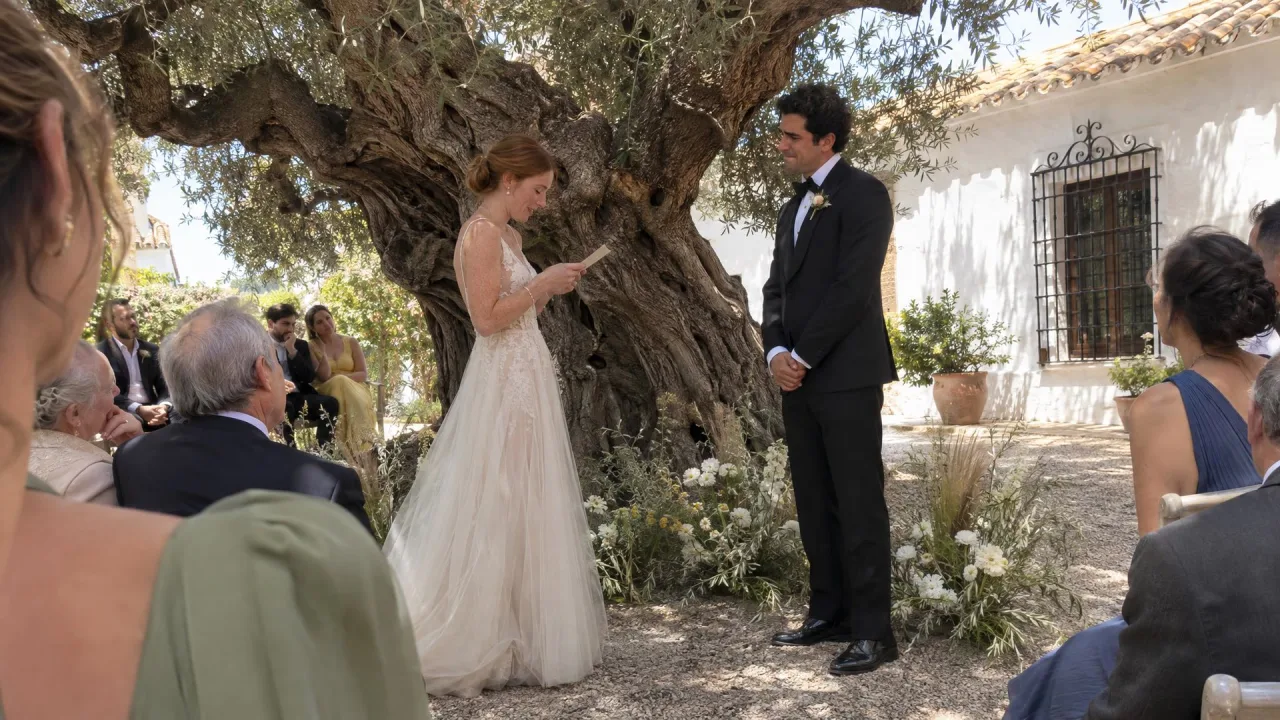
3. A ground meadow or semicircle
Loose flowers and grasses placed directly on the ground in a curve around you feel natural and sit below the view. They work especially well under a large tree, in an olive grove or on a lawn. They are also easier to keep fresh in the heat than flowers hanging high on a frame in direct sun.
4. The architecture you already have
Many Spanish venues come with their own focal points: a stone archway in a masia courtyard, an old wooden door, a chapel façade, a balustrade above the sea or an avenue of cypresses. A few flowers at the base or a garland on one side is usually enough. Ask the venue what other couples have done and what is not allowed to be fixed to historic walls.
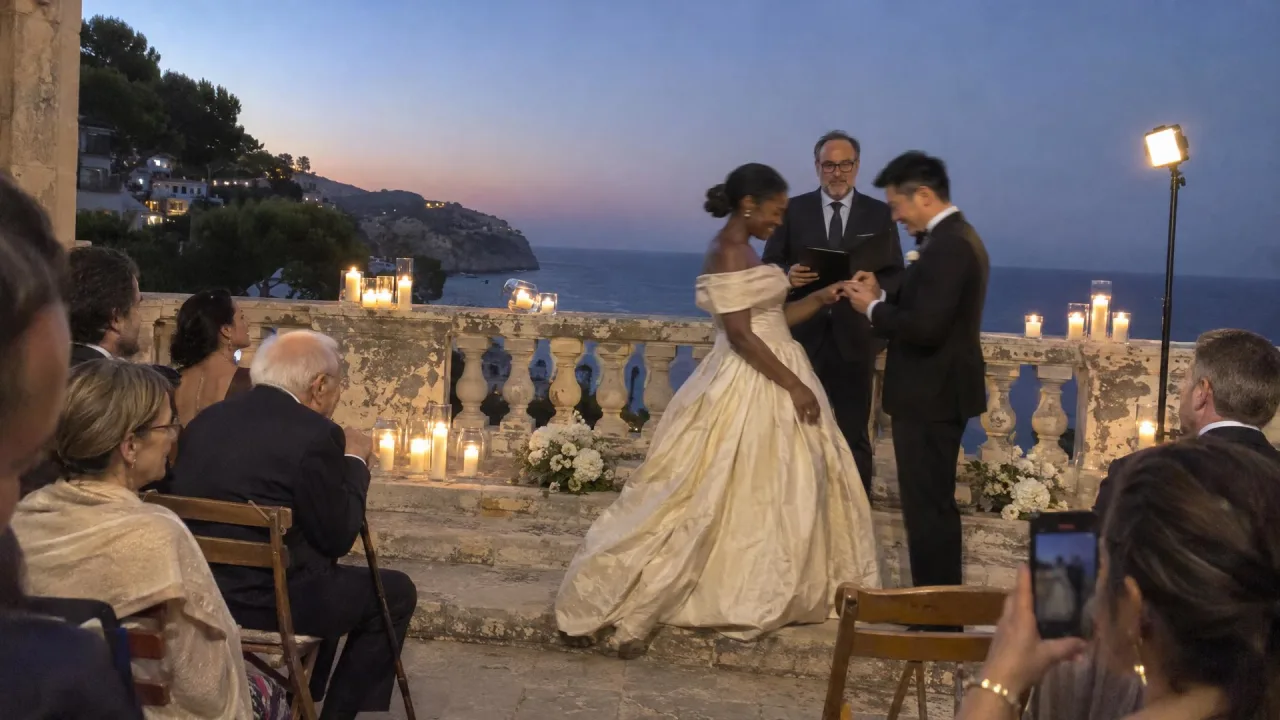
5. Candles for a late ceremony
Spain makes the candle idea realistic. In June the sun sets after 9 pm on the Mediterranean coast and in the Balearics, and dinner often starts well after that, so a ceremony at dusk does not leave you with only an hour of dancing. Plan it carefully:
- Choose battery candles or candles in tall glass for anything near guests and dresses.
- Check whether the venue allows open flames outdoors. In dry summers many rural and wooded venues restrict them, and rules differ by region and season. Our guide to open-flame and sparkler rules at Spanish venues covers the questions to ask.
- Time the ceremony so the vows happen in the last natural light and the candles take over as the sky turns blue. Our article on sunset ceremony timing in Spain helps you find that window for your date.
- Add soft extra light pointed at the couple and the officiant. Candles alone rarely light faces.
6. Fabric between trees or a single branch
Fabric draped between two trees or two posts is cheap, light and easy to adjust on the day. A single olive or almond branch in a simple stone vessel next to the officiant is the most minimal option of all. Both avoid the off-centre problem because there is no frame to stand under.
Practical checks before you decide
Wind. The Costa Brava has the tramontana and the islands get strong sea breezes. Anything tall and light needs weights, and fabric should be tested on site. Ground arrangements and heavy urns cope best.
Sun direction. Decide where the sun will be at ceremony time before you place anything. If the couple faces straight into low sun, they squint; if the sun is directly behind them, faces go dark. Side light is kindest. Our destination wedding timeline guide shows how ceremony time fits the rest of the day.
Heat and flowers. Flowers wilt quickly in July sun. Ask your florist which local seasonal flowers last outdoors; the seasonal flowers and floristry logistics guide has a month-by-month view.
Budget. An arch is often one of the biggest ceremony line items, and it is seen for twenty or thirty minutes. Two urns that move to the dinner table are seen all evening. If you are reshuffling money, our destination wedding budget for Spain shows where it usually goes.
How your backdrop looks on film
From behind the camera, a ceremony is mostly faces: yours, the officiant's and the first rows reacting. The backdrop matters in the wide shots, the drone view and the moment you walk back down the aisle. An open backdrop gives a calm, clean frame and lets the place tell guests and future viewers where you were. Two framing elements on the sides give a sense of depth without covering anything. A heavy arch, on the other hand, often hides part of the view and makes it harder to keep the couple centred from every angle.
For candlelit ceremonies, tell your photographer and videographer early. They will want to know the timing, where extra light can go and whether flash is acceptable during the vows. If you would like to see how open landscapes, stone terraces and late light come together in documentary and cinematic wedding films in Spain, our films show the difference better than any arch catalogue.
Quick checklist
- Stand where the ceremony will be and look at what is already behind you.
- If the view is strong, skip the arch or use low framing on the sides.
- Ask the venue about wind, open flames and what can be fixed to walls or trees.
- Check sun direction at your ceremony time.
- Plan to reuse ceremony flowers at dinner or the bar.
- For a dusk ceremony, add soft light for faces and safe candles.
- Share the plan with your photographer and videographer.
Planning a ceremony with a view and not sure how to frame it? Tell us about your plans and we will share what tends to work at your kind of venue.