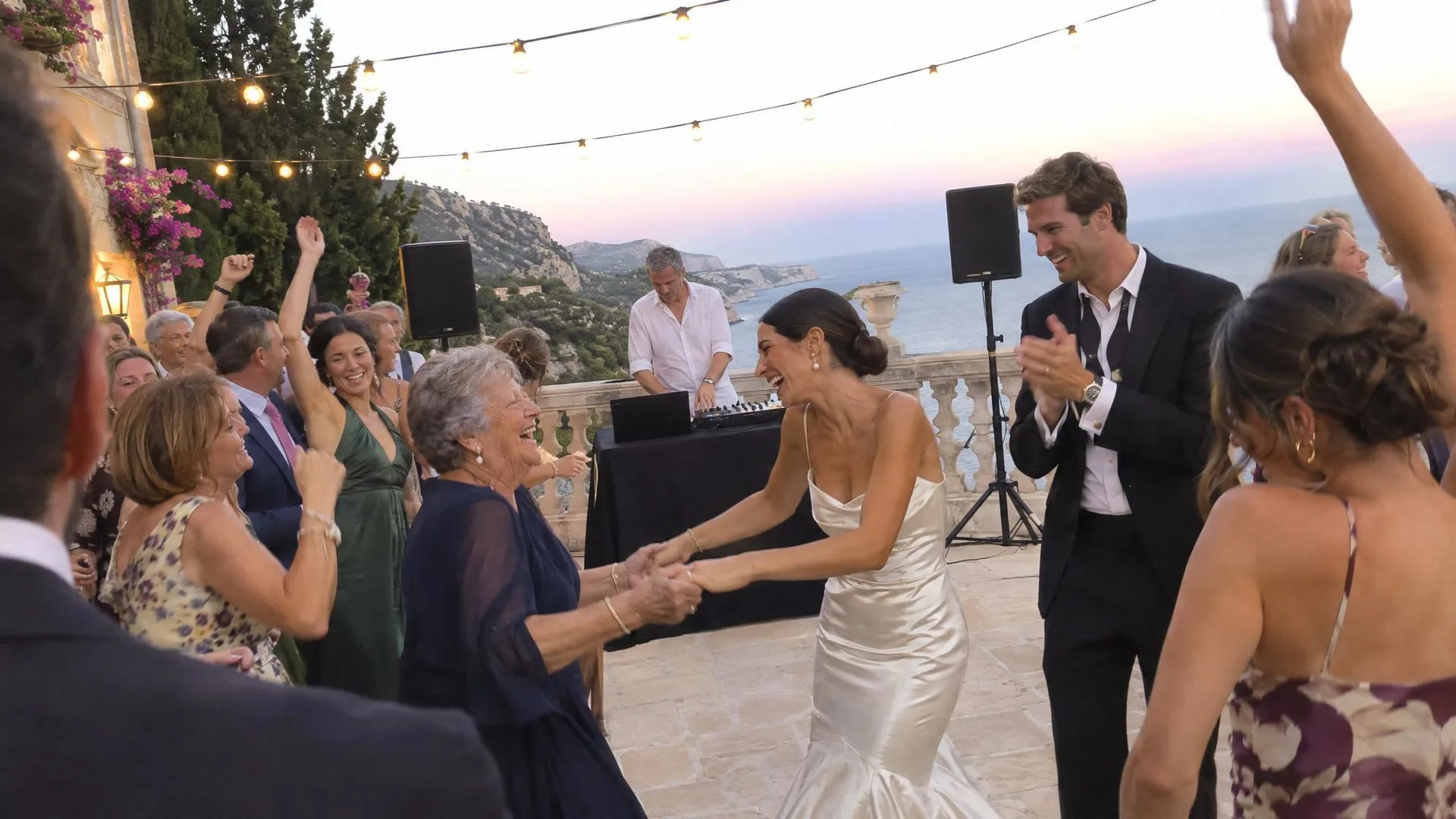
Music is one of those wedding decisions that looks simple on a spreadsheet and turns out to shape the whole evening. Choosing a wedding DJ or band in Spain adds a few extra questions: dinner starts late, parties often run past 3 am, many venues have sound limits, and half your guests may not share a language or a playlist.
A recent planning discussion asked a blunt question: does anyone regret not hiring a DJ? The original poster had only seen DJs who talked too much and played songs that sounded like a random playlist, and wanted to save the fee. More than a hundred replies later, the answer was clearer than the question. Here is what people said, and how it applies to a wedding in Spain.
What the discussion agreed on
- Most bad DJ stories are about the wrong DJ, not about DJs. The most upvoted replies pushed back on the idea that all DJs are cheesy. Several people said the DJs they remember were quiet on the mic, watched the room and changed direction when the floor started to empty.
- The DJ is also the person running the evening. Commenters described a good DJ as a kind of concierge for the night: they cue the entrance, fade music for speeches, run the first dance and the last song, and provide microphones. Without someone doing that job, one guest described a wedding with long silences between songs where most people left early.
- A playlist can work if your evening has few events. Couples who used a playlist without regrets usually had little or no dancing, or very few formal moments. One couple spent months ordering songs, spreading slow tracks out and using an app to fade songs; it went well, but they admitted it was not the same as a person mixing live.
- Mixing works. Several people had a band during dinner and the first part of the dancing, then a DJ for the rest of the night. Others added a saxophone player to a DJ set. A DJ in the thread made the practical point that a band plays its own style brilliantly but can rarely jump from one genre to another the way a DJ can.
- You get what you pay for. Many replies said the good DJs they had seen cost well above the budget the poster had in mind. Price alone does not guarantee quality, but very cheap often means someone just pressing play.
The same themes appeared in a separate thread about venues with a midnight music cut-off, where several European guests said their own weddings ran until two or later and that an after-party space was the usual solution.
How Spanish weddings change the music plan
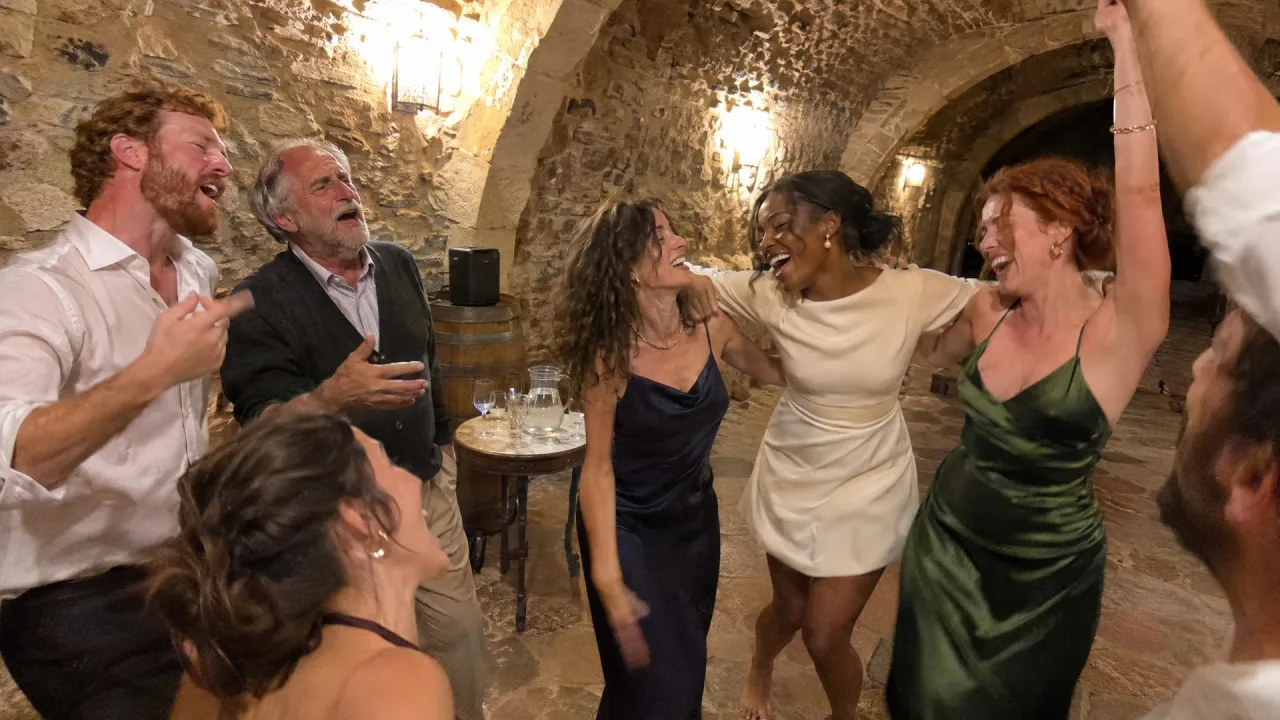
The night is long. In Spain the dinner often starts after 9 pm, speeches can run late, and the dancing may only begin close to midnight. Then there is often an open bar (barra libre) and a late snack, the recena, at around two or three. Your music needs to cover four distinct moods: ceremony, cocktail hour, dinner and the party. A single playlist rarely stretches across all of them well.
Sound limits are real. Many venues have a sound limiter fitted, and outdoor music often has to stop earlier than indoor music because of local noise rules or the venue's licence. Ask for the exact cut-off times and decibel limits in writing, and share them with the DJ or band before you sign. A loud band in a room with a strict limiter will keep tripping the power or play at a level that feels flat. Our guide to noise curfews and after-party planning in Spain covers the questions to ask.
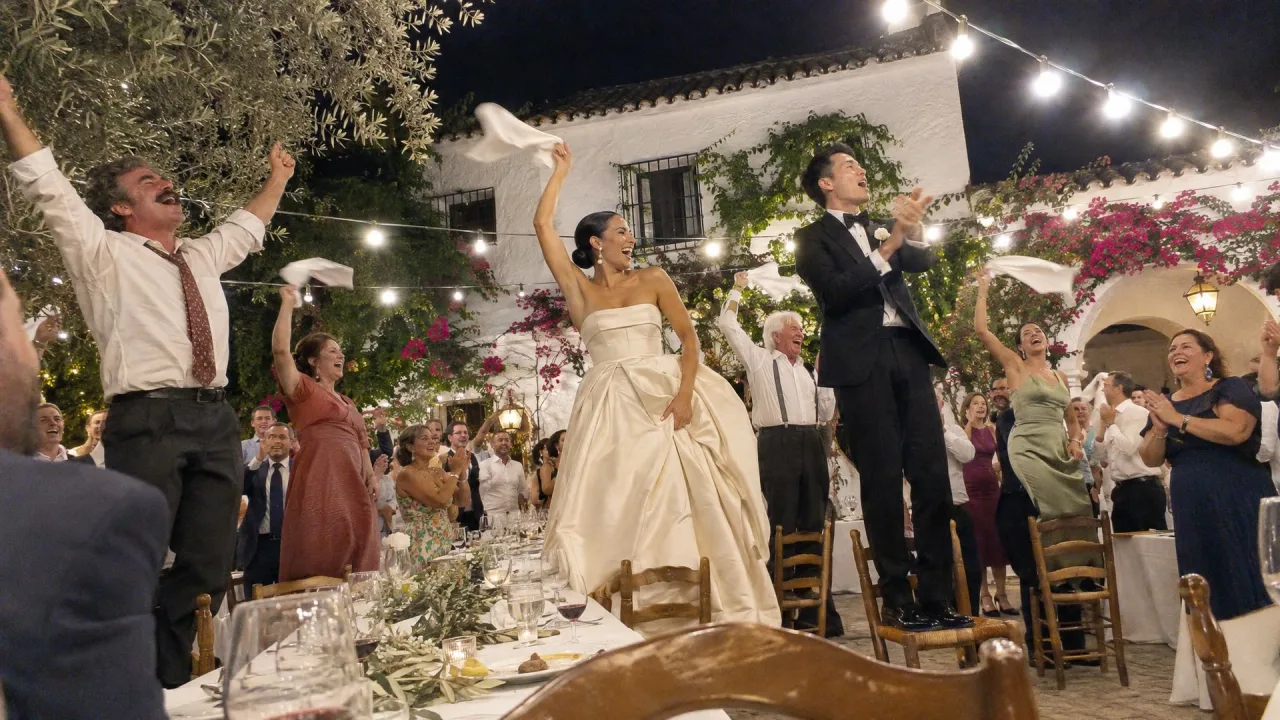
Guests may sing along to different songs. At an international wedding, a British, American or German crowd and a Spanish crowd react to very different tracks. Spanish guests may wave napkins over their heads or stand on chairs when certain songs come on at dinner. Tell the DJ who is coming, which songs matter to each family and which ones should never be played.
DJ, band, live musicians or playlist
A DJ is the most flexible choice for a long Spanish night. They usually bring sound for speeches, can switch between languages and genres, and are easier to fit inside a sound limit. Ask whether they speak your guests' languages on the mic; a bilingual wedding host or a DJ who announces in both languages saves a lot of confusion.
A band brings energy that older guests in particular respond to. Check how much space it needs, whether the venue allows it outdoors, how long the breaks are and who plays music during them.
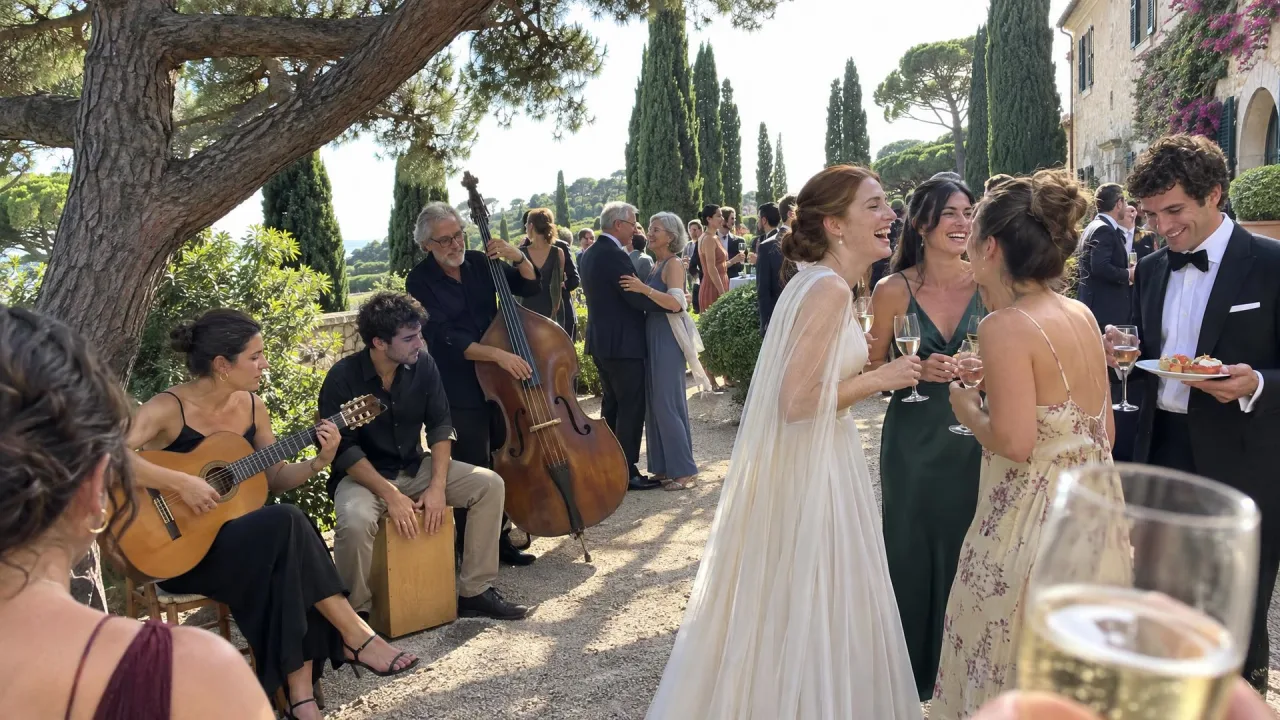
Live musicians for part of the day are a popular middle ground: a guitarist or a small acoustic group for the ceremony and cocktail hour, then a DJ after dinner. A Spanish guitar or a trio with a cajón suits a garden, a courtyard or a terrace and rarely runs into noise rules in daylight.
A playlist works best for a small or very relaxed wedding with few formal moments. Someone still needs to be responsible for it: pressing pause for speeches, handling a dropped connection and fading the last song. Do not hand that job to a guest who also wants to enjoy the night.
Questions to ask before you book
- What exactly is included: ceremony sound, microphones for speeches, lighting, setup and travel?
- How many hours, and what does overtime cost if the party runs past 3 am?
- Do you know the venue, and have you worked with its sound limiter?
- Which languages do you use on the mic, and how much do you like to talk?
- Can we send a must-play and a do-not-play list, and how do you handle guest requests?
- What is the plan if outdoor music has to stop and the party moves inside?
- Who provides the music during a band's breaks?
Put the timings into your schedule early. Our destination wedding timeline guide shows how a typical Spanish evening fits together, and the destination wedding budget for Spain helps you decide where music sits next to food, venue and photo and video.
Music, sound and your wedding film
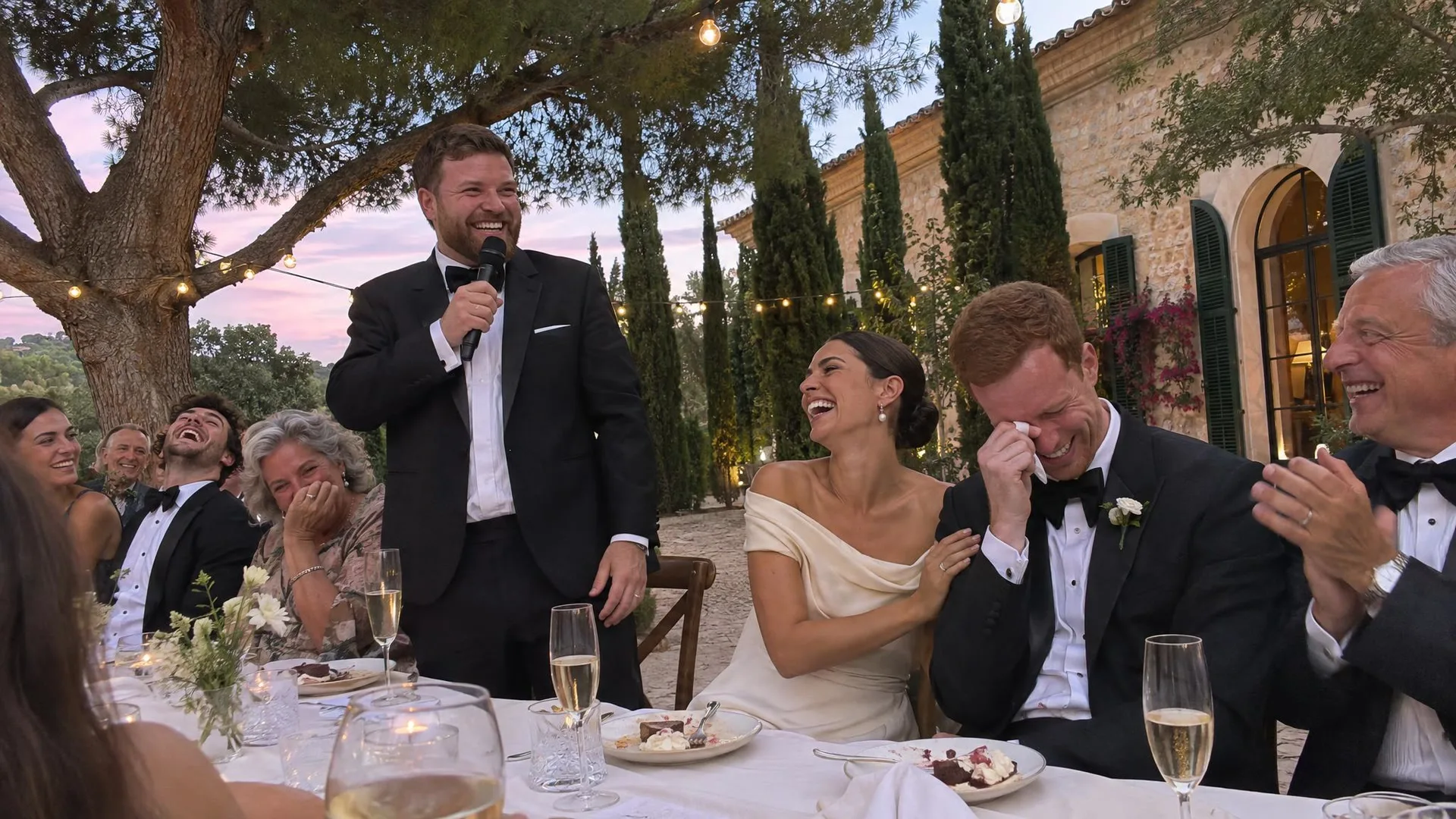
From behind the camera, music and sound decide a lot. Speeches and vows are the heart of many wedding films, and they depend on clean audio. We use lavalier microphones and a separate audio recorder, but it still helps when the DJ or band knows the plan: where the speeches happen, when the music fades and whether the videographer can take a feed from the mixing desk or place a recorder near the speaker.
Lighting matters too. Warm string lights and lamps look natural on film. Heavy coloured lights, lasers and thick haze can turn the dance floor into a blur, so ask the DJ to keep them for the last part of the night, after the first dance and the big moments.
One more point couples often miss: the music in your final film is usually not the music the DJ played. Live dance floor audio is loud and messy, so editors normally build the film around licensed tracks and the real voices of the day. If one song is important to you, tell your videographer early.
If you want to see how speeches, music and late-night dancing come together in documentary and cinematic wedding films in Spain, our films show it better than any description. For guests arriving for several days, the wedding weekend itinerary templates help you place a welcome drink with live music or a relaxed brunch playlist around the main day.
Quick checklist
- Decide what mood each part of the day needs: ceremony, cocktail, dinner, party.
- Get the venue's outdoor and indoor music cut-off times and sound limits in writing.
- Choose a DJ who talks little and reads the room, or a band that fits the space.
- Consider live acoustic music for the ceremony and cocktail hour.
- Send must-play and do-not-play lists that reflect both families.
- Plan an indoor space or after-party if the outdoor music stops early.
- Introduce your DJ or band to your photographer and videographer before the day.
Planning a long Spanish night and wondering how it will look and sound on film? Tell us about your wedding and we will share what tends to work at your kind of venue.