Most couples planning a wedding in Spain spend months on the venue, the menu and the guest list, and about ten minutes on the question of who will hold the microphone. Then, a few weeks before the date, it lands all at once: who welcomes everyone, who calls people to dinner, who introduces the speeches, and what happens when half the room speaks Spanish and the other half does not.
A long thread in a UK wedding forum recently picked this apart from an unusual angle. A bride wanted to move the speeches out of the dinner and into a drinks reception so that evening guests could hear them too. More than seventy replies followed, and a smaller planning group had a parallel debate about whether a 30-guest wedding needs speeches at all. Neither thread was about Spain, but almost everything in them applies to a destination wedding here, where the schedule is longer, the dinner starts later and the guests often come from two or three countries.
What the threads agreed on
Reading through the replies, the same points came up again and again:
- People want to be sitting down. Speeches given to a standing crowd with drinks in hand were the least popular idea. Guests said they could not hear, could not see and mostly hoped it would end quickly. The most liked suggestion was simple: do the speeches while everyone is seated.
- Timing beats content. Speeches that hold up the food make guests restless. Speeches during dessert, or straight after the main course, were remembered more kindly.
- Fewer and shorter. Three or four speakers of around three minutes each, roughly fifteen minutes in total, was the figure most people landed on. Seven separate speeches drew a clear "too many".
- Combine where you can. Parents speaking together as a pair, or two friends sharing one speech, kept the count down without leaving anyone out.
- Nobody has to speak. Several replies were firm that a speech should only come from someone who wants to give it. A short joint thank-you from the couple is enough on its own.
- Someone has to run the room. Even the people who disliked speeches agreed that guests need to know when to sit, when dinner starts and when the dancing begins. If nobody is named for that job, it falls to whoever is nearest the microphone.
Do you need a host at a wedding in Spain?
In Spain there is no strong tradition of a formal master of ceremonies at weddings. The flow of the evening is usually carried by three people without any announcement: the venue's maître or coordinator, who tells the kitchen and the waiters when to move; the DJ or band, who handles music cues and a few announcements; and a planner, if you have one. Many Spanish weddings run happily like this.
A named host becomes useful when:
- your guests come from different countries and do not share one language;
- you have several speeches, a toast, a cake moment and a first dance to fit into the night;
- the ceremony, cocktail and dinner are in different parts of a large estate;
- the schedule has hard limits, such as a music cutoff or a last shuttle back to town.
That describes most international weddings in Spain. If you are already planning one of the bilingual ceremonies in Spain, the reception deserves the same thought.
Who can be your host
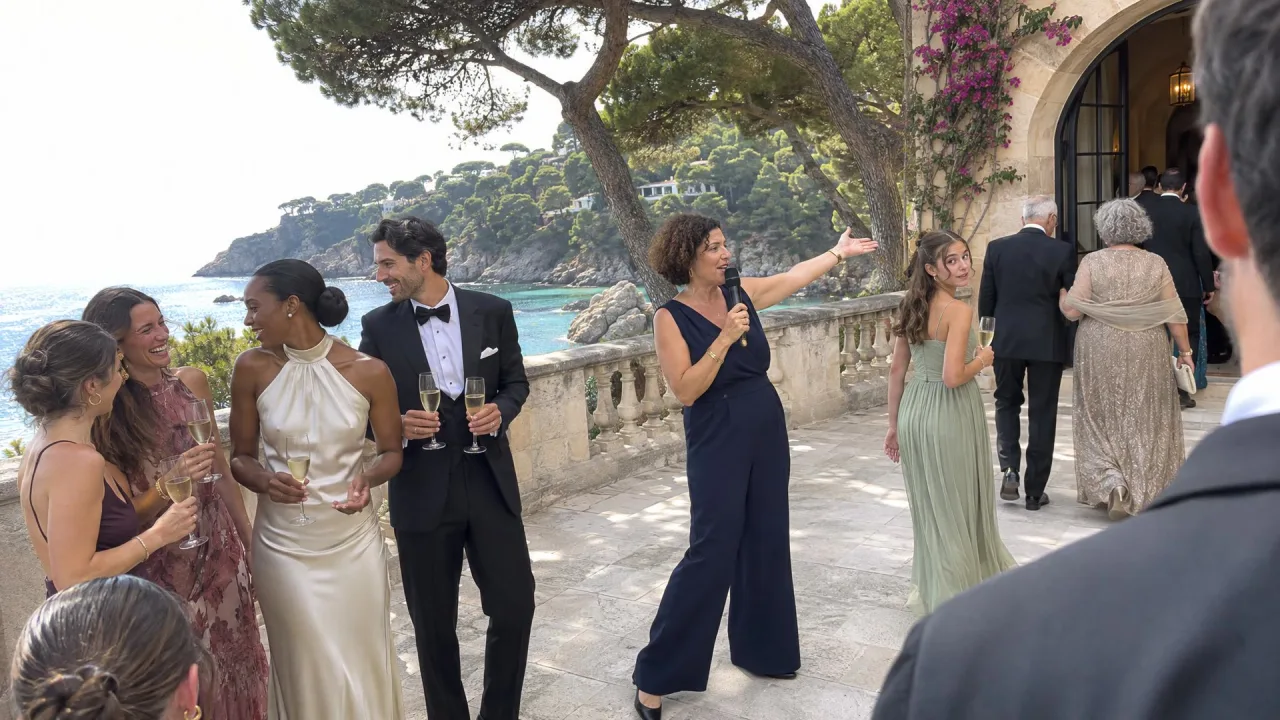
A friend or relative who speaks both languages. The warmest option, and the most common one at destination weddings. It works well when that person is comfortable with a microphone and is happy to work during part of the evening. Give them a written running order, the names of every speaker and how to pronounce them, and introduce them to the coordinator and DJ before the day.
The DJ. Many DJs in Spain do the practical announcements in Spanish and English: dinner, cake, first dance, last song. Ask exactly what they say on the mic and in which languages, and how much they like to talk. Most of the threads preferred a DJ who speaks little and well.
A professional host or presenter. Some companies in Spain offer bilingual presenters, often combined with music or animation. Useful for larger weddings or when nobody in your circle wants the role. Check that the style is calm; a game-show tone rarely fits a black-tie dinner.
The coordinator. A planner or day-of coordinator can quietly run the transitions and leave the microphone to someone else. In practice this is often the best split: the coordinator holds the timeline, the host speaks.
When speeches usually happen in Spain
The rhythm of a Spanish wedding is different from a British or American one. After the ceremony comes a long cocktail, often an hour and a half or more, then a seated dinner that starts late by many visitors' standards. Our guide to Spanish dinner timing explains how the evening tends to stretch.
That leaves three good windows for words:
- A short welcome when guests sit down. One or two minutes from a parent or the host, ideally before the starter is served.
- Speeches at dessert. The most common choice at Spanish weddings, and the one the threads liked best: guests are fed, seated and still listening. This is also when many Spanish couples hand small gifts to family or play a short video.
- The couple's thank-you before the dancing. A minute or two at the edge of the dance floor, just before the first song.
What we would avoid: long speeches during the cocktail, when guests are standing and the light is changing fast, and anything after the open bar has been running for an hour.
If you are hosting a welcome dinner or a pre-wedding evening, some speeches can move there. The wedding weekend itinerary templates show where those events fit.
Speeches in two languages: what actually works
Translating every sentence twice doubles the length and halves the attention. These approaches work better:
- One speaker, one language. Let each person speak in the language they are most comfortable in, and balance the line-up so both sides of the family hear speeches in their own language.
- The host bridges. The host introduces each speaker in both languages and gives a one-line summary of the speech that just ended in the other language. Short, warm, no word-for-word interpretation.
- Paragraph swaps for the important ones. For a parent's speech that everyone must understand, two people can alternate paragraph by paragraph. Rehearse it once; it takes about twice as long, so keep the original short.
- A printed or shared summary. Translations of the key speeches on a card at each place setting, or on the wedding website, let guests follow without slowing the room.
- Keep the vows in your own words. Many couples say their vows each in their own language and read one line in the other. It is usually the moment guests remember most.
Agree on the plan with every speaker at least two weeks before the wedding, and ask for a time limit. Three minutes is a good target; five is the ceiling.
The microphone details nobody remembers
These are small things, but they decide whether anyone hears a word:
- One handheld microphone for speeches, checked and charged, with a spare battery.
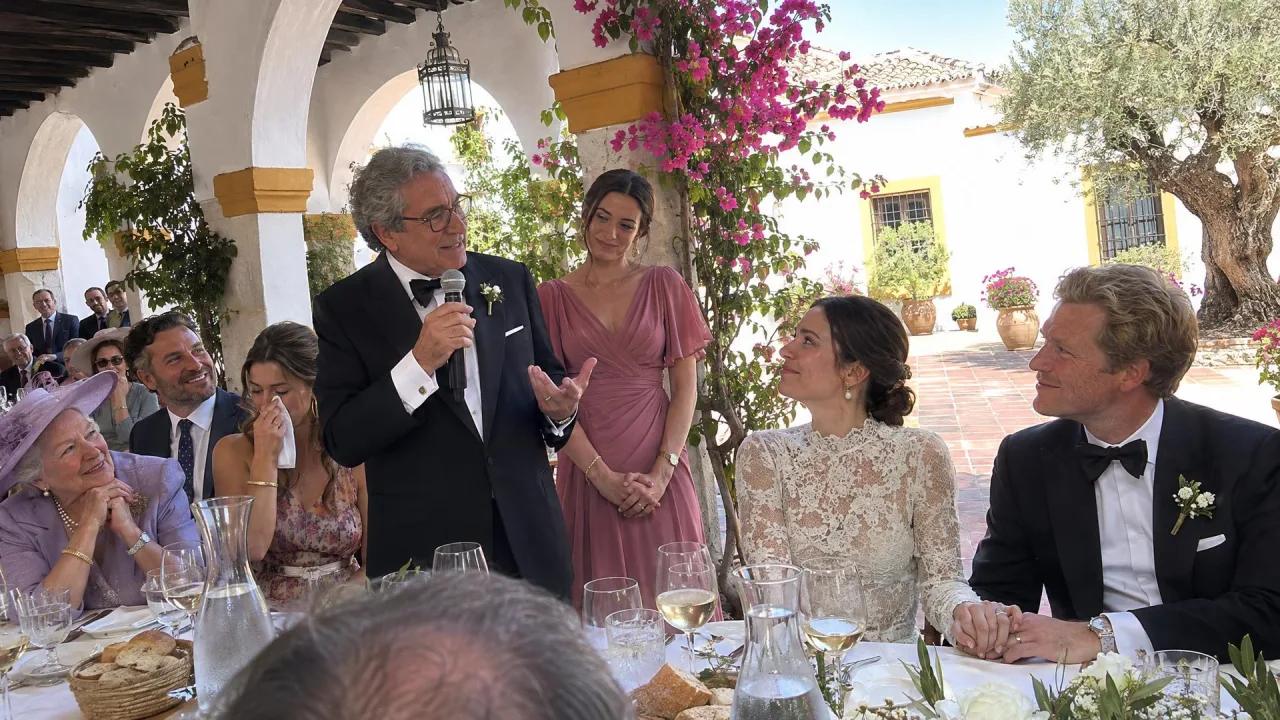
- The speaker holds it close to the mouth, not at chest height.
- Speakers stand where the guests can see them, not with their back to half the tables.
- The DJ fades the music before the host speaks, not after.
- A clear signal, from the coordinator to the host, that the kitchen is ready for the next course.
If you want the speeches in your wedding film, tell your filmmakers who is speaking and when. We put lavalier microphones on the key people and also record the sound separately, and in our Full and Full+ films the speeches are also delivered as their own edited film. Our guide to ceremony and speech audio covers the technical side.
A simple running order for the host
For a typical evening wedding in Spain:
- End of cocktail: host announces dinner in both languages and points the way.
- Guests seated: short welcome from a parent or the host.
- Starter and main course: no speeches, just food and conversation.
- Dessert: two or three speeches, host introduces each one and bridges the languages.
- Cake and toast.
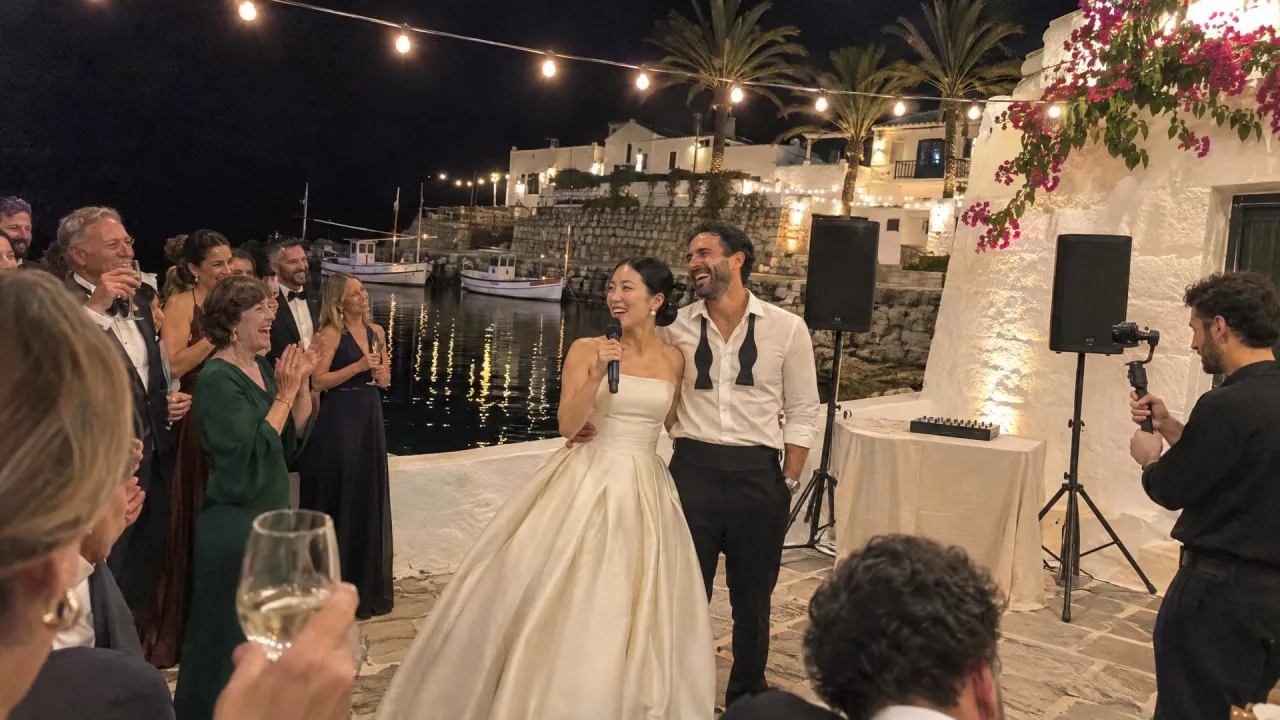
- Couple's short thank-you, then the first dance.
- Late night: host or DJ announces the recena and, later, the last song and transport.
Why this matters on film
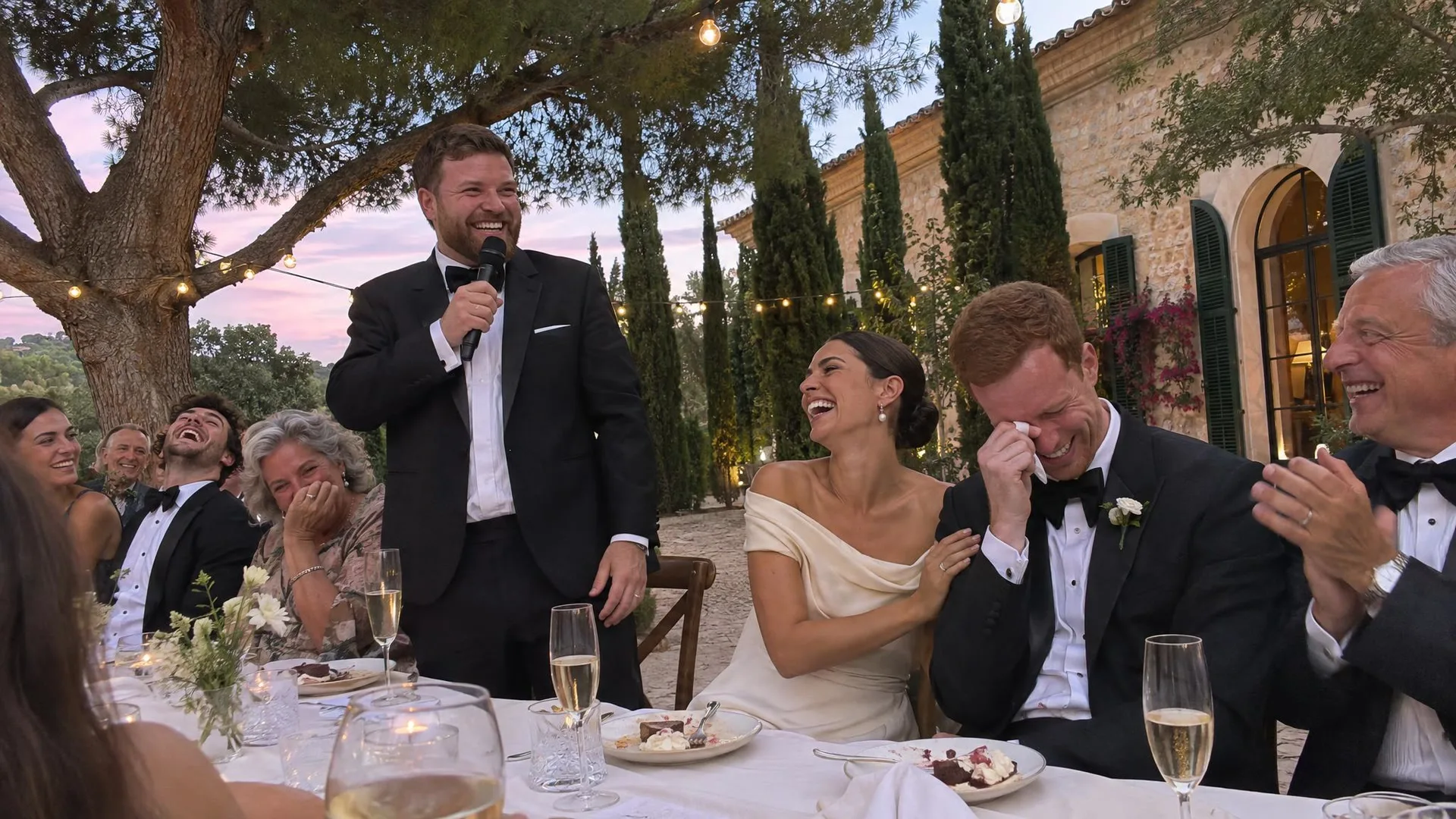
As filmmakers, we notice that the speeches are often where a wedding film finds its heart. A father telling a story in Spanish while a cousin translates it for the English side of the table; a friend who makes the groom laugh until he cries; the couple thanking everyone in two languages. These moments only land if people can hear them and the room is listening. A good host makes that possible, and that is what we look for when we create documentary and cinematic wedding films in Spain, built around real voices like these.
Quick checklist
- Name one host and one coordinator, and introduce them before the day.
- Decide the language plan for each speech.
- Three or four speakers, about three minutes each.
- Speeches at dessert, with guests seated.
- One good microphone, music faded, speakers facing the room.
- Tell your filmmakers the order of speeches in advance.
Planning a bilingual wedding in Spain and wondering how the speeches will feel on film? Tell us about your day.